
1835 — Year of revolts, exploration, and cultural milestones
Overview of 1835, highlighting political conflicts, scientific voyages, cultural publications, notable births and deaths, and other events that marked the mid‑19th century.
1835 was a year of political tension, scientific curiosity and cultural ferment. Across continents it saw the opening shots of rebellions and boundary disputes, vivid reports that captured the public imagination, and voyages and publications that would influence later science and literature. The year sits in the middle of the 1830s, a decade of rapid social and technological change.
Image gallery
10 Images



Major political and military events
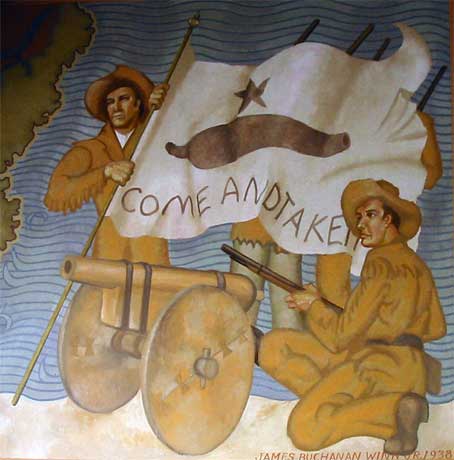
Several localized conflicts and political milestones began or intensified in 1835. In North America tensions between settlers and governments produced important turning points: the dispute known as the Toledo War between Ohio and the Michigan Territory escalated, and in what became Texas the revolt against Mexican rule began in October with the Battle of Gonzales. In the United States the controversial Treaty of New Echota, signed late in the year, set the stage for the forced removal of the Cherokee people.
Science, exploration and public spectacle
Scientific exploration continued to attract attention. Charles Darwin, serving on HMS Beagle, visited the Galápagos Islands during the voyage that contributed to his later ideas about evolution. Astronomical interest was also high: Halley's Comet made a well‑observed return to the inner solar system. Public curiosity and credulity combined in episodes such as the "Great Moon Hoax," a widely read series of newspaper articles that falsely described life on the Moon and illustrated the influence of popular print media.
Culture and publishing
The year produced enduring cultural works and developments in the press. Hans Christian Andersen published his early fairy tales, introducing stories that would enter the international repertoire of children’s literature. Newspapers multiplied in the United States and Europe, and sensational journalism reached new audiences. In urban centers, dramatic fires and disasters—most powerfully the Great Fire of New York in December—shaped civic responses to risk and reconstruction.
Notable births and deaths
- Births: The year saw the births of several figures who would become influential in industry and letters, most famously Andrew Carnegie and Samuel Langhorne Clemens (Mark Twain), both born in late November 1835.
- Deaths: The year also marked the passing of various political, artistic and scientific figures of the early 19th century (obituaries and lists vary by country and profession).
Notable facts and legacy
1835 exemplifies mid‑19th‑century dynamics: emergent nationalisms and frontier conflicts, accelerating print culture and public science, and cultural works whose influence would grow over subsequent decades. Events of the year—from explorations that informed natural science to treaties and conflicts that reshaped populations—left legacies felt in political boundaries, literature and popular imagination.
Questions and answers
Q: What significant event occurred in 1835?
A: The text does not provide enough information to answer this question.
Q: When did the aforementioned event occur?
A: The text states that the event occurred in 1835.
Q: Can you provide any further context about the year 1835?
A: The text does not provide any further context about the year 1835.
Q: Is there any additional information that can be gleaned from the text besides mentioning the year 1835?
A: No, the text only mentions the year 1835.
Q: Does the text provide any indication of what country or region it is referring to?
A: The text does not provide any indication of what country or region it is referring to.
Q: What is the significance of explicitly mentioning the year 1835?
A: Without further context or information, it is unclear what the significance of mentioning the year 1835 may be.
Q: Is there any additional information about specific events or people from 1835 that could be useful to interpret this text?
A: The text does not provide any additional information about specific events or people in 1835.
Related articles
Author
AlegsaOnline.com 1835 — Year of revolts, exploration, and cultural milestones Leandro Alegsa
URL: https://en.alegsaonline.com/art/111791