
Gavotte: Origins, dance steps and its role in Baroque music
The gavotte began as a Breton folk dance and became a staple of French and English courts and Baroque suites. This article explains its steps, musical traits, history, and notable examples.
Overview
The gavotte is a social and musical form that originated among rural communities in northwestern France and later moved into aristocratic circles and instrumental repertoire. Originally a lively folk dance, the gavotte's character—moderate tempo with a strong two-beat feel and distinctive upbeats—made it adaptable both for group dancing and for instrumental composition in the Baroque era. Its name and style have been absorbed into court entertainments and into classical suites, where the dance appears as a short, rounded movement.
Image gallery
5 Images


Musical characteristics
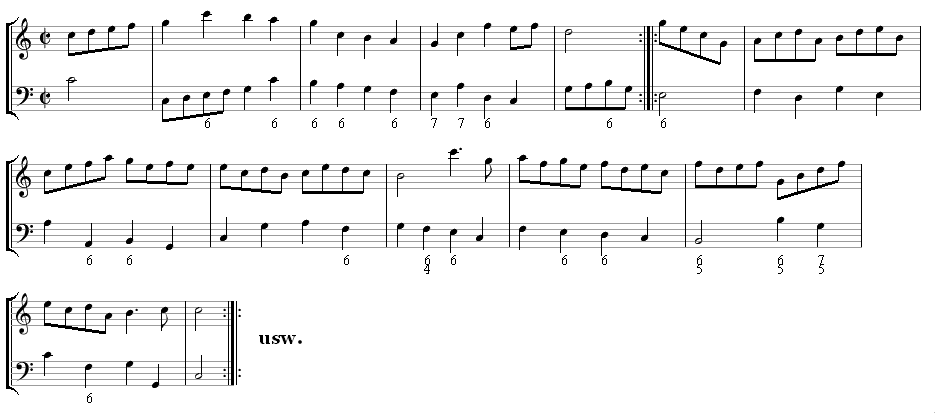
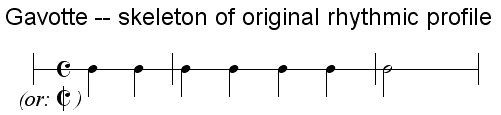
As a musical piece the gavotte typically emphasizes a four-beat measure felt in two, with phrases often beginning on the third beat of the bar (giving a sense of an anacrusis or upbeat). Composers frequently set gavottes in binary (two-part) form with repeated sections, and in suites they are commonly paired with complementary dances. The rhythm tends to be steady and lightly accented, lending itself to moderate tempos rather than the slow tempos of some court dances.
Steps, formation and instruments
Traditional dance patterns for the gavotte involve crossing and hopping motions: dancers commonly cross their feet twice in each basic figure and include a hop or spring to articulate the rhythm. The dance could be performed by couples or larger groups and was flexible enough to be sung or accompanied by instruments. Typical instruments documented in historical accounts include:
History and development
The gavotte grew from local peasant customs into a courtly entertainment. Its roots are associated with rural communities in regions such as Brittany and other parts of northwestern France, where villagers danced at celebrations. In the 17th century the form was adopted by urban and noble audiences; it became popular at the court of Louis XIV and soon appeared in English courtly repertoire as well. Musical Baroque composers incorporated the gavotte into instrumental suites and keyboard partitas, transforming a social dance into a stylized concert piece.
Gavotte in suites and by composers
When composers organized dance movements into sets known as suites, the gavotte commonly occupied a mid-sequence position, often placed between dance types such as the sarabande and the gigue. Notable Baroque figures who wrote gavottes include French and German composers who blended folk elements with courtly refinement. The form's compact, repeating structure made it useful for variation and ornamentation by later performers and arrangers.
Uses, notable facts and distinctions
The gavotte exists in multiple contexts: as a communal dance, as a courtly entertainment, and as a stylized instrumental movement. Its transformation from a rural pastime performed by peasants to a favorite of courtly court life exemplifies the broader movement of vernacular culture into elite arts. Performers and modern historical-dance groups reconstruct both steps and musical interpretation from surviving descriptions and scores.
Further reading and related topics
For background on terms and practices connected to the gavotte, see entries on folk dance, regional culture and the broader milieu of the English court. In musical study, the role of composers who set gavottes for instruments clarifies how a dance can be reimagined in concert settings. Additional resources and cross-references are listed below.
Related articles
Author
AlegsaOnline.com Gavotte: Origins, dance steps and its role in Baroque music Leandro Alegsa
URL: https://en.alegsaonline.com/art/37771