
Gannet (genus Morus): seabird overview and natural history
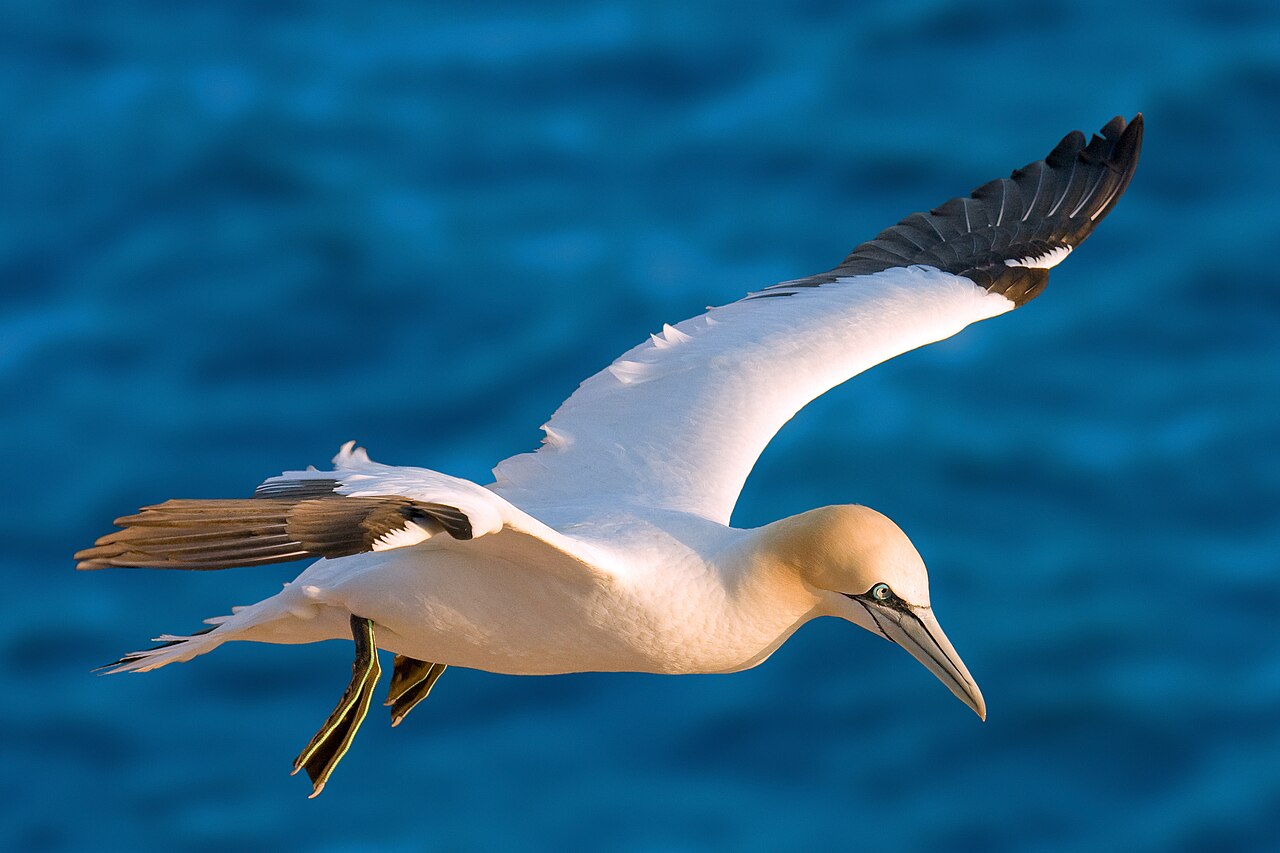
Gannets are large plunge-diving seabirds of the genus Morus, known for white plumage, yellowish heads, long pointed wings and dramatic high-speed dives to catch fish. They breed in dense coastal colonies.
Overview
Gannets are seabirds in the genus Morus, members of the family Sulidae and close relatives of the boobies. These birds are highly marine in habit and are adapted to life spent largely at sea outside the breeding season. They are best known for spectacular plunge-dives in pursuit of fish and squid and for nesting in dense coastal colonies.
Image gallery
10 Images



Identification and adaptations
Adults are predominantly white with contrasting dark wingtips and a pale yellow to buff tint on the head. They have long, pointed wings and a sturdy, dagger-like bill suited to catching and holding slippery prey. Several anatomical specializations reduce injury and aid hunting: they have air sacs and dense skull bones to absorb the shock of impact when striking water, forward-facing nostrils recessed into the bill, and streamlined bodies that help them enter and swim beneath the surface.
Feeding behavior and diving
Gannets hunt primarily by plunge-diving. From heights of up to about 30 metres they fold their wings and plunge at high speed, piercing the sea surface to reach shoaling fish. Typical dives carry them below the surface to several metres, and recorded dives commonly reach depths of around 10 metres; some birds have been observed to go deeper. After a dive they may use wings and feet to pursue prey underwater before resurfacing to swallow their catch.
Breeding, colonies and life history
During the breeding season gannets gather in large, noisy colonies on cliffs and offshore islands. Pairs often form long-term bonds and defend a single nest site, building nests from seaweed, grass and accumulated guano. Clutches usually consist of a single pale bluish egg. Both parents share incubation and chick-rearing duties; chicks fledge after several weeks to months depending on species and conditions.
Species, distribution and conservation
- There are a few widely recognized species within Morus, including northern, Cape and Australasian gannets, each occupying distinct ocean regions.
- Populations and trends vary by species and locality; many colonies remain robust but some face threats from fisheries interactions, pollution and habitat disturbance.
Notable facts and further reading
Gannets are social, long-lived seabirds admired for their aerial grace and fearless hunting technique. They form a visible part of marine ecosystems, concentrating fish and influencing local food webs. For more general information and detailed species accounts, consult these resources:
Related articles
Author
AlegsaOnline.com Gannet (genus Morus): seabird overview and natural history Leandro Alegsa
URL: https://en.alegsaonline.com/art/37484
Sources
- hakaimagazine.com : "Seabirds' Death-Defying Dives"
- jw.org : "The Gannet's Dive"
- allaboutbirds.org : "Northern Gannet Overview"
- wikidata.org : Q1651414
- species.wikimedia.org : Morus (Sulidae)
- eol.org : 104263
- gd.eppo.int : 1MORUG
- fauna-eu.org : 854ffcbf-ea55-4996-b075-d9970c174b7c
- gbif.org : 2480962
- irmng.org : 1290768
- itis.gov : 174698
- data.nbn.org.uk : NHMSYS0000066406
- ncbi.nlm.nih.gov : 37577
- nzor.org.nz : 507532e6-d254-4597-8dba-9c8254b63b6e
- marinespecies.org : 148775