
Gansus — Early Cretaceous aquatic bird genus
Gansus is an Early Cretaceous genus of aquatic birds from present-day Gansu, China. Well-preserved fossils show a mix of primitive and modern traits illuminating early evolution of ornithurine birds.
Overview
Gansus is a genus of primitive aquatic birds known from the Lower Cretaceous, approximately 115–105 million years ago. The best-known material comes from deposits in Gansu province in western China. Gansus is widely regarded as one of the earliest members of the Ornithurae, the broader group that ultimately includes modern birds (Neornithes), and it is central to studies of the early evolution of avian anatomy and ecology.
Image gallery
10 Images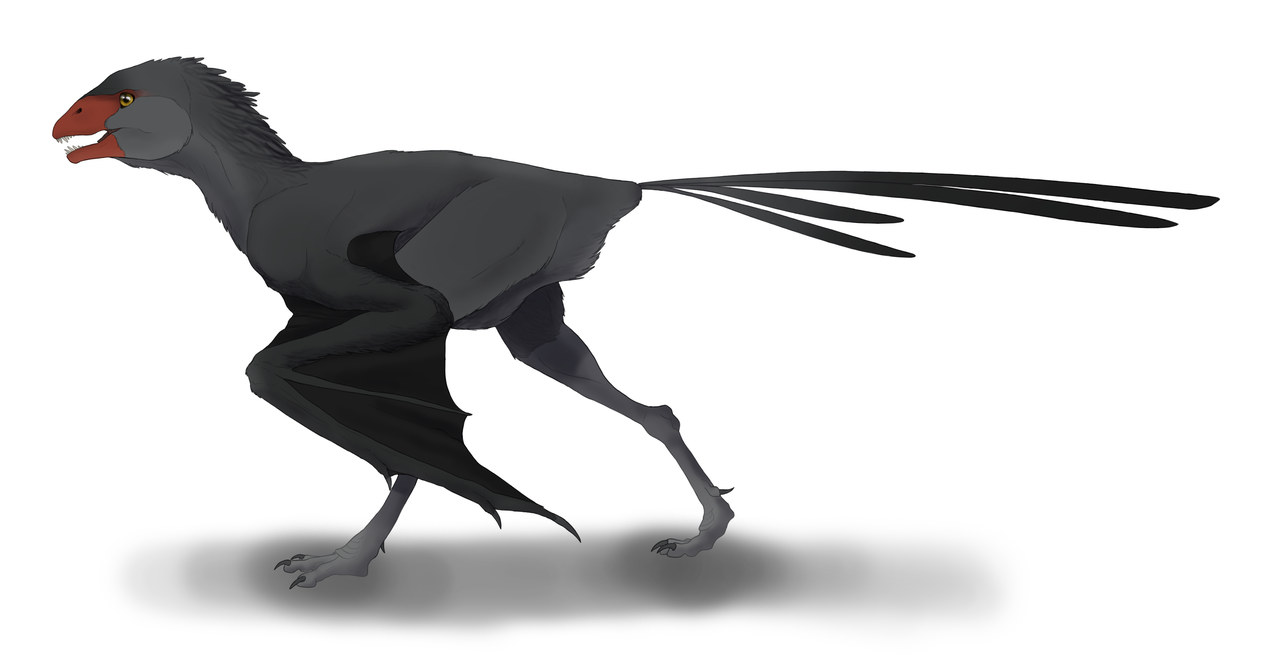




Anatomy and adaptations
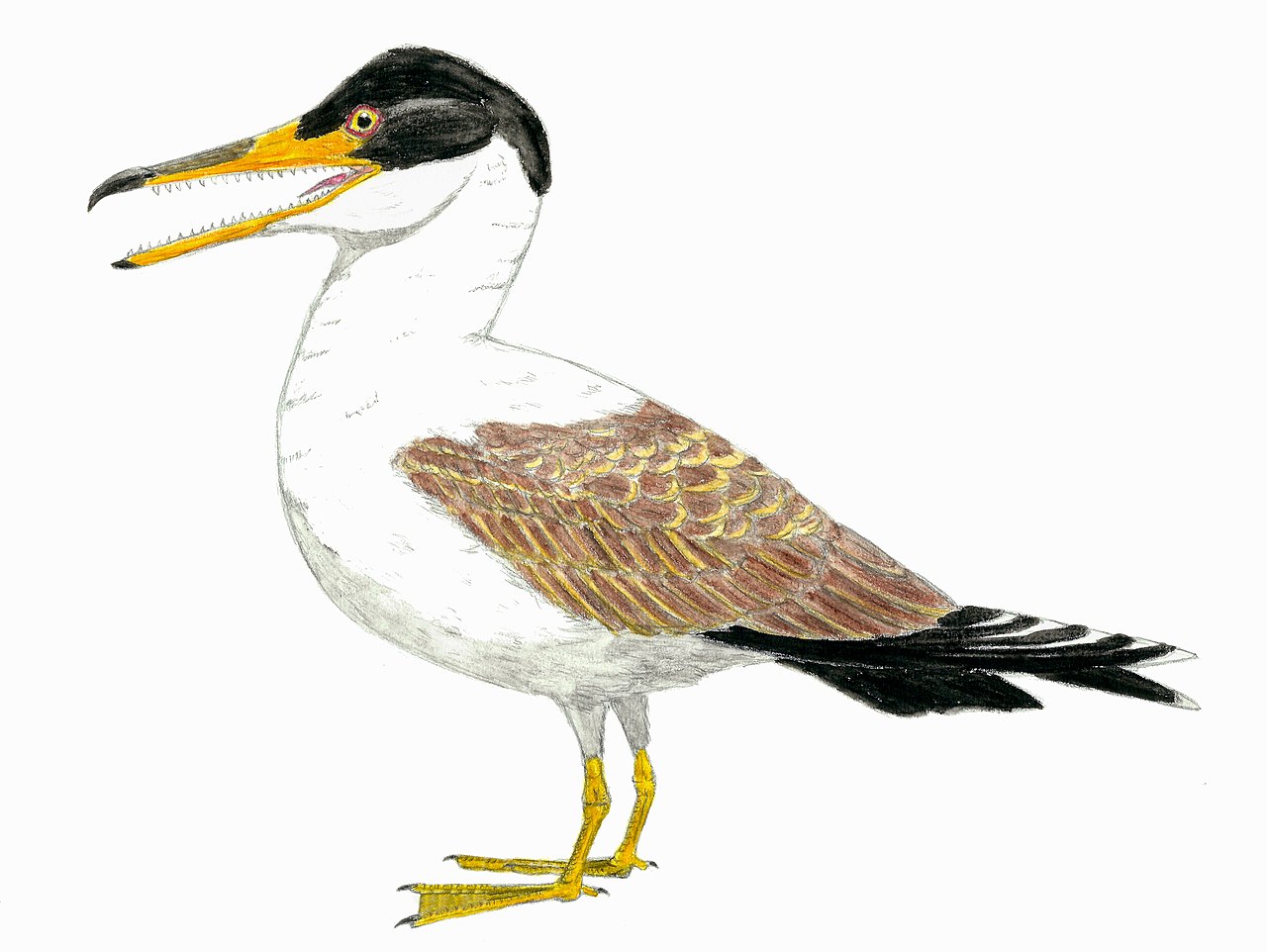
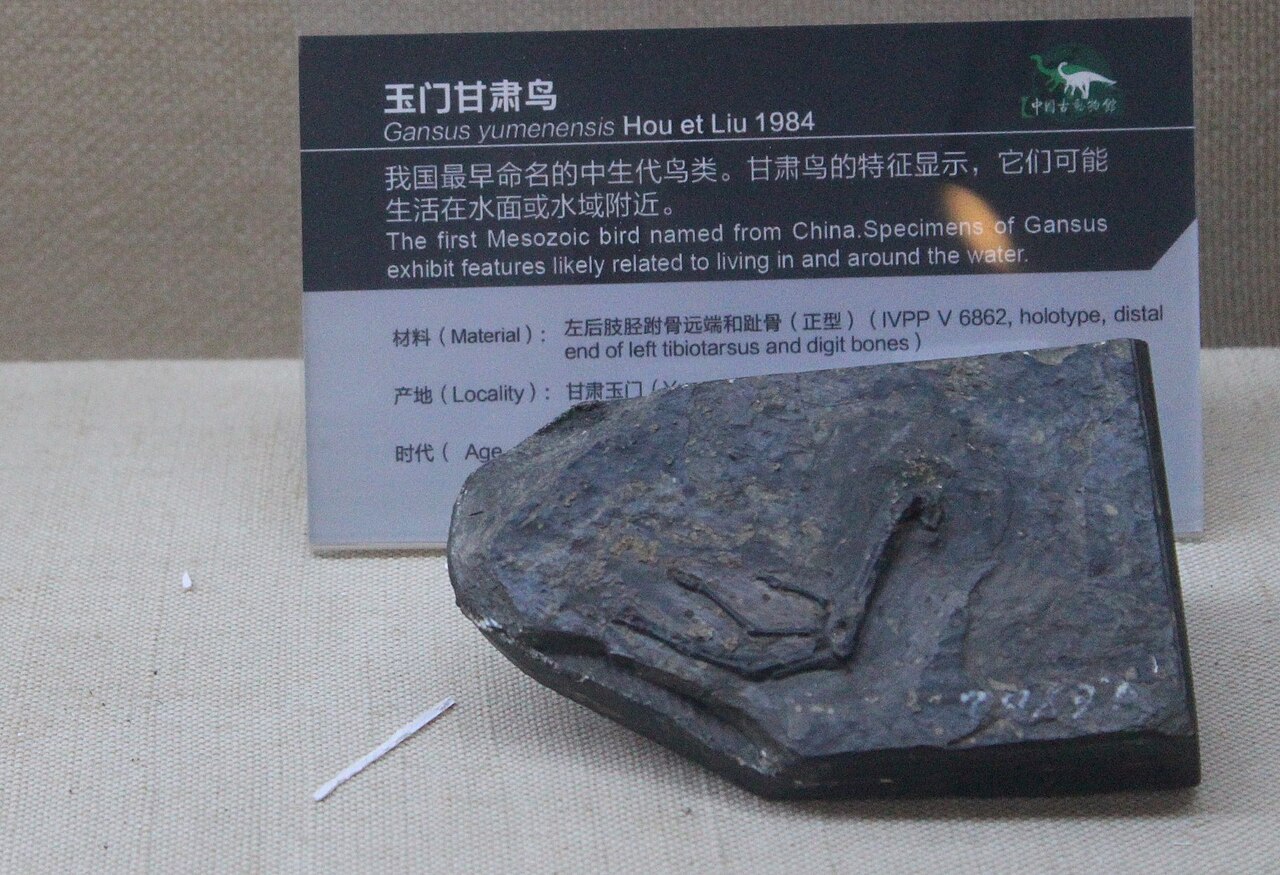
Fossils attributed to the species Gansus yumenensis preserve detailed bone anatomy and feather impressions. Skeletal features show a combination of relatively modern characters—such as a wing and shoulder girdle capable of powered flight—and features interpreted as adaptations to an aquatic lifestyle, including limb proportions and a foot morphology suitable for swimming or surface paddling. Feather impressions indicate contour feathers and wing structures consistent with flight; however, some aspects of plumage distribution remain incompletely known.
Fossil record and discovery
Most specimens come from fine-grained lacustrine sediments of formations in the Changma Basin, where articulated skeletons and impressions are often recovered. These well-preserved fossils provide unusually complete anatomical data for an Early Cretaceous bird, allowing detailed comparisons with both earlier and later avian taxa. The quality of preservation has helped paleontologists infer posture, wing shape and aspects of soft-tissue anatomy that are rarely preserved in older specimens.
Classification and relationships
As an early ornithurine, Gansus helps bridge more primitive Mesozoic birds and later modern lineages. It is frequently compared with earlier stem-birds and other Mesozoic taxa; for example, researchers discuss contrasts with Confuciusornis, which retains more primitive traits, and with later, more specialized marine birds such as Ichthyornis and Hesperornis. These comparisons clarify a sequence of anatomical changes leading toward the modern avian body plan, while also showing that diverse ecologies—flying, diving and surface-swimming—were established early in avian history.
Paleobiology and ecology
Evidence from limb proportions, joint structure and preserved feather arrangement indicates that Gansus was likely capable of sustained flight and was also adapted to an aquatic habitat. Judging from foot morphology and depositional context, it may have foraged in lakes or along shorelines, feeding on small aquatic animals such as fish or invertebrates, although direct dietary evidence is limited and interpretations remain cautious. Its ecology suggests that the occupation of water-associated niches by ornithurine birds occurred relatively early in their diversification.
Significance and ongoing research
Gansus is important for understanding the timing and sequence by which modern avian features evolved. Its mix of advanced and primitive characters makes it a key taxon in phylogenetic analyses that test relationships among early birds and the origins of modern avian clades. Ongoing study of additional specimens, detailed comparisons with contemporaneous taxa and new analytical techniques continue to refine its placement and paleobiological interpretations. For more general background on early avian evolution and important comparative taxa, see the linked entries above.
Key points
- Age and provenance: Lower Cretaceous, Gansu, China.
- Morphology: Combination of flight-capable wings and aquatic-adapted limbs.
- Importance: Illuminates early steps toward the modern bird body plan and ecological diversity.
Questions and answers
Q: What is Gansus?
A: Gansus is a genus of aquatic birds.
Q: When did Gansus live?
A: Gansus lived during the Lower Cretaceous period, between 115 to 105 million years ago.
Q: Where was Gansus found?
A: Gansus was found in what is now Gansu province, western China.
Q: What group does Gansus belong to?
A: Gansus belongs to the Ornithurae group.
Q: What other birds are included in the Ornithurae group?
A: The Ornithurae group includes modern birds (Neornithes) and extinct related groups, such as Confuciusornis, Ichthyornis and Hesperornis.
Q: Is Gansus the oldest-known bird?
A: Gansus is the oldest-known of the Ornithurae group, which includes modern birds and related extinct groups.
Q: What is the significance of Gansus?
A: Gansus is significant because it is the oldest-known member of the group of birds that includes modern birds (Neornithes) and related extinct groups.
Related articles
Author
AlegsaOnline.com Gansus — Early Cretaceous aquatic bird genus Leandro Alegsa
URL: https://en.alegsaonline.com/art/37494
Sources
- msnbc.msn.com : "Waterfowl fossils fill in a big missing link: 110 million-year-old birds bridge gap between age of dinosaurs and today"
- dx.doi.org : 10.1126/science.1126377
- sciencemag.org : Supporting Online Material
- news.nationalgeographic.com : "Dinosaur-era birds surprisingly ducklike, fossils suggest"