
Gar (family Lepisosteidae): ancient armored freshwater predators
Gars are long, armored freshwater fish in the family Lepisosteidae. These ancient ray-finned predators are native to the Americas, notable for ganoid scales, elongated jaws, lung-like swim bladders, and toxic eggs.
Overview
Gars are a small group of large, predatory fishes in the family Lepisosteidae and the order Lepisosteiformes. They belong to the broader assemblage of ray-finned fishes and represent an ancient lineage with distinctive anatomy that has changed relatively little over millions of years. Commonly called gar or garpike, these fishes are often described as "living fossils" because of their long evolutionary history and conservative form.
Image gallery
10 Images





Physical characteristics
Gars have elongated, cylindrical bodies covered in hard, rhomboid ganoid scales that form heavy armor. Their heads end in long, narrow jaws filled with sharp, conical teeth well adapted for seizing and holding slippery prey. Key features include:
- Ganoid scales—thick, shiny, and difficult to penetrate.
- Streamlined, torpedo-like body suited to sudden lunges and ambush attacks.
- Elongated snout with numerous teeth; bite designed for fish capture rather than chewing.
- Relatively slow axial swimming but high short-burst speed for prey capture.
Adult gars vary in size by species; many commonly reach lengths around two metres, with the largest individuals sometimes reported near three metres. Weights can exceed several dozen kilograms in large specimens.
Evolution and fossil record
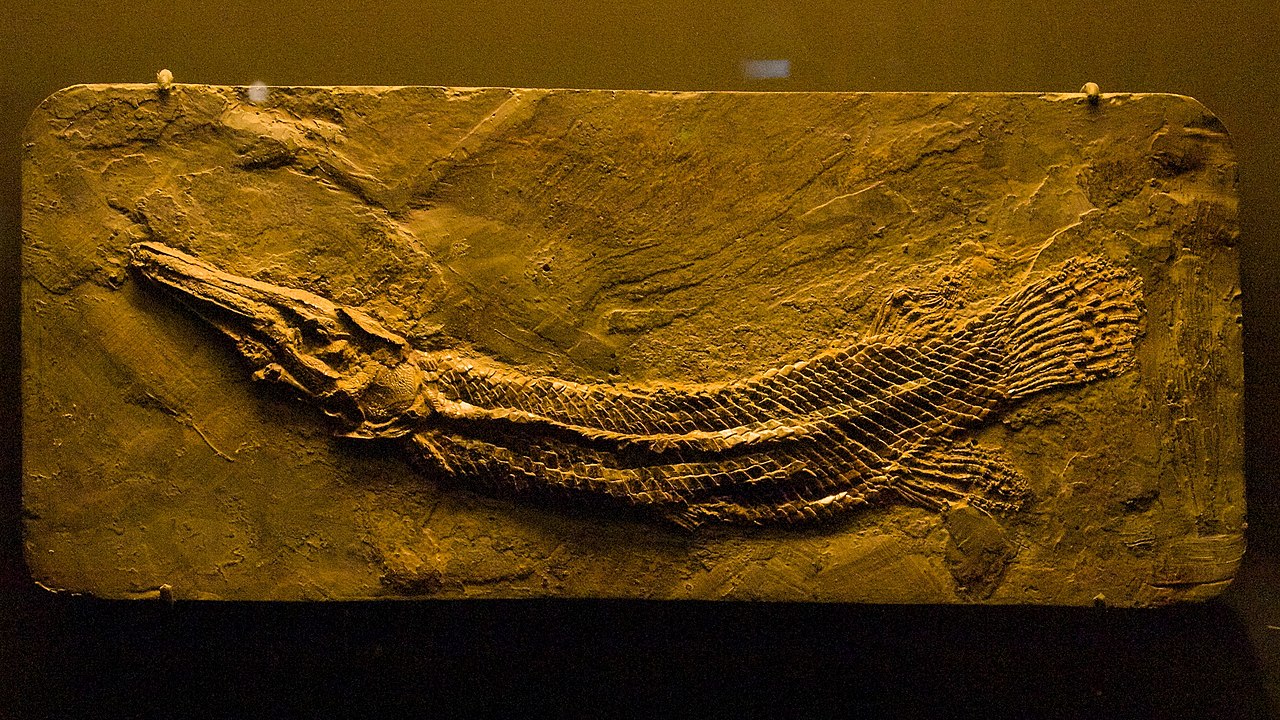
Gars have a deep fossil record and were particularly diverse by the early Mesozoic. Fossils show members of this lineage existed in many parts of the world, and they have persisted with relatively conservative morphology. Modern gars are survivors of a once more widespread and varied group and provide an informative window into the evolution of ray-finned fishes and the broader clade Holostei.
Distribution and habitat
Today, living gars are native to the freshwater and brackish systems of the Americas, ranging through North, Central and parts of South America. They are typically found in slow-moving rivers, lakes, backwaters, swamps and estuarine margins where they hunt among submerged vegetation and structure. Some species tolerate brackish conditions for limited periods.
Biology and behavior
Gars are primarily piscivorous ambush predators that feed on smaller fish and other aquatic animals. A notable physiological adaptation is a highly vascularized swim bladder that can act as an accessory respiratory organ; many gars periodically surface to gulp air and extract oxygen from the bladder in oxygen-poor waters (swim bladder functioning as a lung). Reproduction is seasonal in most species; adults lay numerous eggs that adhere to vegetation. Those eggs contain toxic substances and are dangerous if ingested by people or some animals.
Human interactions, uses and conservation
Humans have long interacted with gars in several ways. Their firm flesh is edible and has been consumed in regions where they occur, while the tough skin and scales have been used for decorative coverings and leather-like products. Recreational anglers prize some species for sport. At the same time, gar populations face local pressures from habitat loss, pollution, and water management practices. Because the group is small and patchily distributed, conservation and habitat protection are important for maintaining their continued presence in native waters.
Notable facts and distinctions
- Seven living species are conventionally recognized, placed in a few genera; the group is split from more derived teleost fishes by ancient anatomical traits.
- Although armored and capable of surviving in low-oxygen water by breathing air, gars are not obligate air-breathers and still rely heavily on gill respiration.
- Gar eggs are toxic and should never be eaten; other parts of the fish have been utilized with care by humans.
Related articles
Author
AlegsaOnline.com Gar (family Lepisosteidae): ancient armored freshwater predators Leandro Alegsa
URL: https://en.alegsaonline.com/art/37508
Sources
- nationalgeographic.com : "Gars, Gar Pictures, Gar Facts"
- dec.ny.gov : "Gar"
- floridamuseum.ufl.edu : "Atractosteus spatula"
- fieldandstream.com : "Did You Know That Gar Eggs Make You Sick?"
- commons.wikimedia.org : Lepisosteidae
- wikidata.org : Q506144
- species.wikimedia.org : Lepisosteidae
- animaldiversity.org : Lepisosteidae
- eol.org : 5468
- fossilworks.org : 63030
- gbif.org : 3716
- inaturalist.org : 54545
- irmng.org : 114126
- itis.gov : 161092
- ncbi.nlm.nih.gov : 7915