
Garden dormouse (Eliomys quercinus)
A small nocturnal rodent of the dormouse family (Gliridae) found in parts of Europe and North Africa; arboreal and omnivorous, hibernates seasonally and faces regional conservation concerns.
The garden dormouse (Eliomys quercinus) is a small nocturnal rodent belonging to the dormouse family, Gliridae. It is known for its distinctive facial markings and bushy tail, and is often associated with woodland edges, hedgerows and older orchards. Taxonomically it sits in the genus Eliomys and has been the subject of regional study because of localized declines.
Image gallery
5 Images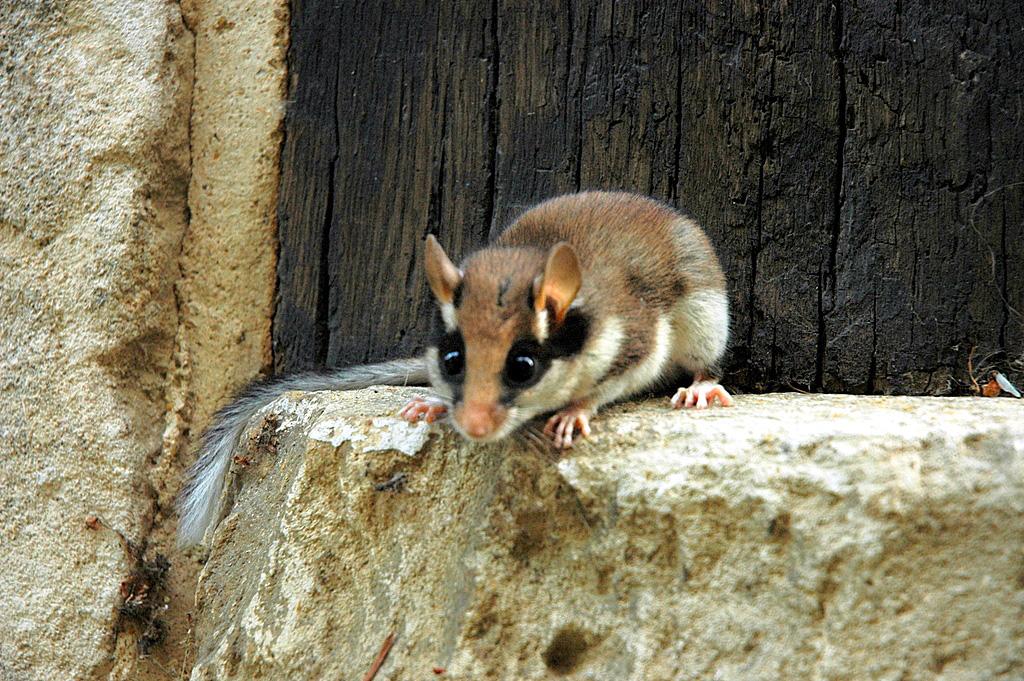


Description
Adults are compact and mouse-like with a relatively long, tufted tail and large eyes adapted to low light. Fur colour varies from grey-brown to reddish tones, and many individuals show dark patches or a mask around the eyes that give the head a characteristic appearance. The tail is often conspicuously bushy and may have a lighter tip.
Range, habitat and behaviour
Its range spans parts of western, central and southern Europe and extends into nearby regions of North Africa and western Asia. Garden dormice occupy mixed woodland, scrub, hedgerows, rocky slopes and sometimes rural gardens where there is dense cover and tree or shrub layer. They are largely arboreal and active at night, using tree cavities, bird nests and dense vegetation for shelter.
Diet is omnivorous and opportunistic: insects, other invertebrates, fruits, seeds and occasionally small vertebrates form part of the diet. Individuals may cache food for cooler months. Like many dormice, the garden dormouse undergoes a period of seasonal torpor or hibernation in colder parts of its range.
- Family: Gliridae (dormouse family)
- Activity: Nocturnal, largely arboreal
- Diet: Omnivore (insects, fruit, seeds, small prey)
- Seasonal behaviour: Hibernation/torpor in winter
Reproduction typically occurs in spring and summer when food is abundant. Females raise a single or sometimes multiple litters each year depending on local conditions; young are reared in nests above ground until independent. Lifespan in the wild is modest and subject to predation and environmental pressures.
Conservation status varies by region. Populations have declined in parts of northern and central Europe due to habitat loss, agricultural intensification, fragmentation and changes in woodland management. Conservation measures focus on preserving and restoring hedgerows, old orchards and connected woodland, reducing pesticide use, and monitoring populations to inform local management.
Related articles
Author
AlegsaOnline.com Garden dormouse (Eliomys quercinus) Leandro Alegsa
URL: https://en.alegsaonline.com/art/37537
Sources
- iucnredlist.org : Eliomys quercinus
- itis.usda.gov : ITIS report
- iucnredlist.org : "Eliomys quercinus (Garden dormouse)"