
Gandaki River (Narayani/Gandak): Himalayan river of Nepal and tributary of the Ganges
The Gandaki is a major Himalayan river draining central Nepal into northern India. Noted for deep gorges, ammonite fossils called shaligrams, cultural importance, and hydropower and irrigation uses.
Overview
The Gandaki River is one of Nepal's principal rivers and an important tributary of the Ganges. It drains large parts of the central Himalaya and flows south through Nepal into India, where it joins the Ganges basin. The river system is known by a few names in different stretches — often called Narayani or Gandak in plains regions — and plays a central role in regional geography, culture and economy. Major river networks in the country depend on its waters; it is a defining feature of Nepal's central valleys.
Image gallery
10 Images
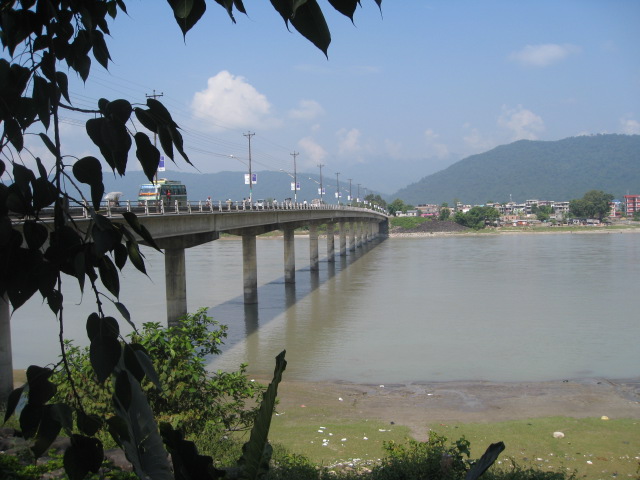


Course and physical characteristics
The Gandaki rises in the high Himalaya and cuts through steep mountain ranges, creating deep gorges and narrow valleys. Some sections are among the deepest river gorges in the world, formed where fast-flowing glacial and snowmelt streams have incised between high peaks. Local descriptions sometimes refer to the Gandaki as the deepest river in the region. As it descends, the river gathers numerous tributaries and spreads into wider floodplains in the plains before joining the Ganges; it functions as an important tributary to the larger Ganges system across India.
Geology and shaligrams
Along some banks and in river gravels, fossilized ammonites appear as rounded, often black stones prized in Hindu tradition. These fossils, known locally as shaligrams, are naturally occurring and are treated as sacred symbols of the deity Vishnu. Geologists identify them as ammonite remnants; devotees describe them as black, hard stones found in riverbeds and terraces.
Uses and cultural importance
- Religious: Shaligrams are collected for worship and pilgrimage sites along the Gandaki attract devotees.
- Economic: The river supports irrigation, local agriculture and fisheries in its lower reaches.
- Energy: Hydropower projects and potential for run-of-river schemes have been developed and proposed to harness Himalayan water flows.
- Transport and tourism: While not navigable in mountain reaches, valleys along the river are important for trekking, cultural tourism and historic trade routes.
History and notable facts
The Gandaki basin has long supported human settlement, linking mountain communities with Terai plains. Its valleys were traditional corridors for trade and pilgrimage. Notable geological and cultural features — especially the presence of shaligrams and the dramatic Kali Gandaki gorge between major Himalayan massifs — make the river prominent in both scientific study and local traditions. For more general background and resources, see links on the river's geography and cultural role: overview, national context, and geological notes at ammonite studies.
Distinctions and conservation
The Gandaki's steep upper reaches contrast with broad, sediment-rich plains downstream, a change that shapes ecosystem diversity and human uses. Conservation challenges include controlling sedimentation, managing hydropower impacts, and protecting culturally significant fossil deposits. Ongoing studies and local initiatives address water management and the balance between development and heritage preservation. Additional reading and resources are available via regional guides and research portals: depth records, tributary data, Ganges basin context, cross-border issues, and cultural references at traditions, stone descriptions, and religious sources at Vishnu-related sites.
Related articles
Author
AlegsaOnline.com Gandaki River (Narayani/Gandak): Himalayan river of Nepal and tributary of the Ganges Leandro Alegsa
URL: https://en.alegsaonline.com/art/37442
Sources
- muktinath.org : story of Gandaki