
Fukurokuju: Japanese Deity of Happiness, Wealth, and Longevity
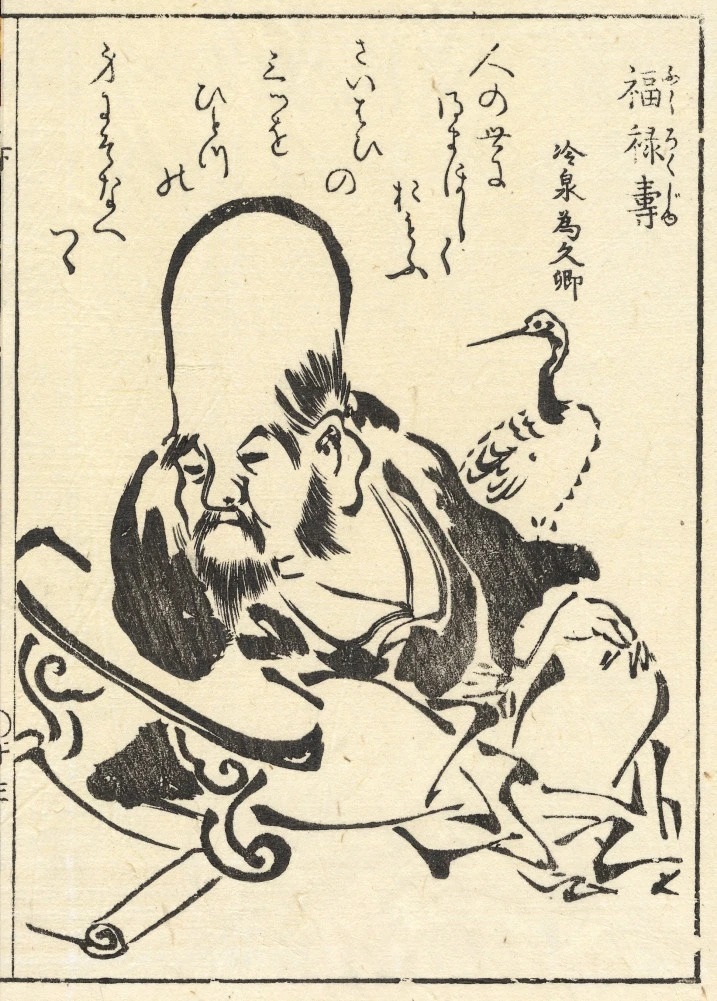
Fukurokuju is one of Japan’s Seven Lucky Gods, symbolizing happiness, wealth and long life. He is known for an elongated forehead and animal companions—crane, turtle, and a legendary black deer.
Fukurokuju (福禄寿) is a prominent figure in East Asian religious folkways, celebrated in Japan as one of the Seven Lucky Gods. His name combines three auspicious concepts—fuku (happiness), roku (wealth) and ju (longevity)—and he embodies the promise of a fortunate, long life. Artists and worshipers recognize him by a distinctive tall or elongated forehead and a calm, sagacious expression.
Image gallery
8 Images




Appearance and common attributes
In visual art Fukurokuju is usually depicted as an elderly, bald man with a very high forehead, long whiskers, and a walking staff. He frequently appears holding a scroll reputed to contain wisdom or the names of the living and the dead. He is closely associated with creatures that symbolize longevity: the crane and the turtle are almost always nearby, and a deer—sometimes described as black—may accompany him. The elongated forehead and star-like association link him to celestial symbolism.
- High forehead — a distinguishing physical trait noted in many portrayals; see cultural notes on the forehead here.
- Crane — a bird symbolizing long life and good fortune: crane.
- Turtle — emblematic of stability and longevity: turtle.
- Black deer — a rarer attribute linked to legend: black deer.
Origins and development
Fukurokuju’s origins reflect a blend of Japanese, Chinese and Taoist influences. He is often compared with or derived from the Chinese star god Shou (Shouxing), who governs longevity. Some traditions hold that Fukurokuju was a historical Chinese hermit or an immortal figure from Taoist lore; others describe him as a manifestation or reincarnation of a Taoist deity. Over centuries his image and role were adapted into the popular pantheon of the Seven Lucky Gods, a syncretic grouping embraced in Japanese folk religion and art.
Role, worship, and cultural significance
Fukurokuju functions primarily as a patron of longevity and prosperity. Devotees may invoke him in New Year traditions, household talismans, and artistic prints that promise good fortune. In some local customs he is credited with unusual powers—most notably an ability attributed in folklore to restore life—though such claims are part of mythic tradition rather than doctrinal practice. His imagery is widespread in carvings, paintings, and popular charms.
Notable distinctions and legends
Although he shares attributes with Shou and with the equally longevity-associated Jurojin, Fukurokuju is distinct in iconography and narrative. He is sometimes described as a living embodiment of the Southern Polestar, a celestial connection that reinforces his association with longevity and cosmic order. Ancient tales and ancient legends about his animal companions—such as the idea that a deer may turn black with extreme age—underscore the symbolic language that surrounds him.
As a cultural figure, Fukurokuju illustrates how religious ideas travel and transform: Taoist immortals, Chinese star-gods, and Japanese popular devotion combined to create a deity whose attributes—wisdom, wealth, and long life—remain meaningful in art and festival practices today.
Related articles
Author
AlegsaOnline.com Fukurokuju: Japanese Deity of Happiness, Wealth, and Longevity Leandro Alegsa
URL: https://en.alegsaonline.com/art/36938