
Ganon (Ganondorf) — recurring antagonist of The Legend of Zelda series
Ganon, also called Ganondorf, is the principal antagonist of The Legend of Zelda series — a powerful sorcerer-warrior who alternates between humanoid and monstrous forms to oppose Link and seize the Triforce.
Overview
Ganon is the name most commonly used for the primary antagonist of The Legend of Zelda series. He is usually portrayed as a recurring, almost archetypal evil who seeks power and dominion over Hyrule and other lands. In many entries he opposes the series’ protagonists: the hero Link and the ruler or protector Princess Zelda. The character appears in multiple incarnations across the franchise and is often described as a being who is revived, reincarnated, or reborn to continue his designs.
Image gallery
5 Images


Character, forms, and abilities
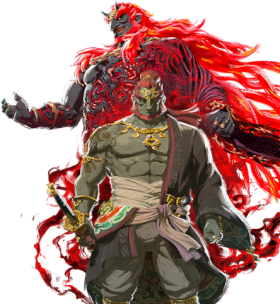
Ganon commonly appears in two principal forms. As Ganondorf he is humanoid: a tall, often regal figure associated with the Gerudo (a desert-dwelling people in the series) and depicted as a formidable sorcerer, tactician, and warrior. As Ganon he becomes a monstrous, usually beast-like embodiment of malice — frequently rendered with boar- or pig-like features in several games. Across titles he is known for superhuman strength, dark magic, and a persistent obsession with the Triforce, especially the Triforce of Power, which fuels his longevity and might.
History and development
The character has evolved in design and role since his earliest appearances. Game creators have reinterpreted his backstory, appearance, and prominence from title to title: in some stories he is a fallen king or thief; in others he is a manifestation of an ancient evil. This flexibility has allowed Ganon to serve as a final boss, a long-term nemesis, or a looming historical threat depending on each game's narrative structure and tone. His visual and thematic redesigns are notable between entries such as the more human Ganondorf versions and the more monstrous Ganon incarnations.
Major appearances and cultural presence
Ganon features centrally in many acclaimed Zelda games, including landmark entries that shaped his image and role. He has also crossed into other Nintendo franchises: for example, he is a playable fighter in the Super Smash Bros. series, first appearing as an unlockable character in Super Smash Bros. Melee and returning in subsequent installments such as Brawl and the 3DS and Wii U versions. Critics and fans frequently note his influence on video-game villainy: in 2013 he was ranked at the top of a GamesRadar list of notable video-game antagonists.
Traits, examples, and variations
Common traits associated with Ganon include resilience (he often returns after defeat), versatility (he can use both physical force and sorcery), and symbolic association with corruption and greed for power. Specific games emphasize different facets: some explore his political role among the Gerudo, others depict him as a cataclysmic force (sometimes called Calamity or similar epithets), and some treat him as an ancient curse that periodically reasserts itself. These variations give writers and designers room to reinterpret the antagonist while maintaining continuity of threat.
Notable distinctions and legacy
- Dual identity: Ganondorf (humanoid) versus Ganon (beast), a distinction used to vary combat and narrative encounter types.
- Recurring motif: his repeated resurrections make him a unifying antagonist across otherwise standalone titles.
- Cross-franchise presence: appearances in fighting games and popular media have increased his recognition beyond the core series.
As a long-lived antagonist in a major video-game franchise, Ganon remains a central figure in discussions of villain design, narrative recurrence, and the evolving visual language of games. For players and creators alike, he represents both a familiar challenge and a canvas for reinterpretation in new entries and adaptations.
Related articles
Author
AlegsaOnline.com Ganon (Ganondorf) — recurring antagonist of The Legend of Zelda series Leandro Alegsa
URL: https://en.alegsaonline.com/art/37486
Sources
- ca.ign.com : "Super Smash Bros. Melee Unlocked"
- smashbros.com : "Super Smash Bros. Brawl - Ganondorf"
- smashbros.com : "Super Smash Bros. for Nintendo 3DS / Wii U: Ganondorf"
- gamesradar.com : "100 best villains in video games"