
Galahad: the Grail Knight of Arthurian Legend
Galahad, son of Lancelot and a Knight of the Round Table, is the idealized grail knight in Arthurian legend. Celebrated for purity and spiritual perfection, he succeeds in the quest for the Holy Grail.
Galahad is a central figure in later Arthurian storytelling, presented as the archetypal pure knight who achieves the quest for the Holy Grail. He appears within the broader corpus of Arthurian legend as a member of the Round Table and as a contrast to more earthly characters. Medieval and later writers made him the son of Sir Lancelot and the one whose holiness allows him to complete a quest others cannot.
Image gallery
9 Images


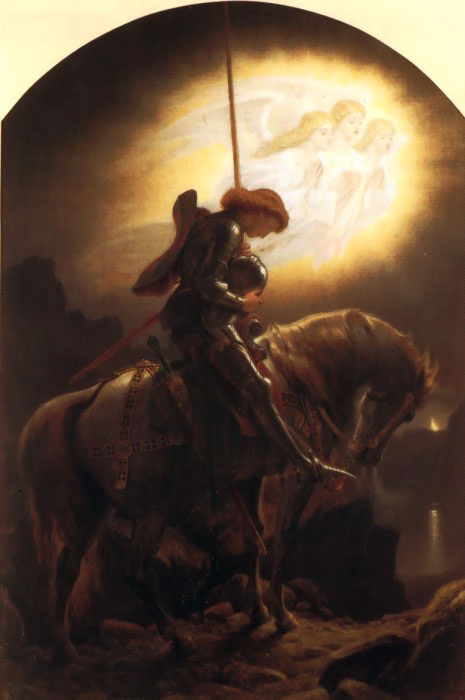
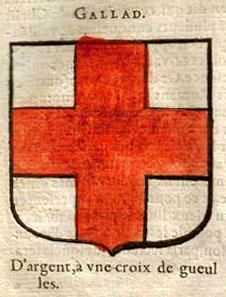
Origins and literary development
The figure of Galahad became prominent in the prose cycles composed in France in the early 13th century and in subsequent English retellings. These accounts expand the Grail story and recast the quest in overtly spiritual terms. Sir Thomas Malory and earlier French writers treated Galahad as the climactic Grail hero, though other traditions sometimes emphasise figures such as Percival; medieval texts therefore present competing versions of who reaches the Grail.
Character, symbolism and attributes
Galahad is depicted as morally and spiritually exceptional. Typical traits attached to him include:
- Chastity and moral purity, often set against the flaws of other knights.
- Religious fervour and obedience, making him fit to perceive sacred mysteries.
- Skilled arms and courtly manners, combining martial prowess with piety.
The Grail narrative
In the most familiar versions, Galahad undertakes the Grail quest and is uniquely able to behold, receive, or drink from the Grail. These episodes emphasise divine election: where other knights fail because of sin or temptation, Galahad’s spiritual condition grants him access to the Grail’s supernatural effects. Accounts often end with a transcendent departure—he is taken up or dies in a state of grace after the vision of the Holy Grail (Holy Grail).
Role within Arthurian society
Galahad is a Knight of the Round Table, an ideal that both inherits and corrects earlier courtly models. His association with the royal household and with figures such as the Fisher King or King Pelles links him to the Grail’s sacred geography and to themes of healing and renewal. Readers and critics have long seen him as an emblem of spiritual perfection that challenges the more human, fallible heroes of the Arthurian cycle. For the social context of his knighthood, see entries on the Round Table.
Legacy and interpretation
Galahad’s image influenced later literature, art, and religious symbolism, where he stands for holiness, purity of intention, and the idea that spiritual worth can surpass worldly achievement. Modern retellings vary in tone—some stress his sanctity, others read him as a figure whose perfection creates moral tensions within a human community. Scholarly treatments continue to explore how Galahad reflects contemporary medieval concerns about sanctity, chivalry and redemption (see discussions of the Grail and Lancelot’s family).
Questions and answers
Q: Who is Sir Galahad?
A: Sir Galahad is a character from Arthurian legend, a knight of the Round Table and the son of Sir Lancelot.
Q: What is the legend about Galahad?
A: The legend says that Galahad searched for and later found the Holy Grail earning him the name 'The Grail Knight', as he was the only one on earth considered by God worthy of finding the Holy Grail.
Q: What happened when Galahad drank from the grail?
A: It is said that when he drank from the grail, he was surrounded by light and ascended to heaven.
Q: Who was Galahad's uncle?
A: Galahad's uncle was King Pelle.
Q: Who was Galahad's father?
A: Galahad's father was Sir Lancelot.
Q: What were Galahad's other qualities?
A: Galahad was very noble and loyal, and was renowned as a talented swordsman.
Q: Why was Galahad known as the perfect knight?
A: Galahad was known as the perfect knight because of his noble character, loyalty, talent in swordsmanship, and his achievement in finding the Holy Grail.
Related articles
Author
AlegsaOnline.com Galahad: the Grail Knight of Arthurian Legend Leandro Alegsa
URL: https://en.alegsaonline.com/art/37249