
Shichi Fukujin: The Seven Gods of Fortune in Japanese myth
Overview of Shichi Fukujin, the Seven Gods of Fortune in Japanese myth: origins, individual deities (Ebisu, Daikokuten, Benzaiten, etc.), their iconography, the Takarabune and New Year customs.
The Seven Gods of Fortune (Japanese: 七福神, Shichi Fukujin), often called the Seven Lucky Gods in English, are a group of deities from Japanese mythology and folklore associated with good fortune. They appear in many forms of popular art, from carved netsuke to festival banners, and are commonly invoked in New Year customs.
Image gallery
10 Images


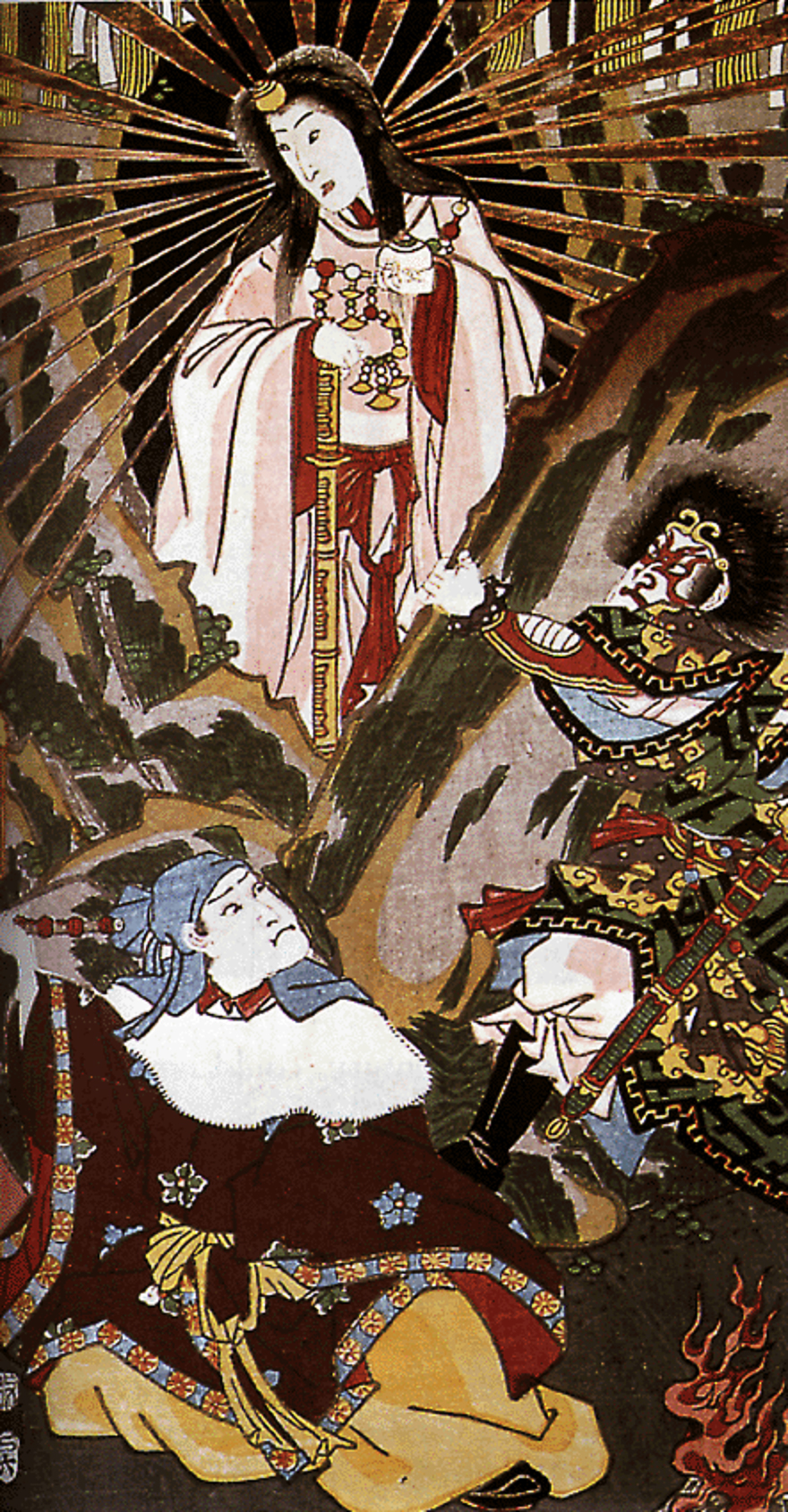


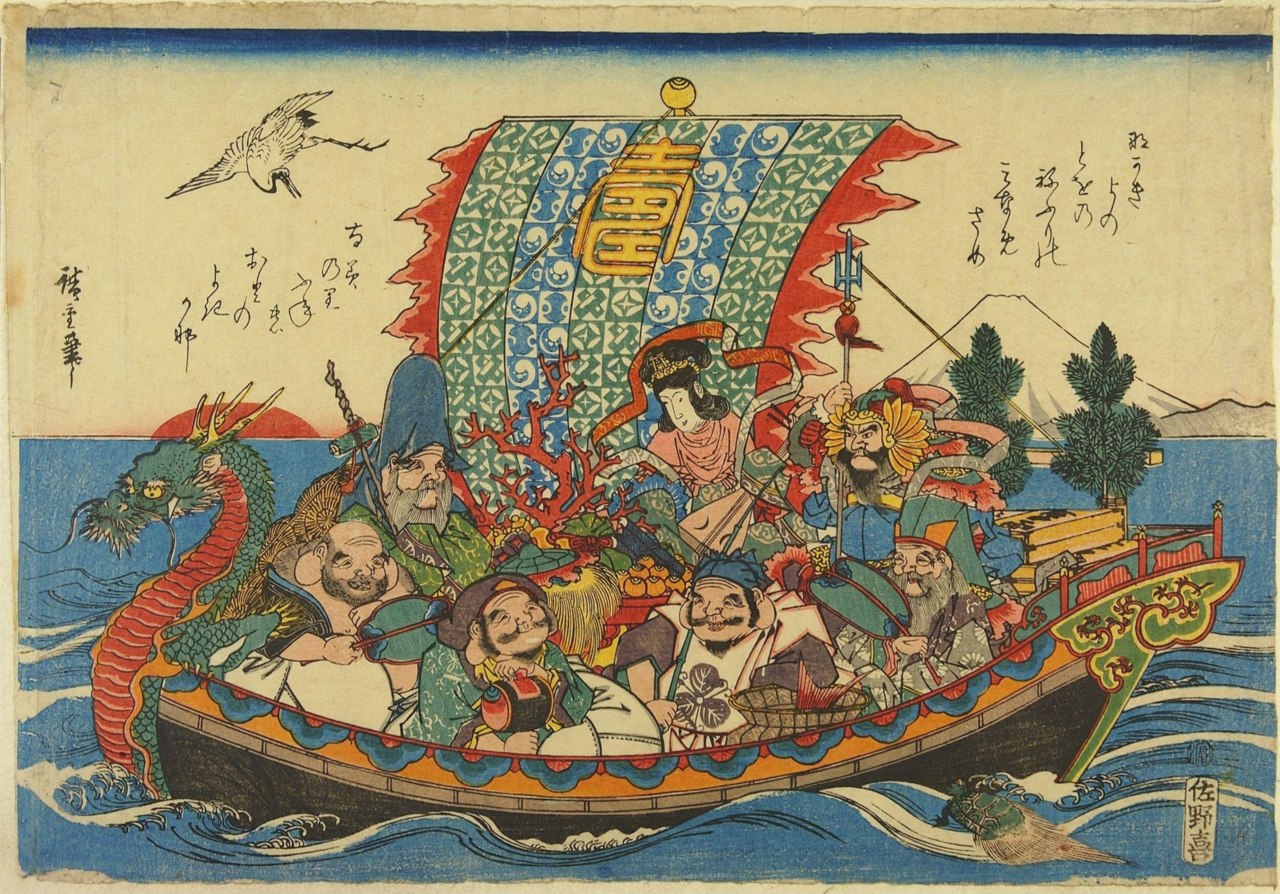
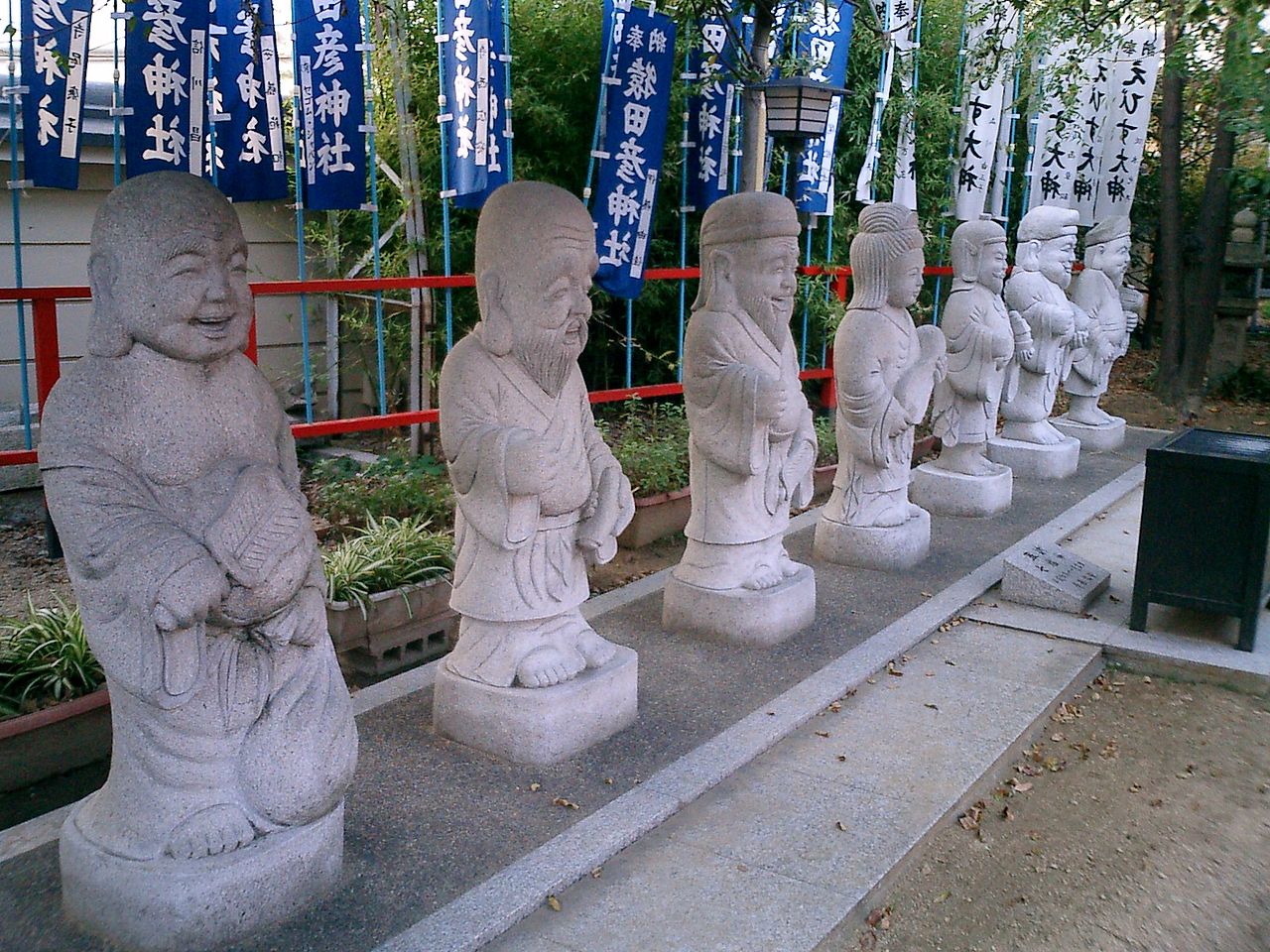

Members
- Ebisu — traditionally the patron of fishermen and merchants; he is frequently pictured holding a large cod or sea bass.
- Daikokuten (Daikoku) — a deity of wealth, trade and prosperity; Ebisu and Daikokuten are commonly paired and displayed together at small shops and stalls.
- Bishamonten — a god associated with warriors and protection in battle.
- Benzaiten (Benten-sama) — goddess of knowledge, the arts and beauty, especially music.
- Fukurokuju — linked to happiness, good fortune, and longevity.
- Hotei — the cheerful, rotund figure symbolizing abundance and good health.
- Jurōjin — a spirit representing long life and wisdom.
Historically, most of the Seven came into Japanese belief through cultural exchange with China, and some of those Chinese figures originally trace back to India. Ebisu is generally considered native to Japan. In some regional or artistic variations, the goddess Kichijōten appears alongside the group, occasionally taking the place of Jurōjin.
Iconography and customs
The seven deities are often shown together on the Takarabune (宝船), the "Treasure Ship." According to tradition, the gods ride this vessel into port at New Year to bestow gifts and blessings. Images of the Takarabune are commonly given to children as red envelopes or cards containing small monetary presents during the New Year season. Representations of the Seven Lucky Gods range from formal paintings and woodblock prints to playful modern caricatures and carved amulets used for good luck.
Questions and answers
Q: Who are the Seven Gods of Fortune?
A: The Seven Gods of Fortune, also known as the Seven Lucky Gods in English, refer to seven gods of good fortune in Japanese mythology and folklore.
Q: What is a netsuke carving?
A: A netsuke carving is a small sculpture or ornament that was traditionally used to secure items such as pouches and tobacco boxes from cords attached to kimono sashes.
Q: Which god is associated with wealth and commerce?
A: Daikokuten (Daikoku) is the god of wealth, commerce and trade. He is often paired with Ebisu, god of fishers or merchants, and represented as carvings or masks on the walls of small retail shops.
Q: Who is Benzaiten (Benten-sama)?
A: Benzaiten (Benten-sama) is the goddess of knowledge, art and beauty, especially music. She is one of the Seven Lucky Gods in Japanese mythology and folklore.
Q: What does Kichijōten represent?
A: Kichijōten represents happiness and sometimes replaces Jurōjin when depicted along with the seven traditional gods.
Q: What does Takarabune mean?
A: Takarabune means "Treasure Ship" in Japanese. It refers to a ship that carries all seven gods around town on New Year's Day to distribute gifts to worthy people.
Q: How do children receive gifts during New Year's Day?
A: During New Year's Day, children often receive red envelopes bearing the Takarabune which contain gifts of money inside them.
Related articles
Author
AlegsaOnline.com Shichi Fukujin: The Seven Gods of Fortune in Japanese myth Leandro Alegsa
URL: https://en.alegsaonline.com/art/89198
Sources
- 194.21.179.166 : "Vital flesh: the mysterious world of Pink Eiga" · web.archive.org