
Amniocentesis: prenatal diagnostic procedure
Invasive prenatal diagnostic test sampling amniotic fluid to analyze fetal cells and chemicals for chromosomal, genetic and some neural-tube defects; offered when risk is increased or screening is abnormal.
Overview
Amniocentesis is a diagnostic medical procedure performed during pregnancy to obtain a small sample of the amniotic fluid that surrounds the fetus. The fluid contains fetal cells and dissolved substances that can be examined in the laboratory to provide information about fetal chromosomes, single-gene disorders, certain metabolic conditions and biochemical markers. Because it is invasive, amniocentesis is used primarily to confirm suspected conditions rather than for routine screening.
Image gallery
2 Images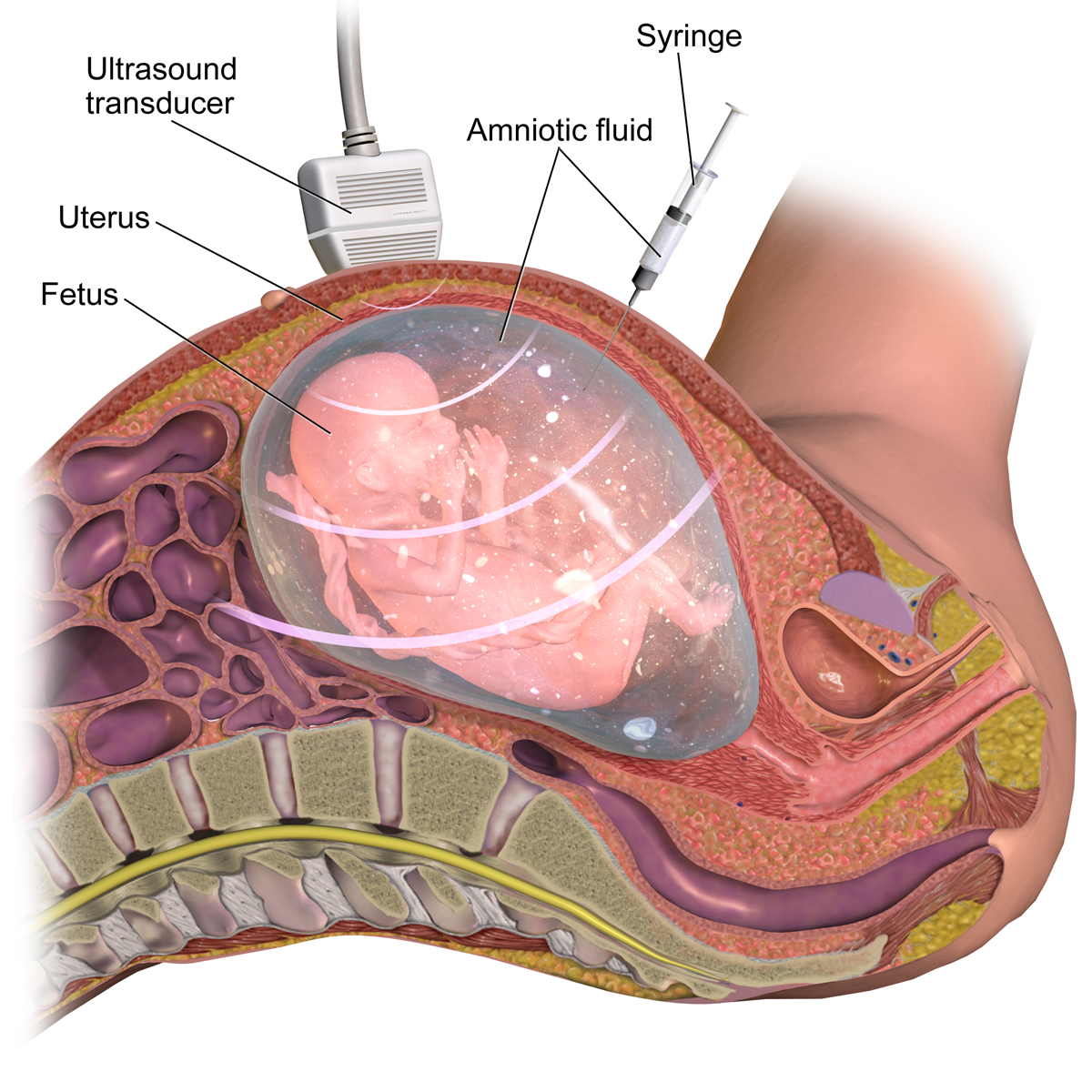

Indications
Common reasons to offer amniocentesis include abnormal results from noninvasive screening tests (such as serum screening or cell‑free DNA), a known family history of a genetic disorder, advanced maternal age, previous pregnancy with a chromosomal abnormality, or suspected neural‑tube defects based on ultrasound or serum markers. The decision to proceed is individualized and usually follows genetic counselling.
Timing and technique
Amniocentesis is most often performed in the second trimester, typically after about 15 weeks of gestation, when there is an adequate volume of amniotic fluid and fetal cells. Under continuous ultrasound guidance, a thin, sterile needle is passed through the maternal abdominal wall and uterine wall into the amniotic sac. A small volume of fluid is withdrawn and sent to the laboratory. Ultrasound monitoring helps minimize the risk of injury to the fetus and locate a safe needle path.
Laboratory tests and what they detect
Samples can be used for karyotyping or chromosomal microarray to detect aneuploidies (for example trisomy 21) and structural chromosomal changes. Targeted molecular testing can diagnose single‑gene disorders when the familial mutation is known. Measurement of alpha‑fetoprotein in the fluid can assist in detecting open neural‑tube defects. Microbiological and metabolic studies are possible in specific clinical contexts. Results may require days to a few weeks depending on the test.
Risks and limitations
Amniocentesis is associated with a small increased risk of pregnancy loss, along with possible maternal discomfort, local bleeding, leakage of fluid or infection. The exact risk varies with operator experience and timing. The procedure does not detect all congenital anomalies: many structural or developmental problems visible on ultrasound or that appear later in life are not identified by fluid testing.
After the procedure and interpretation
Most people can resume normal activities within a day, although providers often recommend avoiding strenuous exertion for a short period. Abnormal results are typically followed by genetic counselling to explain implications, options and further testing. A normal result reduces the likelihood of the tested conditions but cannot guarantee the absence of all anomalies.
Alternatives and decision factors
Noninvasive alternatives include maternal serum screening and cell‑free DNA testing (NIPT), which estimate risk but do not provide a definitive diagnosis. Chorionic villus sampling (CVS) samples placental tissue and can be performed earlier in pregnancy. Choice among options depends on timing, the conditions under investigation, personal values and the risks one is willing to accept.
Counselling and ethical considerations
Pre‑test counselling should cover the purpose of testing, possible results, limitations, and the potential emotional and reproductive implications. Decisions about testing and subsequent options are personal and may involve cultural, ethical and religious considerations. Clinical teams aim to provide balanced information and psychosocial support.
Further reading and resources
- Clinical overview and indications: Clinical overview
- Procedure details and preparation: What to expect
- Laboratory testing options explained: Testing options
- Risks, safety and counselling guidance: Risk information
- Comparing amniocentesis with NIPT and CVS: Comparing tests
- Genetic counselling resources: Counselling resources
- Patient information leaflets and service contacts: Patient information
This article provides a general summary. Local practice, laboratory capabilities and guidelines vary, so clinicians and patients should use current regional recommendations and specialist advice when considering amniocentesis.
Related articles
Author
AlegsaOnline.com Amniocentesis: prenatal diagnostic procedure Leandro Alegsa
URL: https://en.alegsaonline.com/art/3605