
Amoebiasis (Amebiasis): intestinal infection caused by Entamoeba
Amoebiasis is an intestinal infection typically caused by Entamoeba histolytica. It ranges from silent carriage to severe colitis or liver abscess. Transmission is fecal–oral; prevention depends on sanitation and hygiene.
Overview
Amoebiasis, also called amebiasis or entamoebiasis, is an infection of the gut produced by single-celled amoebas of the Entamoeba group. The species most commonly associated with invasive disease is Entamoeba histolytica. Transmission occurs by ingestion of the hardy cyst stage, most often via contaminated food or water when people drink or eat material containing the parasite. Many infected persons carry the organism in the large intestine without symptoms, but others develop intestinal or extraintestinal illness.
Image gallery
7 Images



Clinical features and complications
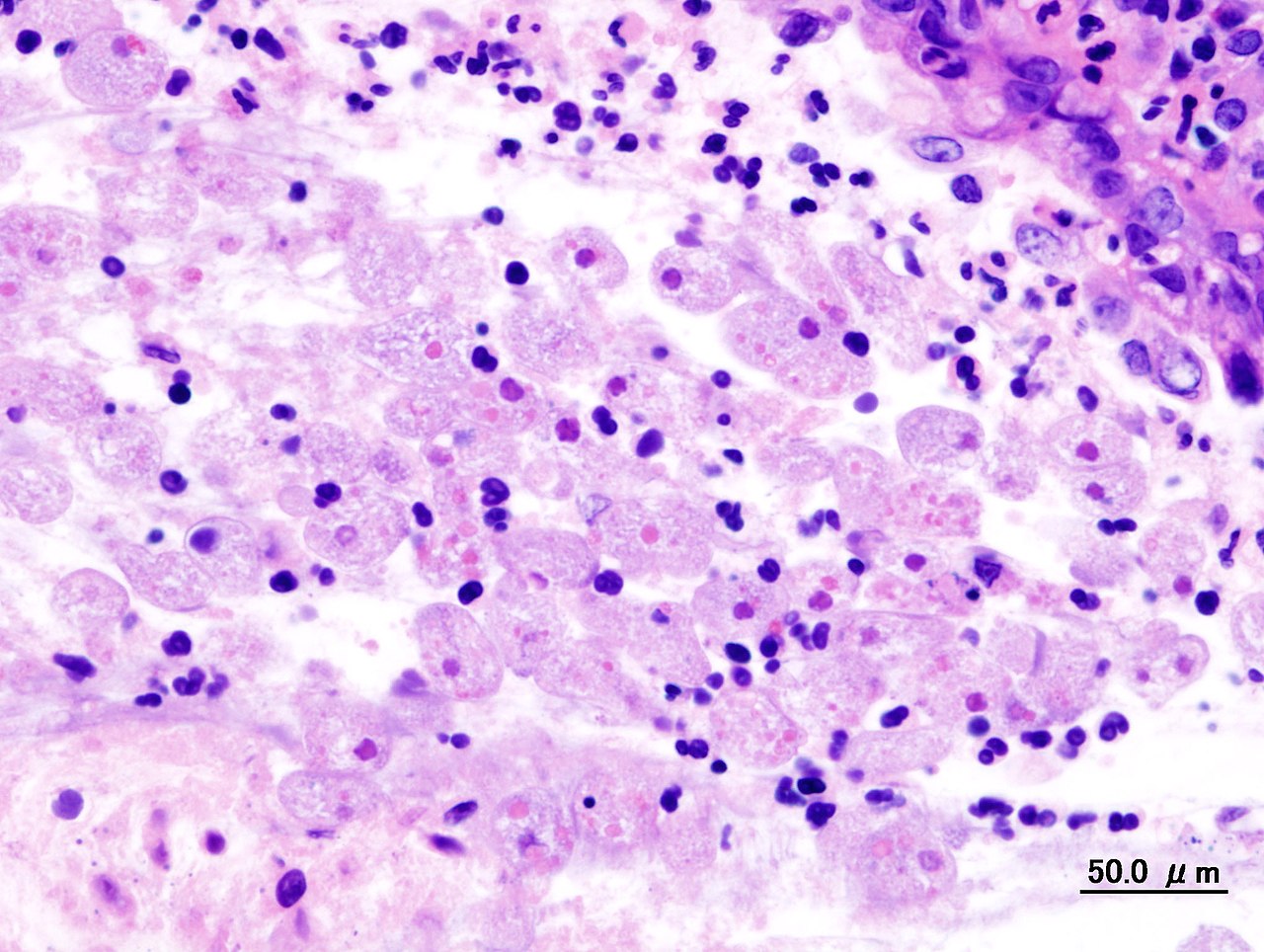
Symptoms vary widely. Mild cases may cause loose stools or cramping, while more severe presentations include abdominal pain, mucus or blood in the stool, and tenesmus. Advanced intestinal disease can present as severe colitis with areas of tissue death (ulceration) that may lead to perforation and peritonitis. The parasite can also spread through the bloodstream to produce an amebic liver abscess, which causes fever, right upper-quadrant pain and systemic symptoms. Chronic blood loss from invasive lesions may result in anaemia. Many infections, however, remain asymptomatic and serve as reservoirs for transmission.
Life cycle, diagnosis and important distinctions
The parasite alternates between an infective cyst and an active trophozoite in the gut. Diagnosis is commonly by stool microscopy, antigen tests or molecular assays; imaging and serology are used when a liver abscess is suspected. It is important to distinguish Entamoeba histolytica from nonpathogenic relatives (for example E. dispar), which may appear similar on routine microscopy but do not usually invade tissues. Because laboratory methods differ in sensitivity, clinical correlation is essential.
Treatment and prevention
Therapy usually requires two complementary approaches: a drug that eliminates organisms living in the intestinal wall or organs (tissue-active agent) and a separate luminal agent that clears cysts from the intestinal lumen. Commonly used tissue-active drugs include nitroimidazoles, while luminal amoebicides such as paromomycin or iodoquinol are given to eradicate carriage. Preventive measures focus on improving sanitation, safe drinking water, hand hygiene and careful food handling. Travelers to endemic areas are advised to avoid untreated water and high-risk foods to reduce the chance of acquiring infection.
- High-risk regions include parts of Latin America (for example Central America and western South America), South Asia, and western and southern Africa, where transmission is linked to limited sanitation.
- Because many cases are asymptomatic, public-health control emphasizes hygiene, water treatment and detection of carriers.
History and public-health importance
Amoebic infections have been recognized for centuries; the relationship between a microscopic parasite and invasive intestinal disease was defined after the development of reliable microscopic and later immunological and molecular tests. Today amoebiasis remains a significant public-health issue in areas with inadequate sanitation and is an important differential diagnosis for persistent or bloody diarrhoea in returned travelers. Distinguishing amoebiasis from bacterial or viral causes of traveller's diarrhoea guides appropriate antimicrobial use and public-health responses.
For clinical guidance, laboratory testing and prevention strategies consult local public-health resources or specialist infectious-disease references. Further reading and resources are available from diagnostic and health agencies: see materials on intestinal infection and parasitology, and overview pages for clinical presentation and management (parasite biology, E. histolytica, waterborne transmission, colonic carriage, abdominal pain, bloody diarrhoea, colitis, ulceration, peritonitis, cyst forms, sanitation, Central America, western South America, South Asia, western and southern Africa, and liver involvement).
Questions and answers
Q: What is amoebiasis?
A: Amoebiasis, also known as amebiasis or entamoebiasis, is an intestinal infection caused by amoebas of the Entamoeba group.
Q: What causes the infection?
A: The infection is usually caused by Entamoeba histolytica and is normally got when someone drinks water with the parasite in it.
Q: What are the symptoms of amoebiasis?
A: Symptoms vary from serious to none at all. There may be abdominal pain, mild diarrhoea, bloody diarrhoea or severe colitis with tissue death and perforation. This last complication may cause peritonitis. People affected may develop anaemia due to loss of blood.
Q: How is amoebiasis transmitted?
A: Amoebiasis is usually transmitted by water contaminated with faeces. It can also be got indirectly by contact with dirty hands or objects. Infection is spread by ingesting the cyst form of the parasite which can be found in faeces.
Q: Where does amoebic dysentery occur most often?
A: Amoebic dysentery occurs most often in parts of the world with poor sanitation such as México, Central America, western South America, South Asia and western and southern Africa.
Q: Is traveller's diarrhoea usually caused by amoebic dysentery?
A: No, most traveller's diarrhoea is bacterial or viral in origin rather than being caused by ameobic dysentery.
Q: What type of drugs are used to treat an E histolytica infection?
A: Anti-amebic drugs known as ameobicides are used to treat an E histolytica infection since it can occur both in a person's intestine and tissue in their intestine/liver requiring two different classes of drugs for each location respectively
Related articles
Author
AlegsaOnline.com Amoebiasis (Amebiasis): intestinal infection caused by Entamoeba Leandro Alegsa
URL: https://en.alegsaonline.com/art/3610
Sources
- ncbi.nlm.nih.gov : "Entamoebiasis - MeSH - NCBI"
- mesh.kib.ki.se : "Entamoebiasis"