
Framlingham Castle
A ruined medieval curtain-walled castle in Framlingham, Suffolk, England. Built by the Bigod earls, later held by the Dukes of Norfolk; notable for its strong curtain walls, 1553 role in Mary’s accession and Anne Mowbray’s birth.
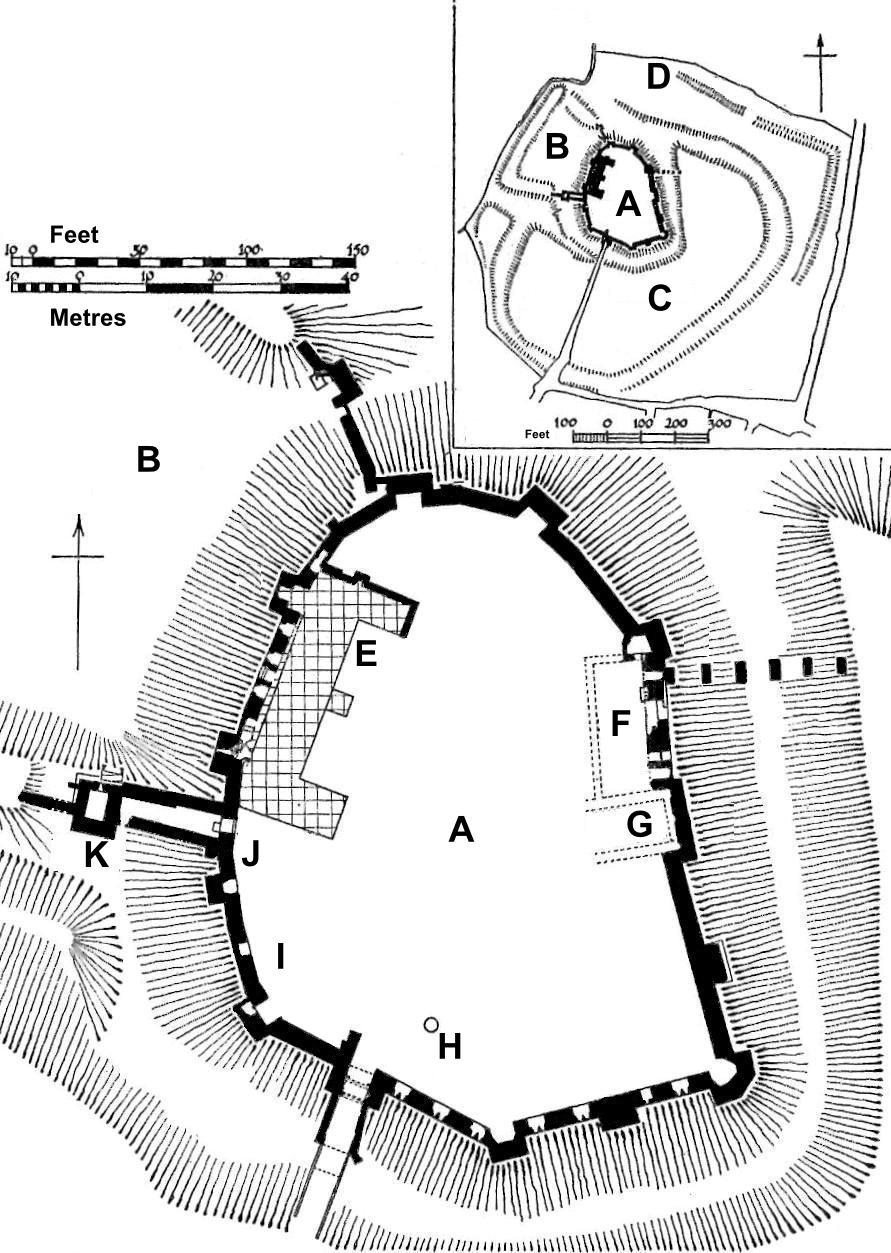
Framlingham Castle is a prominent medieval ruin in the market town of Framlingham, in the county of Suffolk, England. Unlike many Norman fortresses it is known for a powerful curtain wall enclosing the site rather than for a single central keep. Over centuries it served as a fortified residence for leading noble families and played a visible role in national politics.
Image gallery
10 Images




Origins and historical development
The castle originated in the high medieval period when local earls and magnates converted earlier timber strongholds into stone fortifications. The Bigod family, later succeeded by the Mowbrays and the house that became the Dukes of Norfolk, expanded the walls and towers to create a defended courtyard-palace. It remained a noble seat through the later Middle Ages and early modern era.
Architecture and layout
Framlingham is often cited as an example of a curtain-walled castle: a continuous outer wall punctuated by mural towers, enclosing domestic ranges and a great hall. Key features include:
- Long stretches of high curtain wall providing defense and enclosure.
- Multiple projecting towers serving as strongpoints and living space.
- Absence of a dominant central keep — emphasis on perimeter strength.
- Inner buildings once used as private apartments and service areas.
Notable events and people
The castle is associated with a number of historically significant episodes. In 1553 it was a gathering place for supporters of Mary Tudor when she moved to secure the crown. It is also the birthplace of Anne Mowbray in 1472, an example of its use as a noble residence. Over time the site reflected shifts in ownership, status and military technology.
Present day and significance
Today Framlingham survives as a striking ruin and a heritage attraction, preserved for its architectural interest and its links to regional and national history. Visitors encounter the long curtain walls, reconstructed sections, and the earthworks of earlier defenses. The castle is studied both for its distinctive plan and for what it reveals about medieval lordship and household life.
For further reading and visitor information, follow local and national heritage resources or consult curated online entries and guides. Framlingham remains an instructive example of how medieval power was expressed through architecture and landscape.
Related articles
Author
AlegsaOnline.com Framlingham Castle Leandro Alegsa
URL: https://en.alegsaonline.com/art/35988