
Florence Cathedral (Santa Maria del Fiore): History, Architecture, and Significance
Santa Maria del Fiore, the cathedral of Florence, is famed for Brunelleschi’s brick dome, its polychrome marble exterior, and a layered history from medieval origins to Renaissance innovation.
Overview
The cathedral commonly known as Florence Cathedral and formally called Santa Maria del Fiore is the principal church of Florence in Italy. It is celebrated as a landmark of Italian Gothic form refined by Renaissance engineering. The complex that defines the piazza includes the cathedral building, Giotto's bell tower and the Baptistery; together they anchor Florence's historic center and attract scholars and visitors for both religious and architectural reasons.
Image gallery
10 Images


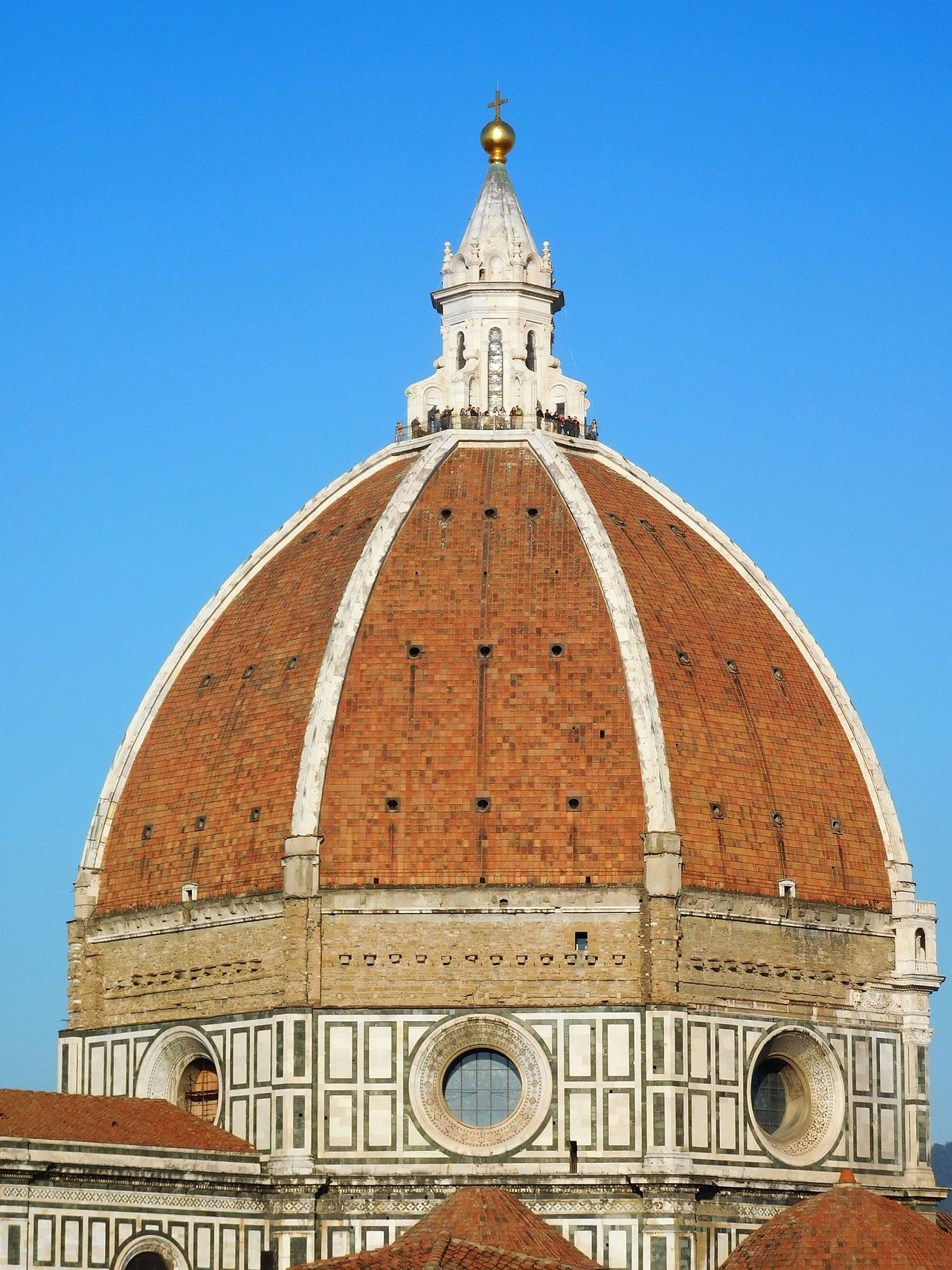
Architecture and main features
The cathedral is known for its striking exterior of polychrome stone and its monumental dome. The façade and walls are faced with alternating bands of white, white, dark green and green marble with accents of pink and other hues, assembled as decorative panels that give the building its vivid appearance. The nave, aisles and chapels follow a traditional basilica plan; the interior is comparatively austere, focusing attention on the dome overhead.
The dome and Brunelleschi's innovations
The dome, engineered by Filippo Brunelleschi, is the cathedral's defining achievement. Constructed of brick with a system of stone ribs, it adopts an octagonal plan and a double-shell form that allowed a very large, self-supporting vault to be built without the full timber centering typically required for such work. Brunelleschi also devised special hoisting machines and construction sequences to lift materials and place the courses of brick in the complex herringbone patterns seen in the structure. The dome remains one of the most important examples of early Renaissance structural daring and problem-solving.
Origins and construction history
Design of the church began in the late 13th century under the architect Arnolfo di Cambio; the site’s foundation and early phases date from that period. Over more than a century the work involved successive generations of artists and builders. The bell tower, now a separate visual landmark, was begun by Giotto and continued by others after his death. Decorative work on the façade was completed much later, in the 19th century, when a neo-Gothic surface treatment replaced earlier plans that had remained unfinished for centuries.
Components and notable elements
- Dome: the masonry dome with inner and outer shells and visible ribs.
- Campanile: Giotto's bell tower, a vertical counterpoint to the dome.
- Exterior facing: multicolored marble arranged in decorative panels.
- Baptistery: the adjacent octagonal baptistery with famed bronze doors.
Importance and legacy
Santa Maria del Fiore stands at the crossroads of medieval guild patronage, civic pride and Renaissance science. Its dome demonstrated that large-scale masonry could be raised with new mechanical and geometric methods, influencing architects across Europe. The cathedral is both a working religious site and a repository of art and engineering history, studied by historians of architecture, restoration specialists and visitors interested in the transition from Gothic forms to Renaissance rationalism.
Visiting and context
Today the cathedral continues to function as an active place of worship and as a major cultural monument. Conservation and scholarly study are ongoing, addressing both the building fabric and the many artworks associated with the complex. For further reading or visitor information, see resources tied to the cathedral and the city: many guides and institutions maintain detailed material about Santa Maria del Fiore and its role within Florence's urban and artistic landscape.
For quick reference: the church is a monumental basilica whose exterior panels, decorative scheme and structural innovations make it a focal point of Italian art history. Its multicolored surface and engineering solutions continue to be referenced in studies of medieval and Renaissance construction methods.
Related articles
Author
AlegsaOnline.com Florence Cathedral (Santa Maria del Fiore): History, Architecture, and Significance Leandro Alegsa
URL: https://en.alegsaonline.com/art/35183
Sources
- news.discovery.com : "Michelangelo's David as It Was Meant to Be Seen : Discovery News"