
Frieze (architectural element)
A frieze is the central horizontal band of an entablature in classical architecture, often plain or decorated with sculpted reliefs; it has distinct forms, history, and functions in building ornamentation.
Overview
In classical architecture the frieze is the broad, horizontal band that occupies the middle part of an entablature. It runs above the architrave and below the cornice and can be either unadorned or richly carved. Positioned at eye level on a building’s façade, the frieze is both a visual focal point and a vehicle for narrative or symbolic decoration.
Image gallery
10 Images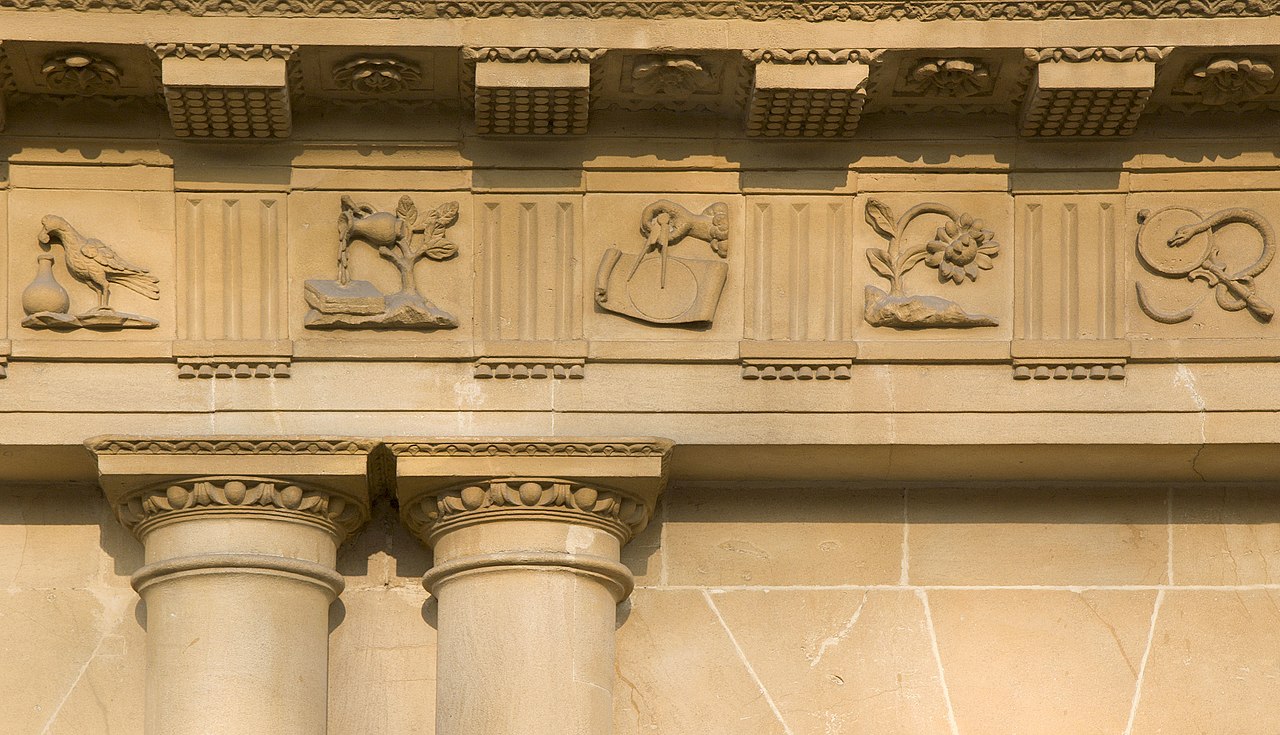


Characteristics and parts
Friezes vary in height and proportion depending on the order and the scale of the building. When decorated, they usually take the form of low-relief sculpture that may depict continuous scenes, repeated motifs, or inscriptions. The treatment of the frieze differs among orders: for example, the Ionic and Corinthian orders commonly allow figurative bas-reliefs, while the Doric order traditionally uses triglyphs and metopes instead.
History and development
Friezes originated in ancient Greek architecture and were later adapted by the Romans and revived in Renaissance and Neoclassical design. Over centuries the frieze evolved from structural ornamentation—emphasizing rhythm and order—to a canvas for historical, mythological, or political storytelling, especially on temples, public buildings, and monuments.
Uses, motifs and examples
Decorative themes include mythological narratives, battle scenes, processions, floral patterns, and geometric repeats. Beyond stone carving, friezes appear in painted, stucco, mosaic, and cast materials on interiors and exteriors. Notable examples are temple friezes from ancient Greece and sculpted bands on civic buildings in later European architecture.
Types and distinctions
- Plain frieze: an undecorated band emphasizing proportion.
- Relief frieze: carved with bas-reliefs or figures.
- Triglyph-and-metope system: characteristic of the Doric order.
The frieze remains an important element in the language of classical design, able to communicate identity, status, and narrative while linking structural parts of an entablature into a cohesive whole.
Related articles
Author
AlegsaOnline.com Frieze (architectural element) Leandro Alegsa
URL: https://en.alegsaonline.com/art/36748