
Giotto di Bondone: Florentine painter and architect of the early Renaissance
Giotto (c.1267–1337) was an Italian painter and architect from Florence whose naturalistic approach to fresco and figure painting helped lay foundations for the Italian Renaissance.
Overview
Giotto di Bondone (c.1267–1337), commonly known simply as Giotto, is widely regarded as a formative figure in Italian art who moved painting away from the stylized conventions of medieval Byzantine imagery toward a more naturalistic and expressive approach. He worked as both a painter and, later in his career, as an architect. Born and active in and around Florence, his career and reputation have been linked by scholars to the broad cultural changes later labeled the Italian Renaissance.
Image gallery
10 Images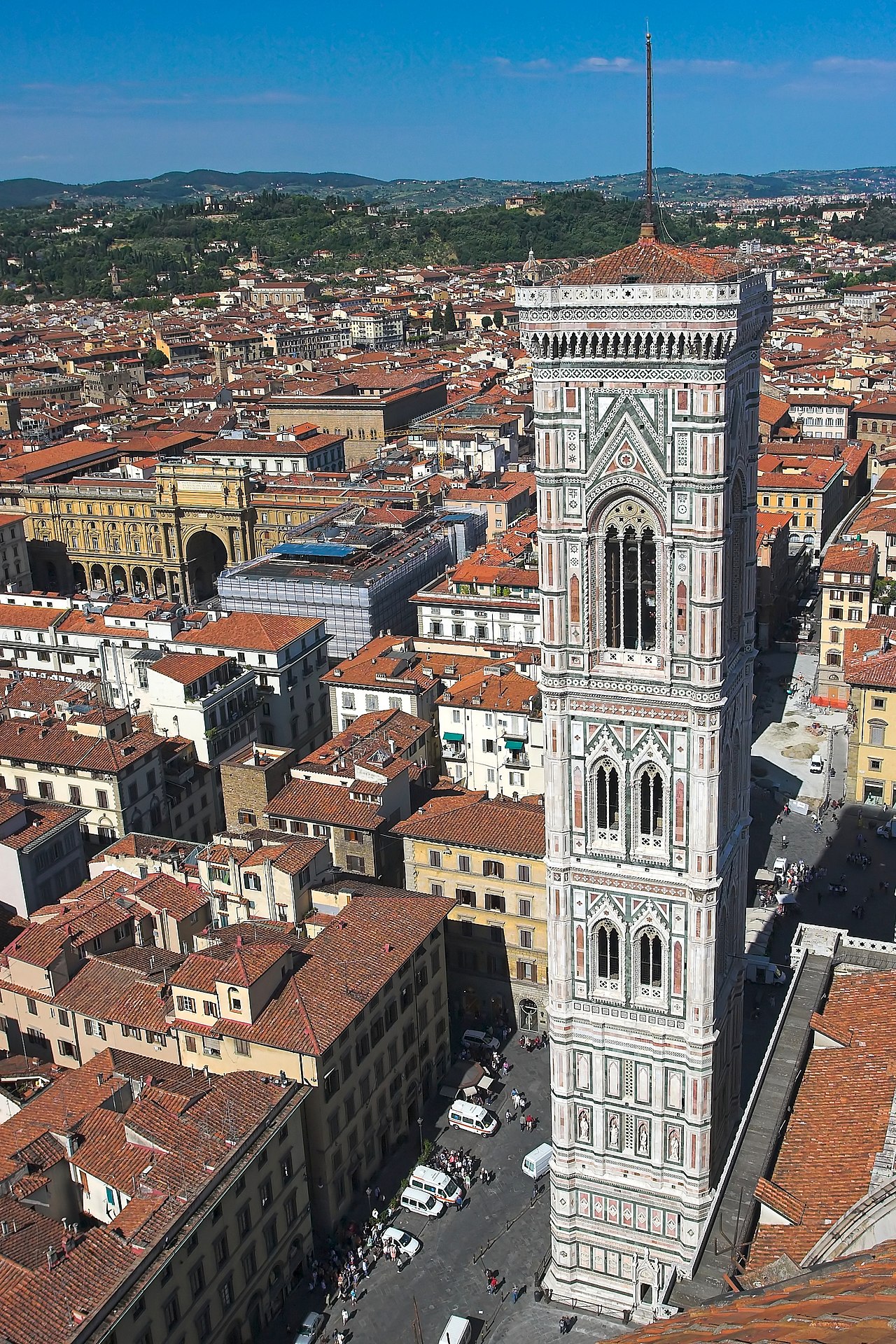


Biography and documentary record
Surviving documents provide only fragmentary information about Giotto's life. A near-contemporary chronicler, Giovanni Villani, praised his ability to render figures with lifelike presence and recorded civic recognition, including payments and a salary for services. Later accounts, notably the Lives of the Artists by Giorgio Vasari, expanded these sketches into narratives that helped shape the modern image of Giotto as a decisive innovator, though Vasari wrote more than two centuries after Giotto's death and mixed fact with interpretation.
Style and innovations
Giotto's paintings are widely admired for their clarity, emotional immediacy and a new concern for volume and space. He painted figures that suggested weight and occupied coherent pictorial space, using modelling and foreshortening to imply three-dimensionality. This emphasis on observation and human behaviour created scenes in which gesture, facial expression and interpersonal relationships carried narrative meaning. Later writers compared the trajectory from Giotto to later masters such as Leonardo da Vinci, a lineage that emphasizes the gradual development of naturalism across centuries.
Major works: the Scrovegni (Arena) Chapel
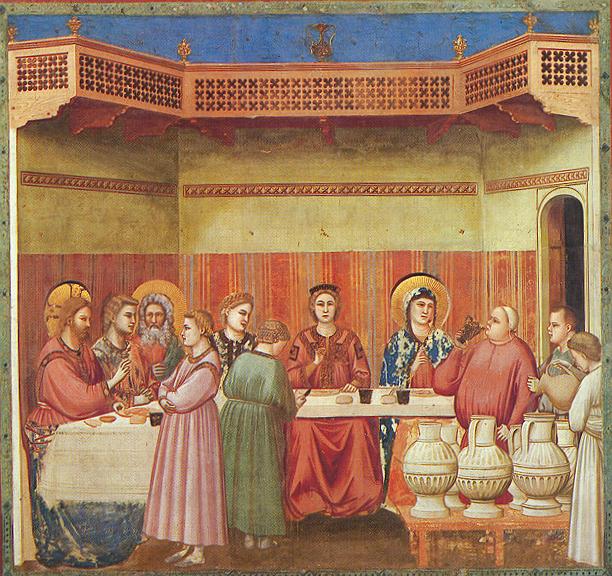
Giotto's most celebrated project is the fresco cycle in the Scrovegni Chapel in Padua, completed around 1305. The building is often called the Arena Chapel because it was built on the site of an ancient Roman arena. The frescoes—executed using the fresco technique—offer a sequence of scenes from the life of the Virgin and the life of Christ, arranged to guide devotional reflection. The cycle is praised for its narrative clarity, economy of means and psychological penetration, qualities associated with the Early Renaissance ideal.
Technique and workshop practice
Giotto worked within the conventions of his time while also testing new approaches. Fresco painting requires rapid execution on wet plaster, which shapes both composition and technique. Surviving panels and documentary references indicate that a workshop produced many of the works attributed to him; assistants and pupils carried out commissions under his direction. This collaborative model complicates strict attributions and helps explain stylistic variation among works linked to his name.
Architecture and public commissions
Late in life Giotto was recorded as undertaking architectural responsibilities. Civic records show that in 1334 he was chosen by Florence to design elements of the cathedral complex, notably the campanile associated with the Florence Cathedral. Whether he executed all details personally is uncertain, but the appointment attests to his reputation and to the mix of artistic and engineering skills expected of major masters of the period.
Attribution, contested works and Assisi
Attributing medieval fresco cycles is often difficult. Treatments of certain sites, most famously the frescoes in Assisi, have been the subject of prolonged scholarly debate: some art historians assign portions to Giotto himself, while others argue for later hands or workshop participation. Conservation work, stylistic comparison and documentary study continue to refine understanding, but some questions remain open and should be approached cautiously when assigning authorship (Assisi is one contested example).
Reception and legacy
Giotto's influence was felt across Italy and beyond. By privileging narrative coherence, emotional specificity and spatial logic, his manner offered a model for painters who gradually developed the representational resources of the Renaissance. Although only a limited number of securely documented works survive, his name became shorthand for a shift toward observation of the natural world and human psychology. Modern scholarship balances admiration for his achievements with careful inquiry into the documentary and material evidence.
Conservation and study
Giotto's frescoes have been the subject of repeated conservation campaigns intended to stabilize painted plaster, remove later overpainting and interpret original pigments and techniques. Scientific analysis—ranging from pigment studies to infrared imaging—has contributed to debates about chronology and authorship. Visitors to major sites encounter both the visual power of the original paintings and the complex history of their preservation and display.
Further reading and resources
For introductory summaries and collection records, consult museum and scholarly catalogues as well as publications that gather primary documents and conservation reports. Many institution pages and bibliographies collect up-to-date research and translations; see for example general guides and online catalogues for further reading.
- Confirmed facts: documented payments and civic commissions in Florence, and authorship of the Scrovegni Chapel cycle.
- Open questions: precise details of Giotto's early biography, the full list of works by his hand, and attribution of some frescoes remain debated.
Giotto remains a central figure in the history of Western art: a pivotal practitioner whose approach to representation helped set new standards for narrative painting and whose documented civic responsibilities show the varied role of artists in late medieval Italian society.
References to biographical chronicles, contemporary records and later histories provide starting points for more detailed study; for the canonical narrative of Giotto's life and reputation see the work of Villani and the later account in Vasari's writings, whose influence on art history has been both formative and contested.
Summary: Giotto's combination of naturalistic observation, narrative skill and public commissions anchored a transition in visual culture that contributed to the emergence of Renaissance artistic values.
Key names and places mentioned above are linked for further consultation: painter, architect, Florence, Italian Renaissance, salary, Giorgio Vasari, Leonardo da Vinci, Cimabue, Duccio, Padua, arena, fresco, life of Christ, Early Renaissance, Florence Cathedral, Assisi.
Questions and answers
Q: Who was Giotto di Bondone?
A: Giotto di Bondone was an Italian painter and architect from Florence who is generally thought of as the first in a line of great artists of the Italian Renaissance.
Q: What did Giovanni Villani say about Giotto?
A: Giovanni Villani, who lived at the same time as Giotto, wrote that he was the king of painters, who drew all his figures as if they were alive.
Q: How did Giorgio Vasari describe Giotto's work?
A: Giorgio Vasari said that Giotto changed painting from the Byzantine style of other artists of his day, and brought to life the great art of painting as it was made by later Renaissance painters like Leonardo da Vinci. This was because Giotto drew his figures from life, rather than copying them from old well-known pictures in the way that Byzantine artists like Cimabue and Duccio did.
Q: What is considered to be one of Giotto's greatest works?
A: One of Giotto's greatest works is considered to be the decoration of the Scrovegni Chapel in Padua, finished around 1305. The building is sometimes called the "Arena Chapel" because it is on the site of an Ancient Roman arena. This fresco series shows the life of the Virgin and Christ. It is thought to be one of the greatest masterpieces of Early Renaissance art.
Q: How much do we know for certain about Giotto's life?
A: Only two things are known for certain about Giotto's life - it is known that in 1334 he was chosen by Florence's town council to design a bell tower next to Florence Cathedral which was being built at that time; and it is also known for certain that he painted frescos in what became known as Arena Chapel.
Q: Was Giorgio Vasari writing close to when Giotto died?
A: No, Giorgio Vasari wrote more than 200 years afterGiottodied so some stories may not be accurate or true.
Related articles
Author
AlegsaOnline.com Giotto di Bondone: Florentine painter and architect of the early Renaissance Leandro Alegsa
URL: https://en.alegsaonline.com/art/119843
Sources
- int.iol.co.za : IOL,September 22 2000
- int.iol.co.za : Franklin Toker