
First Triumvirate (Julius Caesar, Pompey, Crassus)
Informal political alliance formed in 60 BC between Julius Caesar, Pompey, and Marcus Crassus that reshaped late Republican Roman politics and contributed to the collapse of the Republic.
Overview
The First Triumvirate is the modern name given by historians to the informal political alliance that bound Gaius Julius Caesar, Gnaeus Pompeius Magnus (Pompey) and Marcus Licinius Crassus in the late Roman Republic. It began around 60 BC as a private agreement to advance each man's interests within a fractious Senate and an unstable political culture. The arrangement was not an official magistracy but a pragmatic coalition built on mutual benefit and personal influence (scholarly overview).
Image gallery
5 Images


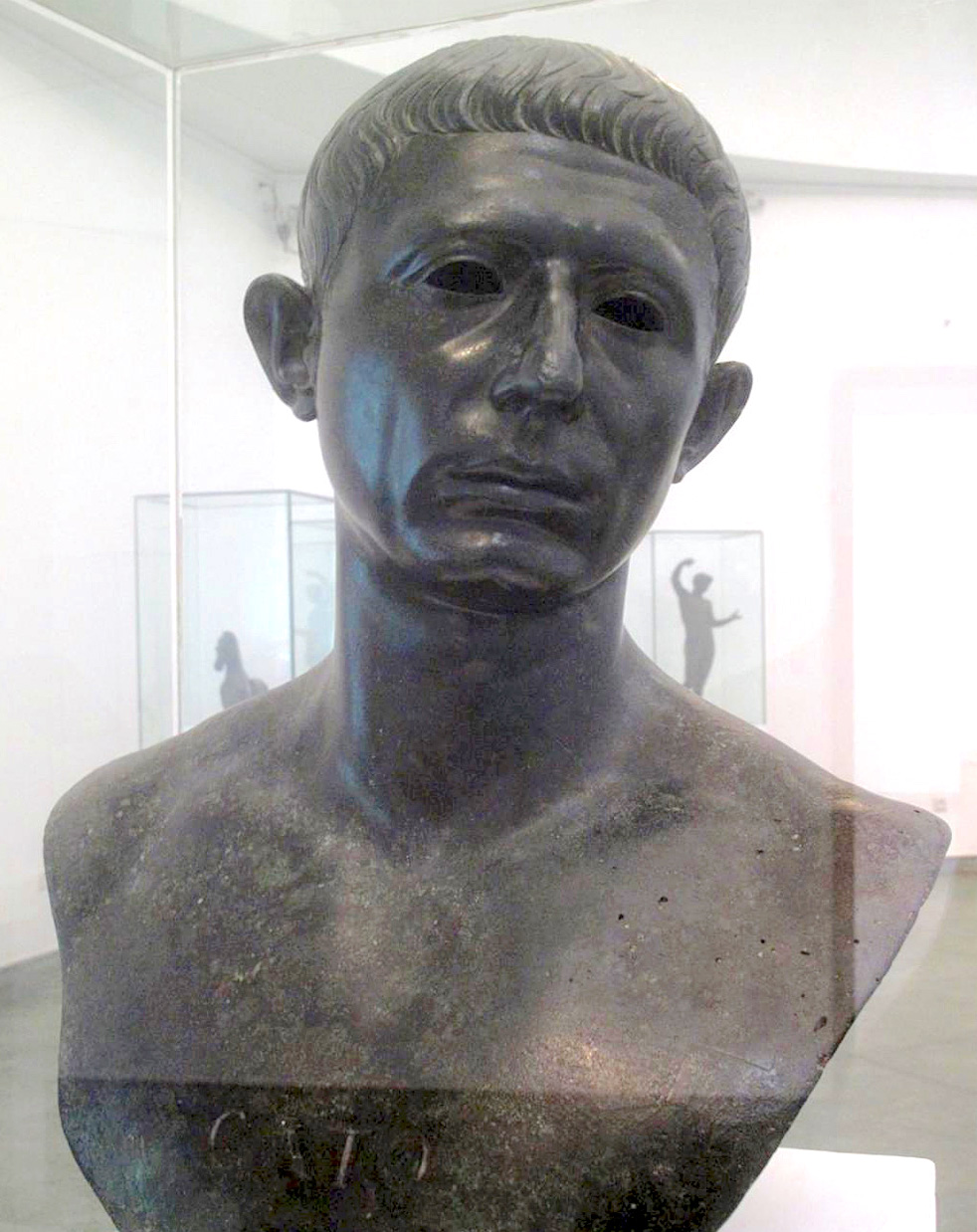
Members and motives
The three principals brought complementary resources to the partnership. Caesar supplied rhetorical skill, popular support among urban and rural voters, and legislative energy; Pompey contributed military prestige and veteran loyalty after his eastern commands; and Crassus provided extraordinary wealth and financial networks. Each sought to secure commands, legislation, and prestige that the senatorial majority was unwilling or unable to grant alone. The coalition therefore combined money, men, and political machinery in a way that sidestepped traditional Republican checks (political context).
How it worked
The Triumvirate operated through backroom agreements, reciprocal endorsements in the assemblies and the Senate, and personal guarantees. Caesar benefited from Crassus's ability to ease his debts and from Pompey's military influence; Pompey secured ratification of land settlements for his veterans and support for his eastern settlements; Crassus hoped to obtain greater political weight and military commands to match his resources. Pompey's marriage to Caesar's daughter Julia tied two partners by kinship, while personal financial assurances and client networks reinforced the bond. The arrangement was informal rather than legally codified, a key distinction from later, official triumviral postings (procedural note).
Key developments and collapse
Caesar used the alliance to obtain the consulship of 59 BC and, subsequently, an extended provincial command in Gaul that produced both military glory and political leverage. The alliance was strained by a sequence of personal setbacks: Julia's death in 54 BC removed the family tie between Pompey and Caesar, and Crassus's catastrophic defeat and death at the Battle of Carrhae in 53 BC broke the balance of power. After Crassus's death the informal tripartite arrangement unraveled; Pompey grew closer to the senatorial elite while Caesar's growing authority in Gaul made confrontation more likely. These shifts set the stage for civil war between Caesar and Pompey (Pompey) and recall older rivalries that had once been patched over, such as tensions dating back to conflicts like the Third Servile War (historical background).
Consequences and legacy
Once relations collapsed, Rome moved rapidly from political rivalry to armed confrontation. Caesar crossed the Rubicon in 49 BC, precipitating a civil war that culminated in decisive battles such as Pharsalus in 48 BC, where Caesar defeated Pompey on the field. The outcome concentrated power in Caesar's hands and hastened the end of the Republican system; Caesar assumed extraordinary magistracies and later the title of dictator before his assassination in 44 BC. The First Triumvirate is therefore often cited as an early, private mechanism through which ambitious men could override constitutional norms and transform Roman politics (Battle of Pharsalus) (dictatorship).
Notable characteristics and distinctions
- Informal nature: Unlike later official triumviral commissions, the First Triumvirate was a personal pact, not a legal office.
- Practical goals: It prioritized immediate political advantage—commands, land laws, and financial arrangements—over ideological unity.
- Impact on institutions: By using private networks to achieve public ends, the alliance weakened senatorial authority and accelerated institutional change.
For further summaries and bibliographic entry points, consult introductions and source collections on late Republican politics and biographies of the three principals (reading) (context).
Related articles
Author
AlegsaOnline.com First Triumvirate (Julius Caesar, Pompey, Crassus) Leandro Alegsa
URL: https://en.alegsaonline.com/art/34597