
Finite Element Method: Principles, Components, Applications and Practical Guidance
Overview of the finite element method (FEM): how it works, main components, historical development, typical applications, common pitfalls, and practical guidance for validation and modeling.
Overview
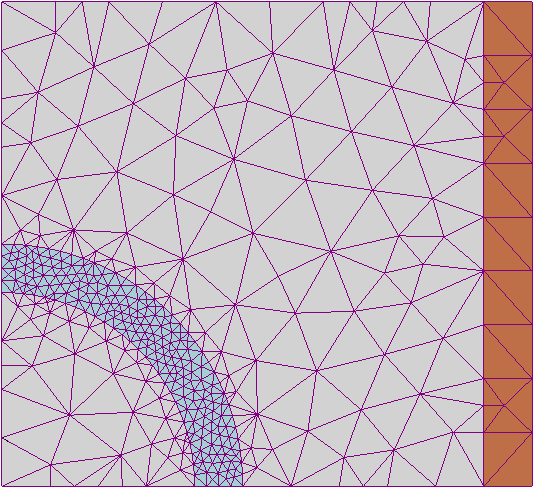
The finite element method (FEM) is a numerical technique for finding approximate solutions to boundary value problems described by differential equations. FEM converts a continuous domain into a discrete model made of small, simple pieces called elements. Within each element the unknown field (displacement, temperature, pressure, etc.) is approximated by basis functions. The global approximate solution is built by assembling element contributions and enforcing boundary conditions, then solving the resulting algebraic system.
Image gallery
7 Images



Key components and workflow
A typical FEM analysis follows several recognizable steps. First, the physical domain is discretized into a mesh of elements (triangles, quadrilaterals, tetrahedra, hexahedra and others). Next, appropriate shape or basis functions are selected for each element, and the governing equations are expressed in a weak or weighted-residual form. The element-level equations are derived, integrated, and assembled into a global system of equations. Boundary conditions and loads are applied, and linear or nonlinear solvers compute the nodal values. Postprocessing interprets derived quantities such as stresses, fluxes, or derived fields.
Typical building blocks
- Mesh: controls spatial resolution and accuracy.
- Elements and shape functions: determine approximation order and continuity.
- Weak formulation: converts differential equations into integral form used for approximation.
- Assembly: combines element contributions into a global system.
- Solvers: direct or iterative algorithms handle the resulting linear or nonlinear algebraic systems.
History and theoretical background
FEM grew out of mid-20th century advances in structural engineering and computational mathematics. It can be viewed as a member of the methods of weighted residuals family, which includes Galerkin and collocation techniques. Early applications focused on structural stress analysis and vibration; over decades the method expanded to heat transfer, fluid mechanics, electromagnetics and multiphysics coupling. Theoretical development established convergence criteria, error estimation, and adaptive strategies that refine meshes where accuracy is most needed.
Applications and importance
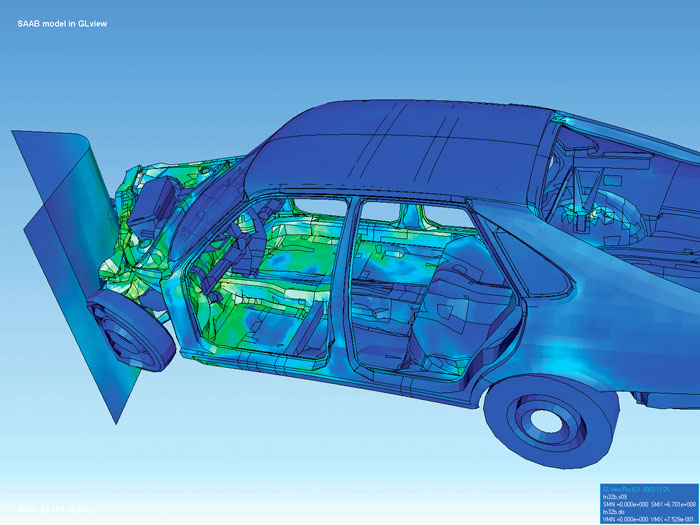
Engineers and scientists use FEM across disciplines: in structural analysis of buildings and aircraft, thermal analysis of electronics, simulation of fluid flow and turbulence models, and modeling of electromagnetic devices. Its flexibility to handle complex geometries and heterogeneous materials makes it a standard tool in design, research, and certification. Many industries rely on FEM-based simulation in their product development cycle; users often consult domain-specific resources and tool documentation for best practices (engineering applications).
Practical considerations, limitations and best practices
While FEM is powerful, it requires care. Mesh quality, element type, boundary condition specification, material models, and solver settings all influence accuracy. Common pitfalls include insufficient mesh refinement in regions of high gradients, misuse of element types, and over-reliance on default settings. Validation against experiments or analytical solutions is essential before trusting results. Users with only a superficial understanding can produce misleading outcomes; learning fundamental numerical methods and error estimation helps. For introductory material and numerical-methods context see numerical overviews and basic algebra references like algebra primers.
Standards, software and further resources
There are many commercial and open-source FEM packages; they differ in element libraries, solver performance, and pre-/post-processing features. In regulated industries, documented verification and validation practices are important, and some sectors maintain guidelines for modeling large structures such as aircraft or bridges (structural analysis guidance). For advanced topics—error estimators, adaptivity, and advanced numerical techniques—consult specialized technical literature and resources (advanced methods). Combining sound engineering judgment, mesh and model verification, and experimental validation yields reliable FEM results.
Related articles
Author
AlegsaOnline.com Finite Element Method: Principles, Components, Applications and Practical Guidance Leandro Alegsa
URL: https://en.alegsaonline.com/art/34413