
Fire extinguisher: types, design, use and maintenance
Portable and vehicle-mounted devices that suppress small fires. Covers types, fire classes, operation, history, common uses and basic inspection and service considerations.
Overview
A fire extinguisher is a portable or wheeled device that delivers an agent to suppress or control a fire in its early stages. Extinguishers range from small, hand-carried canisters intended for household or workplace use to large, cart-mounted units for airports and industrial sites. Many modern extinguishers are designed for specific fire types and are labeled to indicate their intended use. For basic guidance on choosing or locating an extinguisher consult manufacturer information or local fire-safety guidance such as consumer safety pages.
Image gallery
10 Images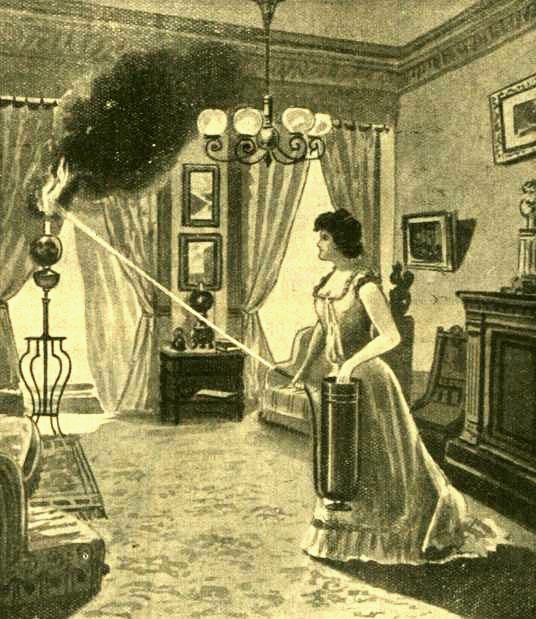


Design and main components
Most extinguishers share several common parts: a pressure vessel, a discharge mechanism (valve and hose or nozzle), an internal agent (water, foam, powder, gas or wet chemical) and an operating lever or handle. A pressure gauge on many models shows readiness. Portable units are sized for carrying, while larger extinguishers are mounted on wheels. Transparent or training models are sometimes used for familiarization and drills.

Types of extinguishing agents and suitable fires
Different agents work on different fuels and hazards. Common categories include:
- Water — effective on ordinary combustible materials like wood and paper; not for electrical or flammable-liquid fires.
- Foam — forms a blanket to smother liquid-fuel fires and cool burning surfaces.
- Dry chemical (powder) — versatile and widely used against flammable liquids and gases; some powders are multi-purpose.
- Carbon dioxide (CO2) — displaces oxygen at the fire site and is often used for electrical and liquid-fuel fires, leaving little residue.
- Wet chemical — formulated for cooking oil and grease fires common in kitchens.
- Specialized agents — metal fire powders and other compounds are used for combustible metals and unusual hazards.
Fire classification systems (A, B, C, D, K or F, depending on region) group fuels by type; labels and color coding on extinguishers indicate compatibility with those classes. Always check an extinguisher's markings before use. For general information about local standards and installation, see regulatory guidance.
Operation and safe use
Using an extinguisher effectively calls for prompt action and a simple technique often taught with the acronym PASS: Pull the pin, Aim low at the base of the fire, Squeeze the lever, and Sweep from side to side. Only attempt to fight small, contained fires with a clear escape route; if the fire grows, evacuate and call emergency services. Some extinguishers and agents are hazardous in confined spaces or on certain materials, so choose the correct type and follow safety instructions on the unit.
History, development and notable facts
Portable fire-extinguishing devices have evolved since the 19th century from simple pumps and chemical canisters to the variety of engineered agents available today. Early designs included soda-acid and cartridge-operated models; advertising and manuals from the early 1900s illustrate those forms and the training that accompanied their distribution. A period illustration demonstrates historical use and instruction methods.

Maintenance, inspection and placement
To be reliable, extinguishers require periodic inspection and servicing. Visual checks detect obvious damage, correct pressure and intact seals. Many jurisdictions and organizations set inspection and maintenance schedules; professional servicing at recommended intervals ensures agent integrity and container safety. Hydrostatic testing or recharge may be required periodically depending on type and age. For large facilities and specialized hazards, trained personnel or contractors can advise on numbers, placement and service routines; airport and industrial installations commonly use wheeled units and coordinated systems — see example operational guidance at facility safety resources.
Fire extinguishers are a first-line tool for limiting small outbreaks and protecting people and property when used appropriately. Knowing the right type for the hazard, how to operate it safely, and keeping units maintained are essential elements of effective fire safety.
Questions and answers
Q: What is a fire extinguisher?
A: A fire extinguisher is a device that can be used to control and put out fires.
Q: How do you know which type of fire extinguisher to use?
A: Different types of fires require different substances to be extinguished, so it's important to look at the color code on the fire extinguisher to determine which type of fire it is suitable for.
Q: What are the sizes of hand-held fire extinguishers?
A: Hand-held fire extinguishers typically range from 0.5kg up to 14kg in size.
Q: How long does a 2kg model last for?
A: A 2kg model will usually work for around two to four seconds.
Q: Are there bigger models available?
A: Yes, there are also larger models that are mounted on carts or vehicles and these are often used in airports and other public buildings.
Q: How often should a fire extinguisher be checked? A: Fire extinguishers need to be checked after a certain amount of time, as specified by law in public buildings.
Q: What are transparent fire extinguishers used for?
A: Transparent fire extinguishers are typically used for training purposes.
Related articles
Author
AlegsaOnline.com Fire extinguisher: types, design, use and maintenance Leandro Alegsa
URL: https://en.alegsaonline.com/art/34467