
Fire-tube boiler
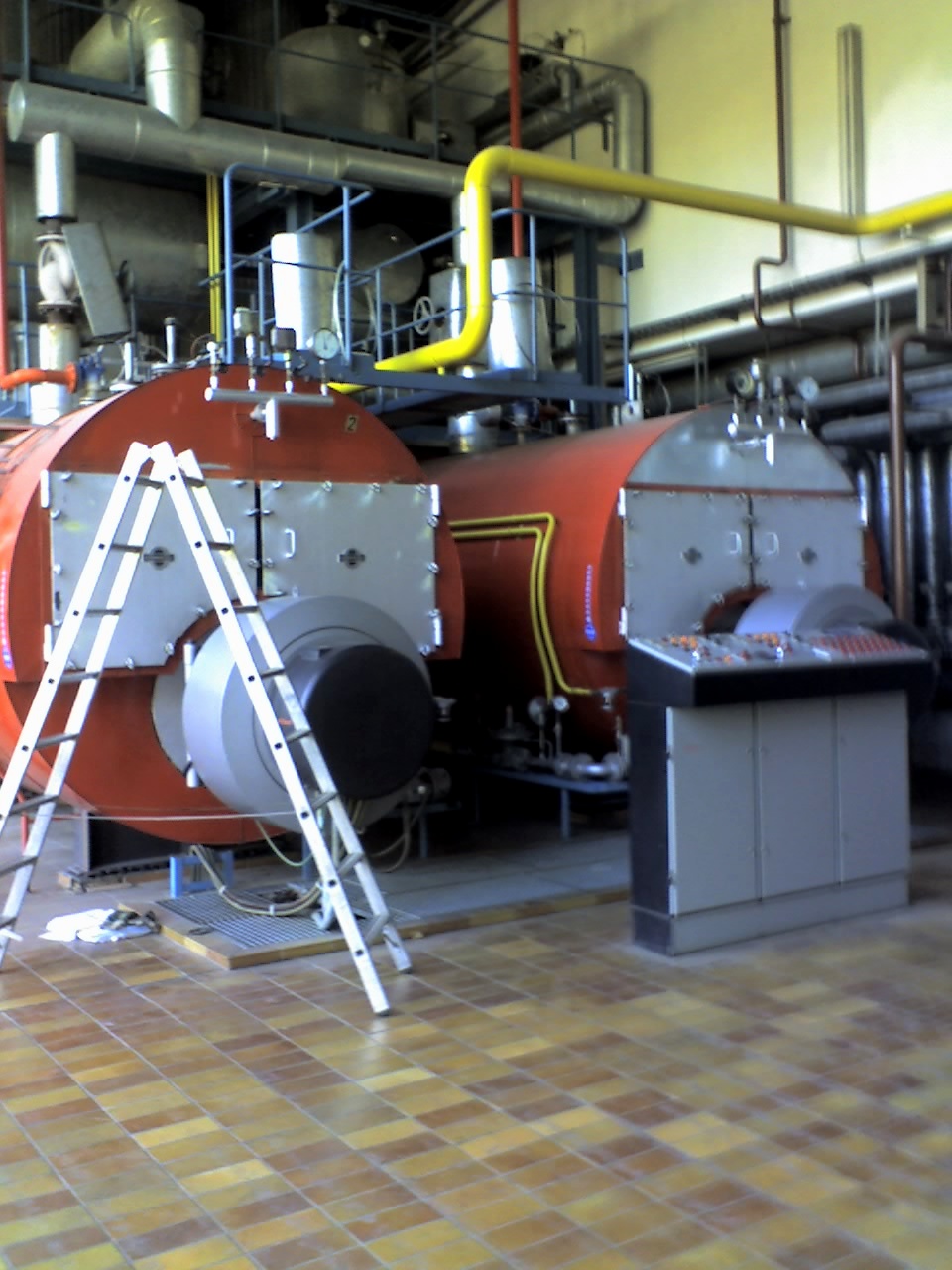
A fire-tube boiler produces steam by passing hot combustion gases through tubes surrounded by water. Simple and robust, it was widely used in locomotives, small plants, and heating systems.
Overview
A fire-tube boiler is a steam-generating device in which hot combustion gases flow through multiple tubes that run inside a sealed shell filled with water. Heat from the gases passes through the tube walls (heat transfer) into the water, producing steam that can be used for propulsion, heating or industrial processes. This straightforward arrangement contrasts with water-tube designs where water circulates inside tubes heated from the outside. Many early and some modern steam locomotives used fire-tube boilers because of their compactness and simplicity.
Image gallery
8 Images


Main components and characteristics
- Outer shell or barrel that contains the water and steam space.
- Firebox or furnace where fuel is burned to generate hot gases.
- Multiple small-diameter tubes or flues that convey gases through the water.
- Smokebox and chimney to expel combustion products after they pass through the tubes.
- Fittings such as safety valves, water-level indicators, steam outlets and feedwater connections.
History and development
Fire-tube boilers were developed and refined during the 18th and 19th centuries as steam power spread during the Industrial Revolution. Their robust construction and ease of manufacture made them popular for locomotion, maritime use and stationary plant. Over time, improvements in metallurgy, safety devices and manufacturing techniques increased reliability, but the basic principle—passing hot gases through tubes immersed in water—remained the same.
Operation, maintenance and safety
In operation, combustion products travel from the firebox through the tubes to the smokebox and out the chimney. The large water volume provides thermal inertia, making fire-tube boilers forgiving to short-term load changes, but they require careful water-level control and routine cleaning of tube deposits. Common maintenance tasks include tube inspection and replacement, cleaning flue surfaces to restore heat transfer, and checking safety valves. Poor maintenance or low water levels can lead to tube overheating and, in severe cases, catastrophic failure.
Uses, advantages and limitations
Fire-tube boilers remain suitable for low- to medium-pressure steam and for applications where simplicity and low initial cost are priorities: small industrial plants, heating systems, historical steam vessels and locomotives preserved for display or tourist service. Advantages include compactness, low cost, and relatively easy operation. Limitations are lower maximum pressure and slower steam-raising capability compared with modern water-tube boilers, which makes fire-tube types less appropriate for very large power plants or high-pressure process steam.
Distinguishing facts
Compared with water-tube boilers, fire-tube designs put the hot gases inside tubes and water outside, giving greater water capacity but reduced ability to accommodate very high pressures or rapid load changes. For historical research, restoration work or small-scale installations where authenticity or simplicity matters, fire-tube boilers remain an important and recognizable technology.
Related articles
Author
AlegsaOnline.com Fire-tube boiler Leandro Alegsa
URL: https://en.alegsaonline.com/art/34477