
Fibula (brooch)
A fibula is an ancient brooch used to fasten garments from the Bronze Age through the early Middle Ages; both functional and decorative, fibulae are important archaeological and cultural objects.
Overview
A fibula (plural: fibulae) is a type of brooch or clothing fastener common across the ancient and early medieval world. The word derives from Latin usage, where fibula referred especially to Roman brooches, but in modern scholarship the term is applied more widely to similar pins and clasps. Unlike purely decorative modern brooches, fibulae were made primarily to secure garments such as cloaks and tunics while often also serving as visible ornaments and status symbols. They succeeded the earlier straight pins and eventually gave way to sewn fasteners like buttons, while their spring-and-pin mechanism is an ancestor of the modern safety pin.
Image gallery
10 Images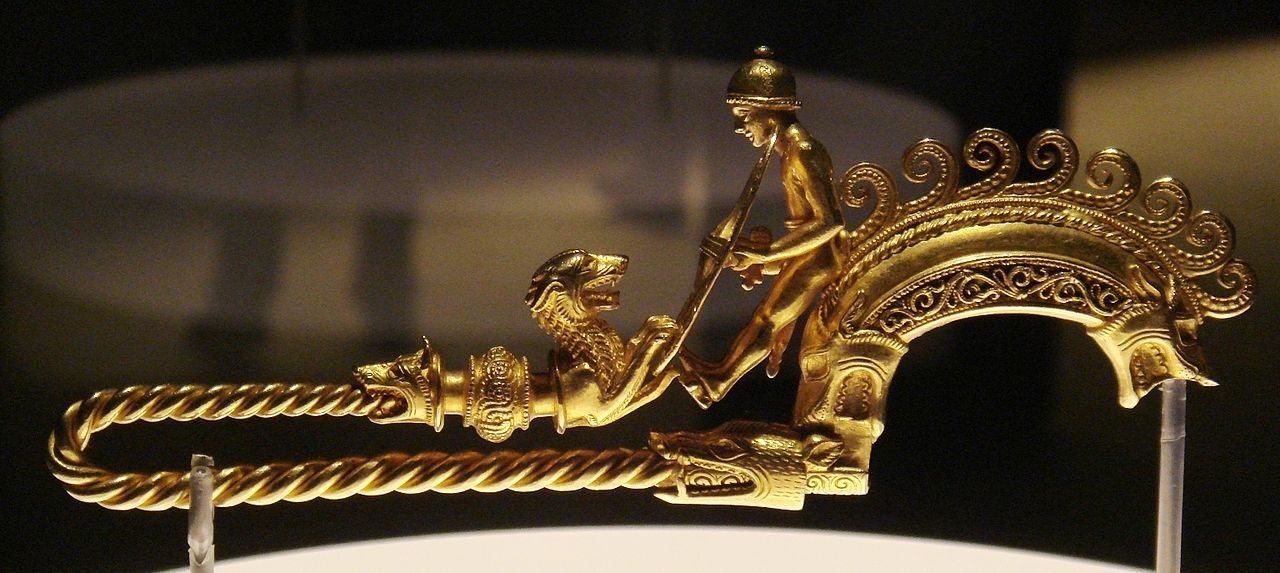


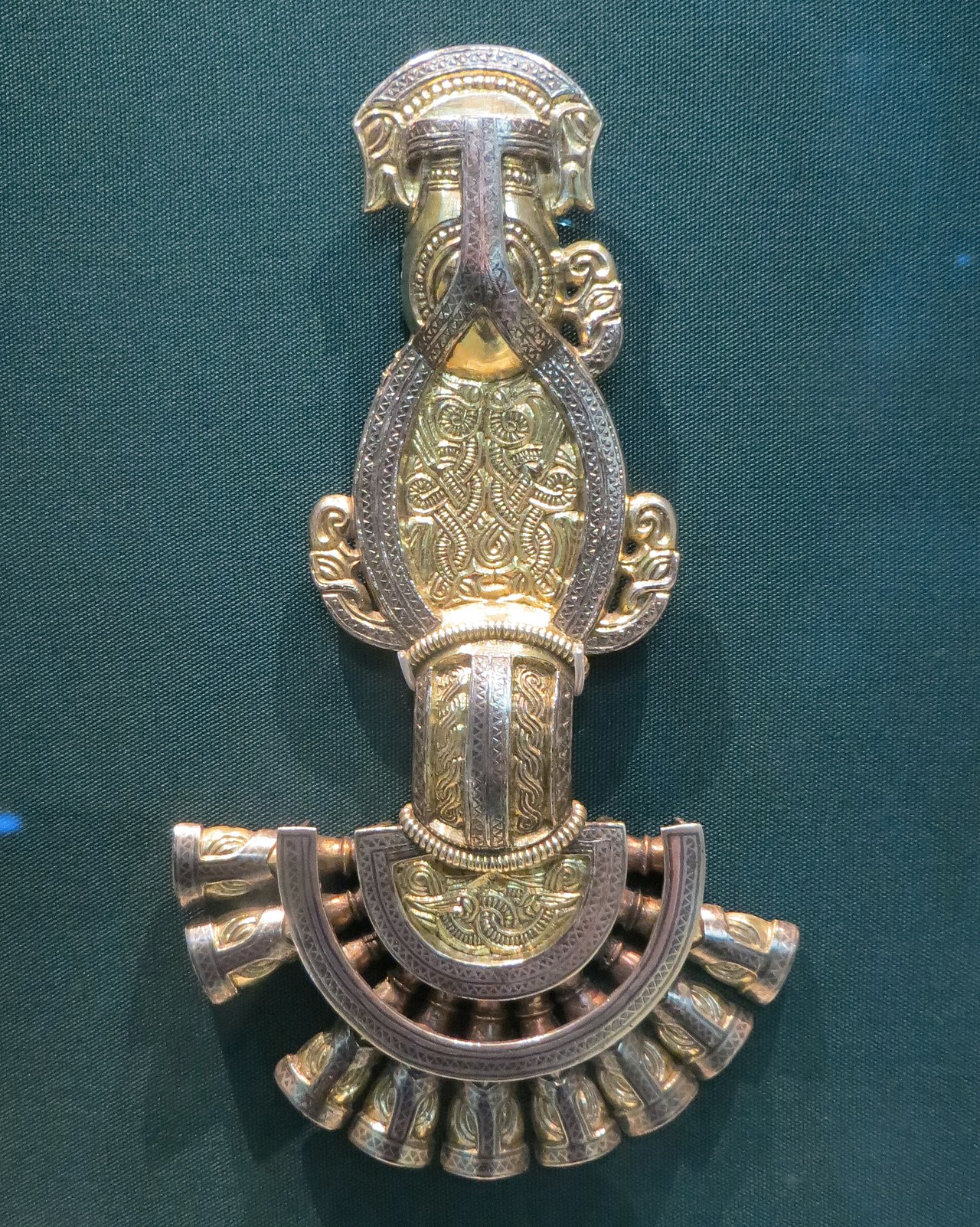


Characteristics and construction
Typical fibulae combine a pin and a bow or body that holds the clothing in place, plus some kind of spring or hinge and a catch-plate to secure the point. Materials range from common metals such as bronze and iron to precious metals—silver and gold—and they were frequently decorated with inlay, enamel, glass or gemstone settings. The combination of form, material and ornamentation helped indicate the wearer's wealth, cultural affiliation, or military rank. Simple functional examples coexist with highly elaborate pieces that were created primarily for display.
Types and classification
Archaeologists sort fibulae into families by shape, mechanism and chronology. Well-known categories include penannular rings, long-bow or safety-pin styles, plate fibulae and ornate disc or shoulder brooches. Specific regional or period types—such as La Tène-influenced forms, Roman imperial bows, or Migration Period examples with cloisonné garnet work—are used to identify cultural connections. These groupings reflect the wide range of variations that developed as fibulae spread and evolved across different communities.
- Penannular — open-ring brooches common in Celtic contexts.
- Long-bow / Safety-pin style — iterative design that emphasizes a long curved bow and a spring mechanism.
- Plate and disc — broad decorative examples used on garments and as status markers.
- Crossbow and ornate types — visually distinctive forms from later Roman and early medieval periods.
History and cultural significance
Fibulae first appeared after the widespread use of simple pins in prehistoric times and became especially prominent through the Bronze Age and into classical antiquity. They were integral to Roman clothing traditions and spread widely in the Roman sphere and beyond, adapting to local tastes across the ancient world. During the early medieval era fibulae remained important items of dress in many regions before sewn buttons and other fasteners gradually replaced them. Finds from burial sites and hoards help scholars trace trade, migration and cultural contact.
Uses, archaeological importance and notable facts
Beyond fastening clothing, fibulae functioned as personal ornaments, markers of identity, and frequently as valuable grave goods. Their material, technique and form provide archaeologists with clues for dating layers, identifying cultural links and understanding craft traditions. The earliest antecedents appear alongside Neolithic and Neolithic practices and became widespread in the Bronze Age. Cataloguing fibulae by type and chronology remains central to the study of ancient dress and material culture; museums and collectors prize well-preserved examples, while conservators balance display with careful preservation. For basic introductory resources on fibulae and examples from different periods, consult accessible summaries of ancient brooch forms and specialized studies of early medieval ornamentation. Comparative overviews and typologies can be found through reference material that organizes fibulae by period and region, for example general guides to historic pins and brooches or catalogs of Roman and post-Roman finds (ancient and Roman collections).
Because of their ubiquity and diversity, fibulae remain a key category for understanding clothing technology, trade connections and social expression in the past.
Related articles
Author
AlegsaOnline.com Fibula (brooch) Leandro Alegsa
URL: https://en.alegsaonline.com/art/34178
Sources
- commons.wikimedia.org : Fibulae