
Henge: prehistoric circular earthworks of the British Isles
A henge is a Neolithic circular or oval earthwork—typically a bank with an internal ditch—built mainly in the late Neolithic and early Bronze Age in the British Isles, usually interpreted as ceremonial enclosures.
Overview
A henge is a prehistoric earthwork defined by a roughly circular or oval bank with a ditch set on the inside of that bank, enclosing a central area. The term is most commonly used for monuments in the British Isles, though related enclosures occur elsewhere in northwestern and central Europe. Henges date mainly to the later Neolithic and the early Bronze Age and are widely interpreted as places for communal, ceremonial, ritual or social activities rather than fortifications.
Image gallery
9 Images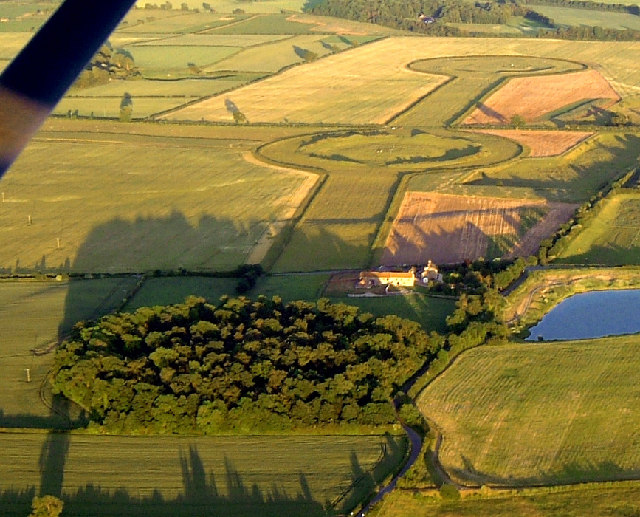


Typical features
Characteristic elements include a low earthen bank and an internal ditch, one or more entrances that break the bank, and an enclosed interior which may contain postholes, timber circles, stone settings, burial deposits or evidence of hearths. Finds from excavations often include pottery sherds, worked flint and animal bone. The internal ditch is a key diagnostic feature: because it faces the interior, it argues against a primarily defensive purpose.
Types and classification
Archaeologists commonly group henges by their number of entrances and complexity:
- Class I – a single entrance cutting the bank and ditch, often circular in plan.
- Class II – two entrances, frequently positioned roughly opposite each other, sometimes forming a processional axis.
- Class III – multiple entrances or very large enclosures; some sites of this kind are called henge enclosures and may enclose extensive internal features.
Construction and chronology
Henge construction required organized effort and planning: banks were piled up from material dug from the interior ditch and shaped to form an enclosed space. Radiocarbon dating at many sites places their main phases of activity within the late fourth and third millennia BCE, although some sites show later reuse or modification in the Bronze Age. Timber settings and stone monuments are sometimes contemporary with, earlier than, or later insertions into henge layouts.
Regional distribution and notable examples
Many well-preserved henges are concentrated in the British Isles; famous examples include Stonehenge (which combines earthwork, stone and timber phases) and the large complex at Avebury. Comparable circular enclosures and ritual monuments exist on the European mainland, often with local variations in form and function (continental parallels). For discussion of the cultural setting see sources on the Neolithic and regional surveys of prehistoric landscapes (British Isles contexts).
Archaeological evidence and interpretations
Excavations reveal episodic use rather than continuous occupation: deposits of food waste, pottery and animal bone point to feasting and communal events, while burials or cremation deposits at some sites tie henges to mortuary practices. Astronomical alignments have been proposed for particular monuments, suggesting an interest in marking seasonal or lunar events, but such interpretations are site-specific and debated. Overall, the balance of evidence supports ceremonial, social and symbolic roles.
Distinctions, conservation and public access
It is important to distinguish henges (an earthwork form) from stone circles or timber circles: the three may coincide at a single site but are not synonyms. Many henges are protected as scheduled monuments and managed by conservation bodies; a number are accessible to the public, often with interpretation panels or visitor facilities. Key structural terms to note are the ring bank and the internal ditch, which together define the henge form and help archaeologists identify and classify these prehistoric enclosures.
Questions and answers
Q: What is a henge?
A: A henge is a Neolithic earthwork.
Q: Where are henges typical of?
A: Henges are typical of the British Isles (for example Stonehenge), but there are a few similar structures in continental Europe.
Q: What is the structure of a henge?
A: Henges have a ring bank and ditch.
Q: Are henges primarily defensive?
A: No, henges are not thought to be primarily defensive, because their ditch is inside the wall or rampart.
Q: Why would it seem better to have the ditch outside the bank for defence?
A: It would seem better to have the ditch outside the bank for defence because attackers would need to climb up further.
Q: What is the function of henges thought to be mainly?
A: The function of henges is thought to be mainly ceremonial.
Q: How are henges divided?
A: Henges are divided into three types.
Related articles
Author
AlegsaOnline.com Henge: prehistoric circular earthworks of the British Isles Leandro Alegsa
URL: https://en.alegsaonline.com/art/43500