
Feather River (Northern California)
Feather River, rising in the Sierra Nevada, is a major tributary of the Sacramento River. It supplies water, hydroelectric power, flood control, recreation and habitat across Northern California.
Overview
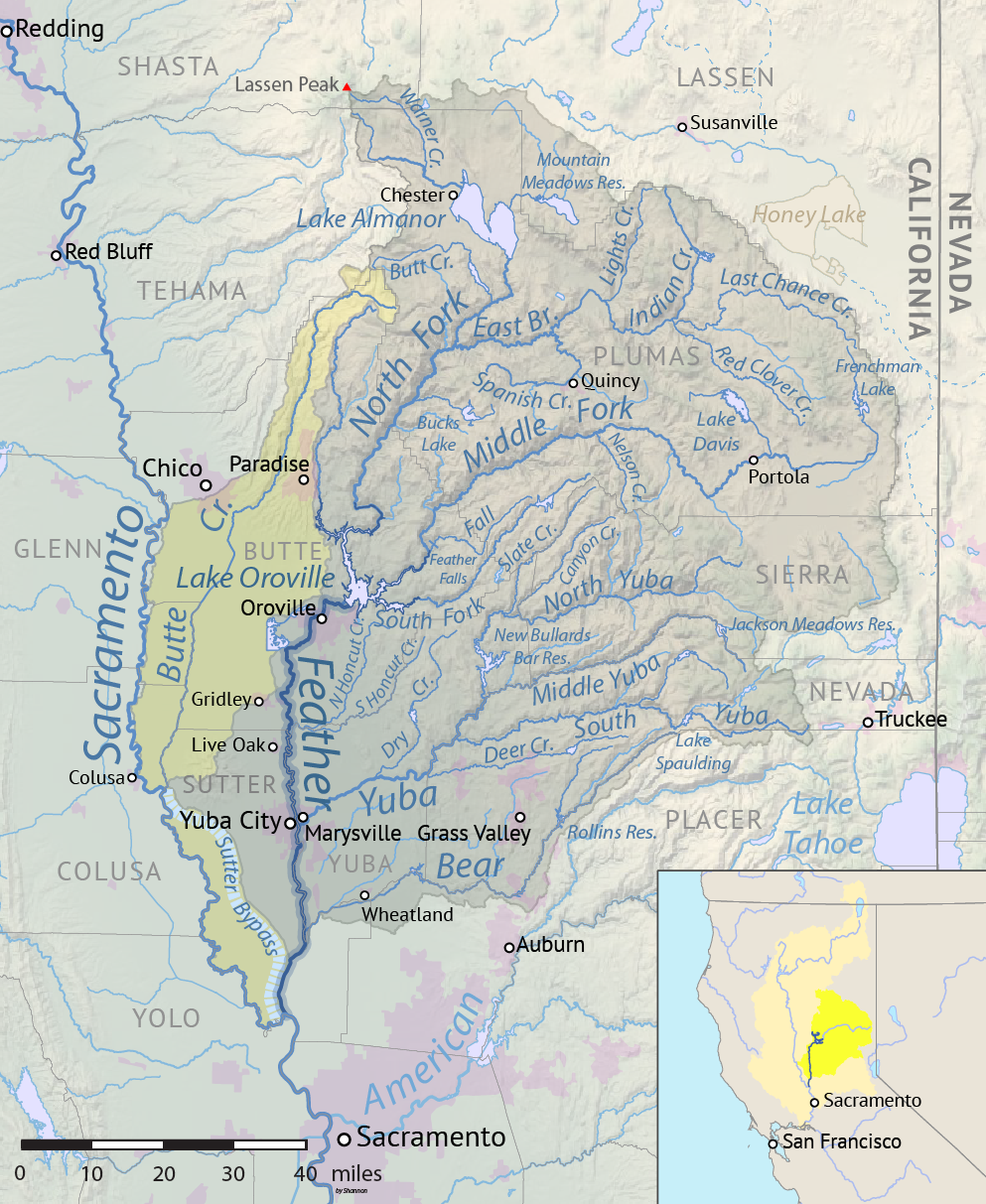
The Feather River is a principal river system in Northern California and a major tributary of the Sacramento River. Rising in the Sierra Nevada, the river drains a broad mountainous and foothill watershed and flows generally southward into the Central Valley. It is an important source of municipal and agricultural water, hydroelectric power, and flood regulation for the state (river overview). Located entirely within California in the United States, the Feather has shaped regional development since the 19th century.
Image gallery
6 Images


Course and tributaries
The Feather River system comprises several major forks—the North, Middle, South and West forks—that collect snowmelt and rainfall from Sierra Nevada slopes before joining to form the main stem. These tributary forks flow through steep canyons and broader valleys; they contribute seasonal runoff and sediment that historically supported rich floodplain soils downstream. Flow in the river is now strongly influenced by reservoirs and diversions, so natural seasonal patterns have been altered in many reaches.
Infrastructure, water uses and Oroville
Key infrastructure on the Feather includes large dams and reservoirs constructed in the 20th century to provide water supply, flood control and power. Most prominent is Oroville Dam and its reservoir, which store winter runoff for use during dry months and form a focal point for recreation and resource management. These facilities support municipal and agricultural deliveries, including connections with statewide systems that move water to other regions (water supply and irrigation), and they house hydroelectric plants that generate electricity for local and regional use.
Ecology and fisheries
The Feather River watershed supports diverse aquatic and riparian ecosystems. Historically it sustained runs of anadromous fish such as Chinook salmon and steelhead; these species remain central to conservation efforts. Dam construction and flow regulation have affected migration routes, spawning habitat, and water temperatures, so fish passage facilities, hatchery programs and flow-management measures are important elements of ongoing restoration work. Riparian corridors along the river also provide habitat for birds, mammals and plant communities representative of Sierra and valley environments.
History, impacts and management
The Feather River valley was heavily influenced by the California Gold Rush and subsequent agricultural expansion. Mining and hydraulic operations altered channels and delivered sediment and contaminants to waterways; later water development projects reshaped hydrology to support the Central Valley’s farms and growing urban areas. Today, multiple agencies and stakeholders collaborate on flood safety, water allocation, habitat restoration and recreational access, balancing human uses with ecological needs.
Recreation and regional significance
- Lake and river corridors support boating, fishing, camping and hiking around reservoirs and public lands.
- The river is frequently referenced in regional planning, water management and conservation documents (detailed overview).
- As a component of the larger Sacramento basin, the Feather plays a key role in sustaining agriculture, communities and natural systems across several Northern California counties.
For more information about specific tributaries, management programs and recreational facilities, consult regional resources and agencies that oversee the Feather River watershed (state resources, tributary information, Sierra Nevada context).
Related articles
Author
AlegsaOnline.com Feather River (Northern California) Leandro Alegsa
URL: https://en.alegsaonline.com/art/33780
Sources
- geonames.usgs.gov : "Rice Creek"
- geonames.usgs.gov : "Sierra Valley Channels"
- geonames.usgs.gov : "Lake Oroville"
- geonames.usgs.gov : "Feather River"
- viewer.nationalmap.gov : The National Map
- water.usgs.gov : "Boundary Descriptions and Names of Regions, Subregions, Accounting Units and Cataloging Units"
- waterdata.usgs.gov : "USGS Gage #11425000 on the Feather River near Nicolaus"