
Exeter St Davids railway station — overview, history and services
Major railway station serving Exeter, England. Victorian origins (opened 1 May 1844), a regional junction for intercity and local services, and the second busiest station in Devon.
Exeter St Davids is the principal railway station serving the city center of Exeter. It functions as a regional hub and interchange for services across the southwest of England. The station is widely regarded as the main rail gateway to the city and its surroundings; more information about its operations is available from local and national rail resources at station information pages and transport bodies in England.
Image gallery
6 Images


Characteristics
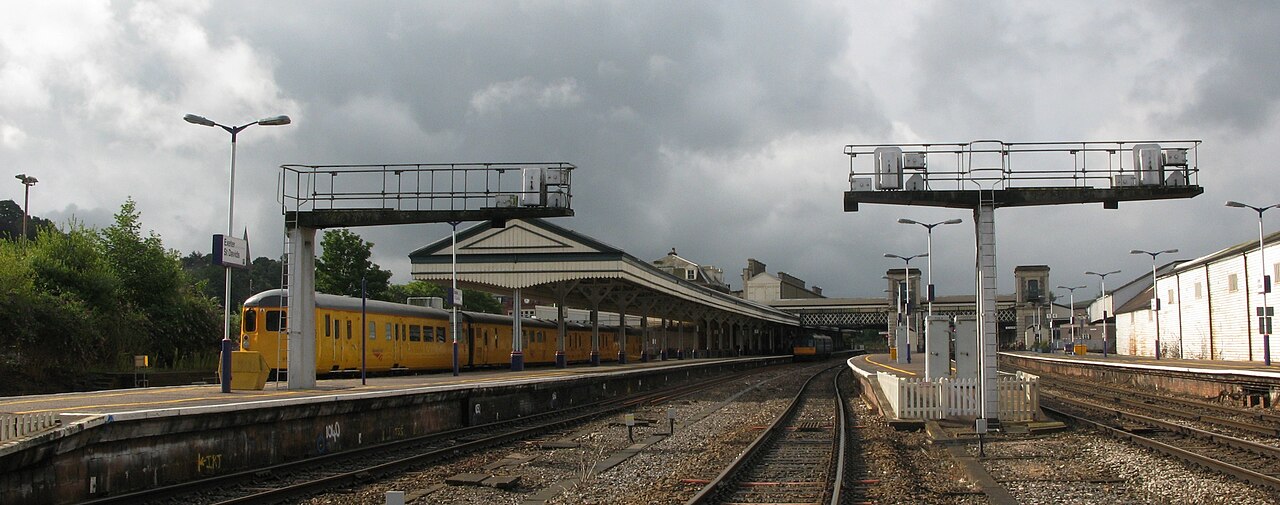
The station occupies a prominent site close to the city center and is laid out to handle both long-distance intercity trains and local commuter services. Its track arrangement and platform layout allow trains to split, join or reverse as required, which makes the station an important operational junction. The passenger environment combines elements dating from the Victorian era with modern additions for accessibility and passenger information.
History and development
Opened on 1 May 1844 during the rapid expansion of Britain’s early railway network, Exeter St Davids has evolved through successive periods of change. Originally built in the 19th century, it was adapted and extended as rail traffic increased, reflecting broader shifts in railway technology and service patterns. Conservation and modernisation projects in the 20th and 21st centuries have sought to balance historic fabric with contemporary needs.
Services and importance
The station handles a mix of regional and longer-distance services connecting the city with other destinations across the southwest and with London. It is the second busiest station in the county of Devon, traditionally recording fewer annual passengers than Plymouth; historical passenger counts indicated a notable rise in usage, with numbers increasing by about 30% between April 2002 and April 2007, reflecting growing demand for rail travel.
Facilities and connections
- Passenger facilities typically include ticketing, waiting areas, real-time displays and basic retail or catering outlets.
- Multi-modal connections: local bus routes, taxi ranks and cycle parking provide onward travel options for commuters and visitors.
- Step-free access and improved signage have been introduced over time to assist mobility-impaired travellers.
Notable for its mix of heritage and operational significance, Exeter St Davids remains a key node in the West Country rail network. Visitors interested in architectural or railway history will find its nineteenth-century origins and subsequent adaptations illustrative of the wider story of Britain’s railways.
Related articles
Author
AlegsaOnline.com Exeter St Davids railway station — overview, history and services Leandro Alegsa
URL: https://en.alegsaonline.com/art/32921
Sources
- rail-reg.gov.uk : "Station Usage"
- networkrail.co.uk : "National Rail Timetable 135 (Summer 2009)"
- networkrail.co.uk : "National Rail Timetable 160 (Summer 2009)"
- networkrail.co.uk : "National Rail Timetable 51 (Summer 2009)"