
Amarna (Akhetaten): the city of Akhenaten and the Amarna period
Amarna (Akhetaten) is the mid-14th century BC royal capital founded by Akhenaten on the east bank of the Nile. Its short life produced distinctive religion, art and exceptionally well-preserved archaeological remains.
Overview
Amarna is the modern name for an extensive archaeological site on the east bank of the Nile in southern Egypt’s Minya Governorate, close to the town of Minya. Excavations have exposed the remains of a purpose-built royal capital established in the mid-14th century BC and largely abandoned within a generation. The era when it served as the seat of power is conventionally called the Amarna period, a distinct chapter in the late Eighteenth Dynasty.
Image gallery
10 Images


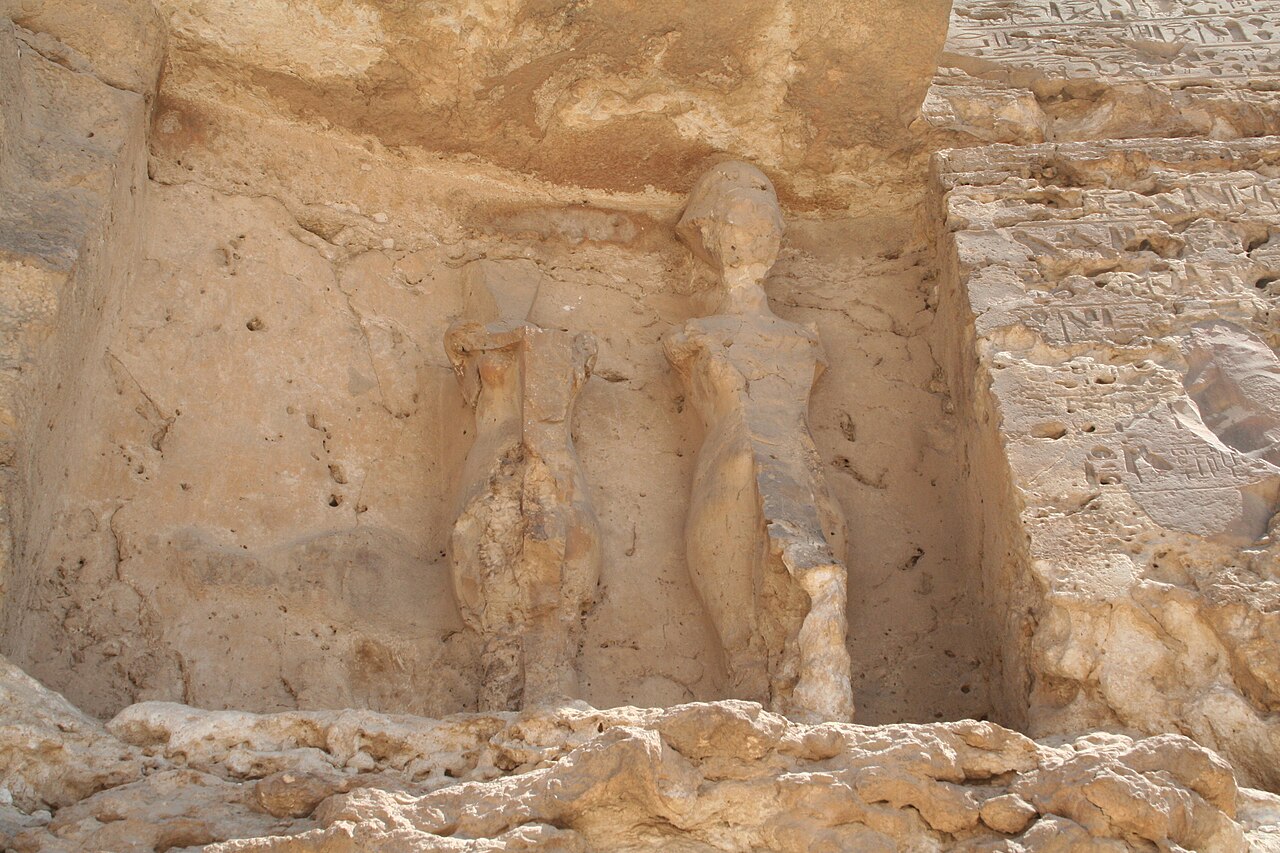
Name and identity
The modern Arabic name for the site is reflected in the term Amarna. The name used by the ancient builders is written in English as Akhetaten and is usually translated as “Horizon of the Aten.” In classical studies the site and its inscriptions are contextualized within the religious and administrative traditions of the ancient Egyptians.
Foundation and religious innovation
The city was created by the pharaoh commonly known as Akhenaten who, in royal program and public monuments, promoted exclusive devotion to the sun-disk deity, the Aten. Akhenaten’s reforms affected temple practice, royal titulary and iconography; these changes were closely associated with the relocation of the court to Akhetaten. The move represented both an urban program and a theological experiment, and it left abundant epigraphic evidence in the form of boundary stelae and temple inscriptions.
City plan, art and architecture
Amarna’s layout combined a royal precinct with temples dedicated to the Aten, administrative buildings, a large palace complex and residential districts for officials and artisans. The cliff-cut tombs of nobles that overlook the city contain some of the finest painted reliefs of the period. The material culture from the site is associated with a recognizable aesthetic often called Amarna art: a tendency toward naturalistic portrayals, intimate family scenes, elongated proportions in royal imagery and new decorative motifs.
Archaeology and notable finds
Archaeologists and explorers began work at Amarna in the 19th century and research has continued into the present. Excavations have recovered pottery, statuary fragments, carved reliefs, painted tombs and workshop debris from craftsmen’s areas. One famous painted bust traditionally linked to an Amarna workshop remains emblematic of the period’s artistic achievements. Because the city was quickly dismantled and many buildings were not reused extensively, archaeologists have had the rare opportunity to study streets, houses and production areas that document everyday life at a royal capital.
Legacy, abandonment and study
Following Akhenaten’s death the religious program centered on the Aten was rolled back and the court moved away, leaving Amarna to decline. Many monuments were deliberately defaced or dismantled, but the archaeological record preserves evidence of the city’s brief prominence. Scholars continue to study Amarna to understand its administrative arrangements, the social composition of its population, and its contribution to changes in Egyptian art and religion. For introductions, excavation histories and catalogues of finds consult specialized works on pharaonic history, studies of Akhenaten and surveys of the Amarna period. Additional summaries and bibliographies are available in broader resources on ancient Egyptian religion and the Arabic documentation of the site.
- Key features: royal palace, Great Temple of the Aten, tombs, artisan quarters, boundary stelae.
- Distinctive aspects: religious reform, Amarna artistic style, rapid urban development and decline, unusually well-preserved domestic contexts.
Ongoing conservation and fieldwork aim to protect painted surfaces and fragile architectural remains while improving access for study and responsible visitation. Amarna remains a central case study for how short-lived political and religious initiatives can have a lasting archaeological and art-historical impact.
Related articles
Author
AlegsaOnline.com Amarna (Akhetaten): the city of Akhenaten and the Amarna period Leandro Alegsa
URL: https://en.alegsaonline.com/art/3231
Sources
- amarnaproject.com : "The official website of the Amarna Project" · web.archive.org