
Akhenaten: Pharaoh of Amarna and Reformer of Egyptian Religion
Akhenaten (formerly Amenhotep IV) was an 18th‑dynasty Egyptian pharaoh who promoted Aten worship, founded Akhetaten (Amarna), sponsored a distinct artistic style and whose religious reforms were later reversed.
Overview
Akhenaten, born Amenhotep IV, ruled in the mid‑14th century BC and is one of the most discussed rulers of ancient Egypt. As an Egyptian pharaoh of the Eighteenth Dynasty, his reign is usually dated to the 1350s–1330s BC. He is chiefly remembered for initiating a dramatic religious and cultural program that set him apart from his predecessors and successors. His personal name change to Akhenaten signalled the centrality of a new religious focus during his lifetime.
Image gallery
10 Images


Religious reforms and the Aten
Early in his reign Akhenaten reduced the public prominence of Egypt’s traditional gods and elevated the sun disk known as the Aten. Where prior pharaohs operated within a conventional system of polytheism, Akhenaten promoted what modern scholars describe as a concentrated cult centered on the Aten; some characterize this as an early or limited form of monotheistic devotion. He renamed himself to reflect this change and instituted rites that celebrated the sun disc Aten while curtailing the power of established priesthoods, notably those associated with Amun. The religious program built around the sun disc is often called Atenism, though its exact theology and social reach remain subjects of ongoing research and debate.
Art, court life and the queen
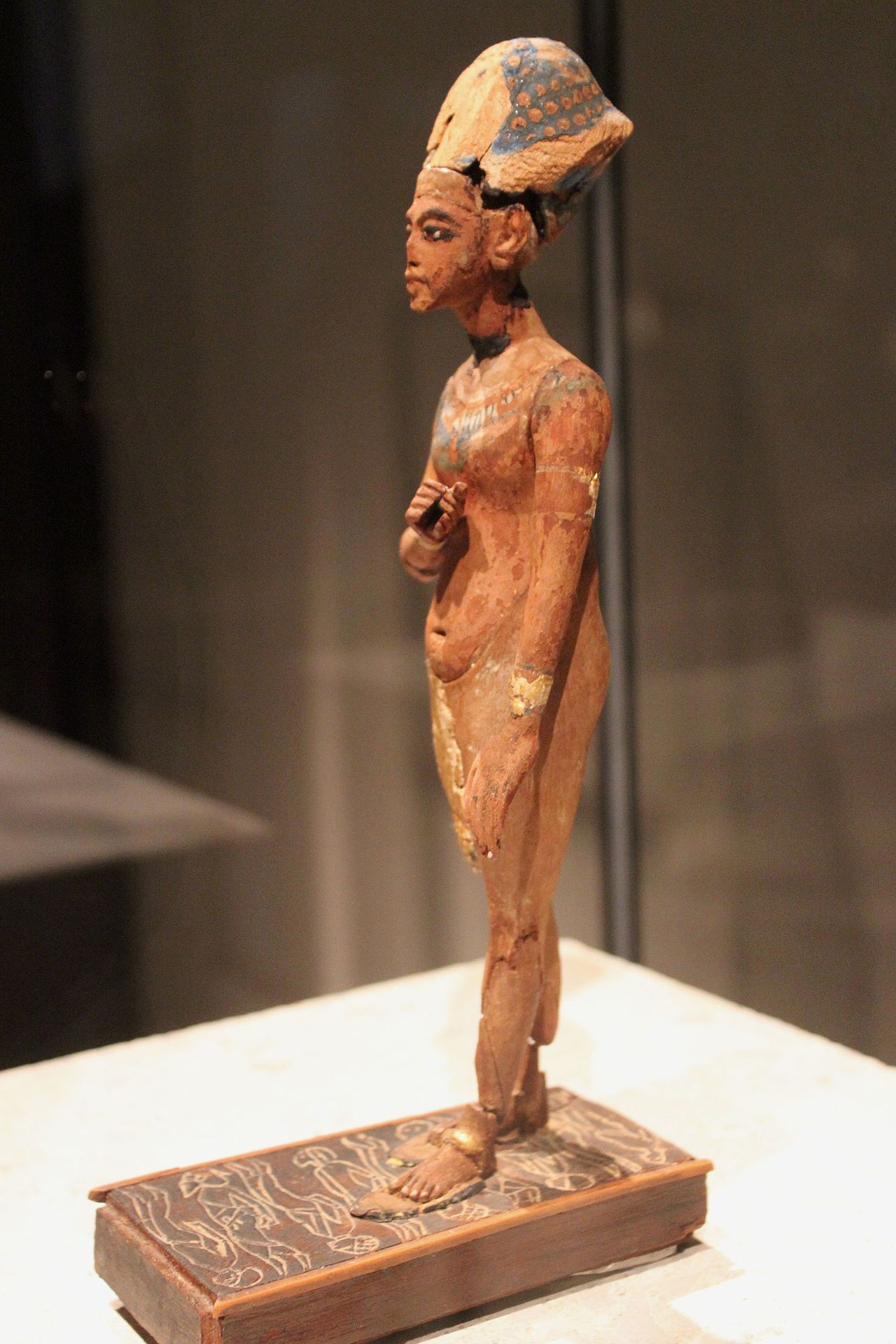
Akhenaten’s court produced a strikingly different visual language that appears in reliefs, sculptures and painted scenes excavated at the new capital. The so‑called Amarna style favored elongated, intimate, and sometimes exaggerated portrayals of the royal family, softening conventional rigid formalism and emphasizing domestic scenes—most famously the king and his principal queen Nefertiti—receiving the rays of the Aten. These images and the surviving material culture suggest a court preoccupied with the king’s godly role, family life and a closely managed religious publicity.
Akhetaten (Amarna) and archaeology
To embody his reforms Akhenaten founded a new capital on the Nile’s east bank, commonly called Akhetaten and known today as Amarna. The city included administrative buildings, temples devoted to the Aten, and houses for courtiers and officials. Amarna was abandoned and dismantled after the pharaoh’s death, but its ruins and the archives and artworks recovered there in the 19th and 20th centuries provided the primary evidence for reconstructing Akhenaten’s program. Excavations and scholarship at Amarna transformed modern understanding of this period.
Aftermath, erasure and legacy
Akhenaten’s reforms were not long‑lasting. Following his death traditional religious institutions were gradually restored; his immediate successors reversed many policies. Some monuments associated with his reign were dismantled and deliberately defaced, and his name was deliberately omitted from later king lists as a form of posthumous condemnation or erasure. This exclusion and the later dismantling of his works are sometimes described as an ancient form of damnatio memoriae; later rulers such as Tutankhamun restored temples and priestly privileges while figures like Horemheb completed a broader rollback. The fact that Akhenaten’s monuments were later removed explains in part why his memory faded until archaeological rediscovery revived interest.
Key points and significance
- Dates and identity: Amenhotep IV changed his name to Akhenaten during the mid‑18th dynasty and reigned in the mid‑14th century BC.
- Religious innovation: He elevated the Aten and reduced the public role of traditional deities and their priesthoods.
- Capital and administration: He founded Akhetaten (Amarna) as a new ceremonial center for his program.
- Artistic impact: The Amarna period introduced a distinctive artistic style that emphasized realism and intimate royal imagery.
- Historical reversal: After his death many of his monuments were dismantled and his name was intentionally excluded from later records.
- Archaeological rediscovery: Excavations at Amarna and subsequent fieldwork reintroduced Akhenaten to modern history and public imagination.
Akhenaten remains a provocative figure because his reign combined religious experimentation, intense royal self‑promotion, and artistic renewal. Whether judged as a heretic, a visionary, or a radical reformer, his policies had a lasting effect on how scholars interpret pharaonic authority, religion and the interplay between art and ideology in ancient Egypt.
Related articles
Author
AlegsaOnline.com Akhenaten: Pharaoh of Amarna and Reformer of Egyptian Religion Leandro Alegsa
URL: https://en.alegsaonline.com/art/1788