
Ernestine Duchies of Thuringia: Fragmented Wettin Principalities in Central Germany
Survey of the Ernestine duchies: fragmented Wettin principalities in central Germany (largely Thuringia), their dynastic divisions into Saxe‑states, governance by partible inheritance, and their dissolution after 1918
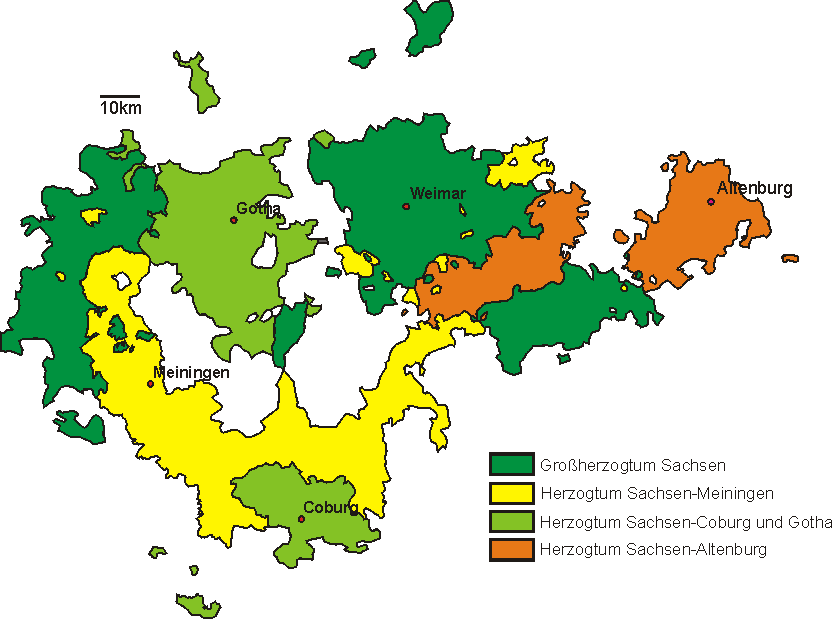
The Ernestine duchies were a series of small, often short-lived states ruled by members of the Ernestine branch of the House of Wettin. Located in central Germany, their territories lay largely in what is today the state of Thuringia. Because the Wettin family once controlled large parts of Saxony, these possessions are also referred to in some sources as the "Saxon duchies."
Image gallery
5 Images


Origins and early history
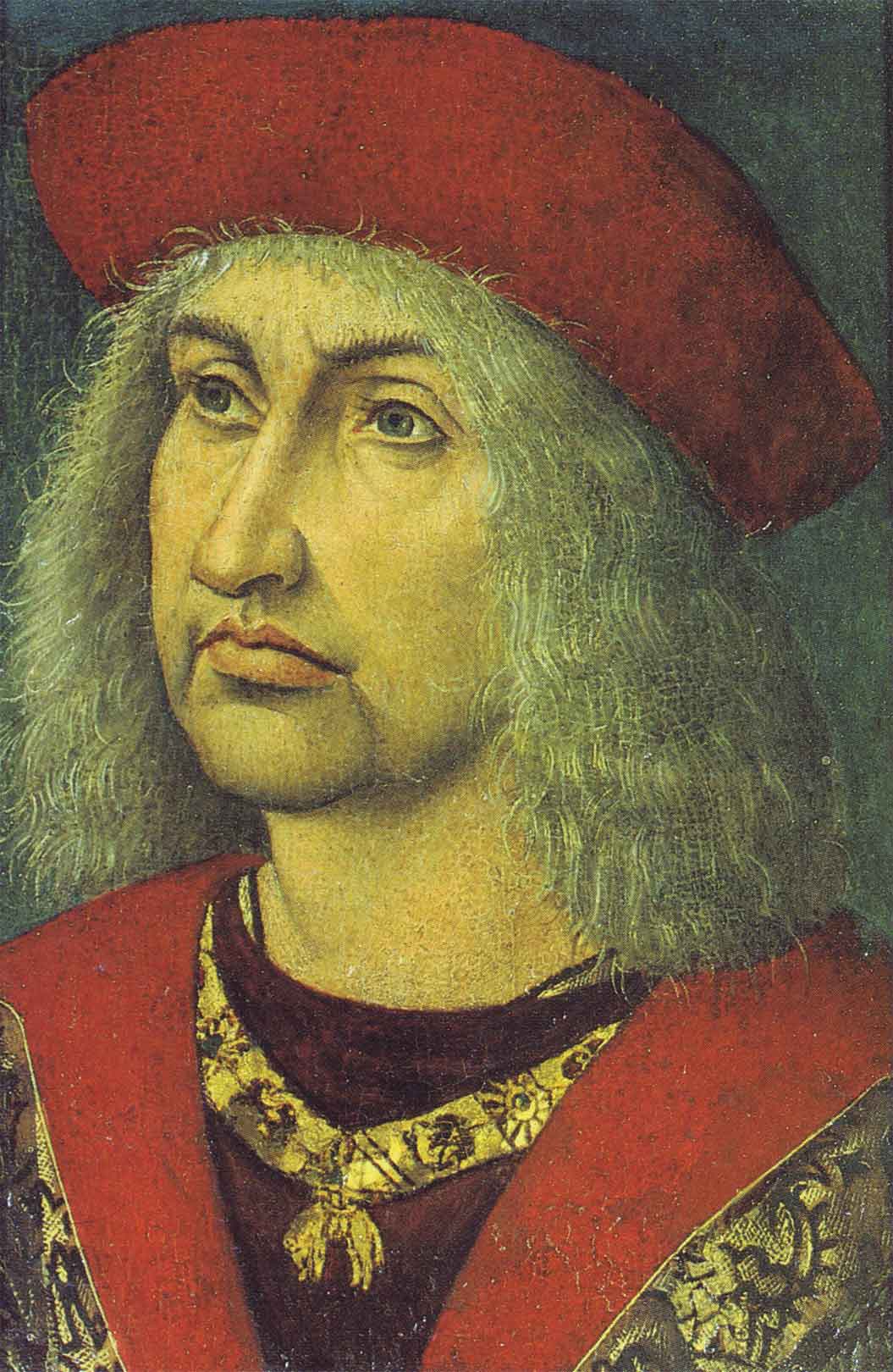
The division of Wettin lands in 1485 (the Leipzig partition) created two main branches: the Ernestine and the Albertine lines. The Ernestine princes initially held the electoral dignity and large territorial holdings in Saxony. Following the Schmalkaldic War and the transfer of the electoral title to the Albertine line in the mid-16th century, the Ernestine territories were reduced and repeatedly redivided among heirs.
Fragmentation and principal states
Over the following centuries the practice of dividing a ruler's lands among his sons produced a complicated patchwork of tiny duchies. These frequently changed in name and extent as dynastic branches died out, merged or split. Notable Ernestine duchies (often styled "Saxe‑…" followed by a place name) include:
- Saxe‑Weimar
- Saxe‑Gotha (and its successors such as Saxe‑Gotha‑Altenburg)
- Saxe‑Coburg (later Saxe‑Coburg‑Gotha)
- Saxe‑Meiningen
- Saxe‑Altenburg
- Saxe‑Eisenach and Saxe‑Hildburghausen
In addition to these Ernestine states, the Albertine branch produced smaller duchies—among them the duchy of Weissenfels—and the Albertine territories often lay adjacent to Ernestine holdings. The labels "Ernestine" and "Albertine" therefore describe dynastic origin rather than a single continuous state.
Government, law and succession
The duchies were ruled as hereditary principalities. Because partible inheritance (dividing a father's lands among his sons) was customary in many branches of German princely houses, territorial fragmentation was the norm rather than the exception. Periodic inheritances, swaps and mediations rearranged borders, producing states that could be quite small but nevertheless sovereign within the framework of the Holy Roman Empire, and later within the German Confederation and the German Empire.
End of the duchies and legacy
The monarchies of the Ernestine duchies came to an end in 1918 with the collapse of the German monarchies at the end of World War I. Most of the former ducal territories became republican free states and were reorganized in the post‑war settlement; in 1920 many of these lands were incorporated into the modern state of Thuringia. Although the duchies no longer exist, their history shaped regional identities in central Germany, and several dynastic connections extended the influence of Ernestine houses beyond the region.
- 1485 — Partition of the Wettin lands (Leipzig).
- Mid‑16th century — Transfer of the electoral dignity to the Albertine line.
- 19th–early 20th century — Existence as constituent monarchies within German federal structures.
- 1918–1920 — Abdication of dukes and incorporation into the Free State of Thuringia.
Questions and answers
Q: What are the Ernestine duchies?
A: The Ernestine duchies were a series of small states in the present German state of Thuringia that were governed by dukes of the Ernestine line of the house of Wettin.
Q: What are the Albertine duchies?
A: The Albertine duchies of Weissenfels, Merseburg, and Zeitz were also referred to as "Saxon duchies," and they bordered several of the Ernestine ones.
Q: Who governed the Ernestine duchies?
A: The Ernestine duchies were governed by dukes of the Ernestine line of the house of Wettin.
Q: How did the Ernestine duchies differ from the Albertine duchies?
A: The Ernestine duchies and the Albertine duchies were different small states in the present German state of Thuringia. The Ernestine duchies were governed by dukes of the Ernestine line of the house of Wettin, while the Albertine duchies were governed by a different line of the house of Wettin.
Q: What is the geographical scope of the Ernestine duchies?
A: The Ernestine duchies were located in the present German state of Thuringia.
Q: How many Ernestine duchies were there?
A: The number of Ernestine duchies changed over time, so there was not a fixed number.
Q: What is the relationship between the Ernestine duchies and the Albertine duchies?
A: The Ernestine duchies and the Albertine duchies were both small states in the present German state of Thuringia. The Albertine duchies bordered several of the Ernestine ones.
Related articles
Author
AlegsaOnline.com Ernestine Duchies of Thuringia: Fragmented Wettin Principalities in Central Germany Leandro Alegsa
URL: https://en.alegsaonline.com/art/32003
Sources
- zum.de : Ernestine Saxony, 1485-1547
- britannica.com : britannica.com
- heraldica.org : House Laws of Anhalt · web.archive.org
- tacitus.nu : The Ernestine Line's Saxon Duchies