
Edom (Idumea): ancient kingdom of the southern Levant
Edom, called Idumea in later sources, was an ancient Semitic-speaking kingdom south of the Dead Sea associated in tradition with Esau and known from biblical, Assyrian and archaeological records.
Overview
Edom is the name applied in ancient sources to both a person and a people: the biblical figure Esau and the nation said to descend from him. The story of Edom appears in the Hebrew Bible, while extra-biblical records and later classical writers use forms such as the Assyrian Udumi, Syriac ܐܕܘܡ, Greek Ἰδουμαία and Latin Idumæa or Idumea. Historically the name came to denote a cluster of tribal chiefdoms and, at times, organized kingdoms occupying the highlands and wadis south and east of the southern portion of the Dead Sea.
Image gallery
6 Images



Geography and name
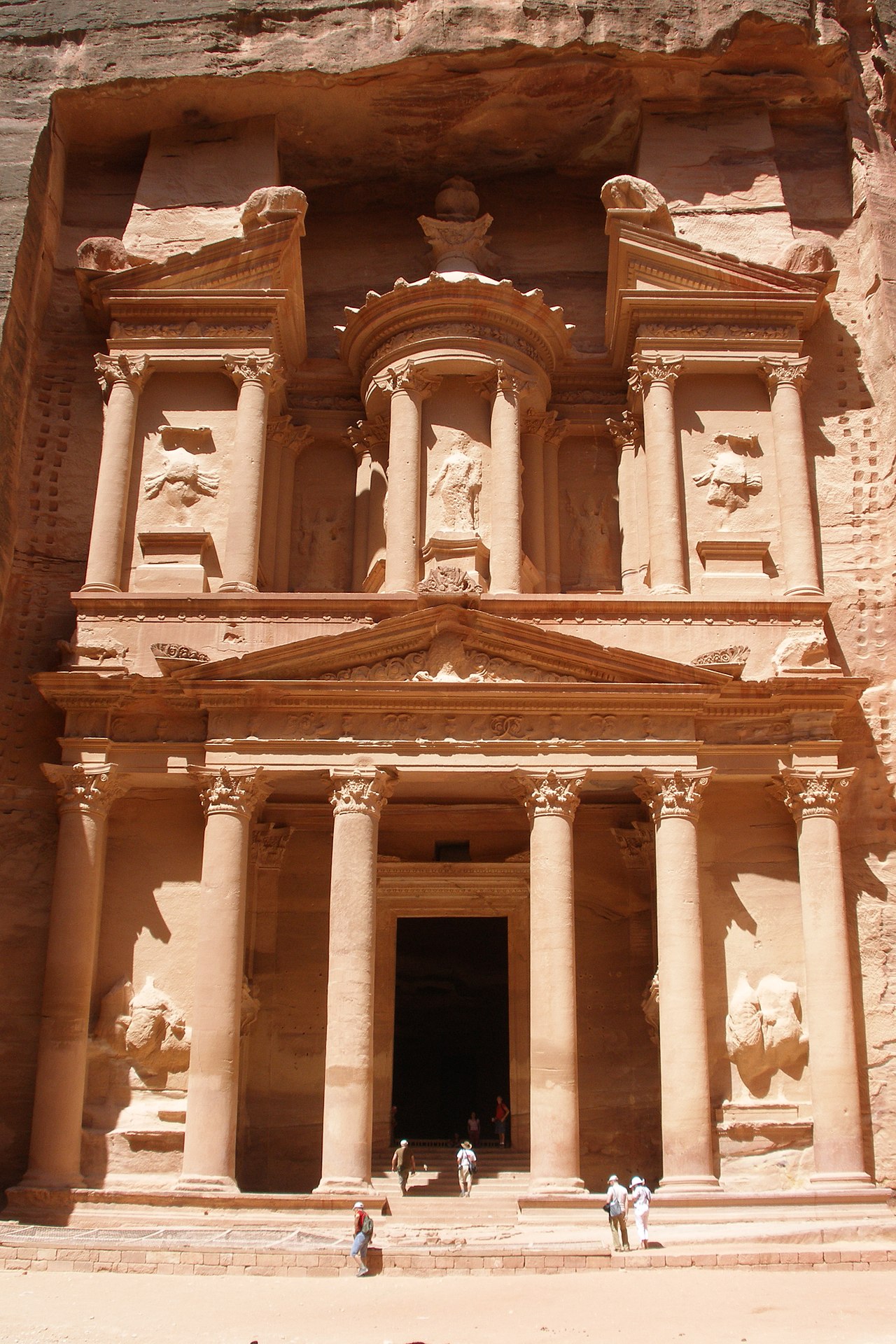
The core territory of Edom lay in the Negev and the long valley known as the Arabah, along the southern reaches of the Dead Sea and extending toward the Jordan valley. The landscape is notable for exposed beds of red sandstone, a likely source for the name "Edom" (which is related to the Hebrew word for red). Key sites mentioned in literary sources include hill towns and fortified settlements perched on rocky escarpments. Edom's location placed it astride overland trade routes and near mineral resources that influenced its economy.
People, language and society
The inhabitants are generally described as a Semitic-speaking population of tribal groups and petty rulers. Material culture and settlement patterns indicate a primarily pastoral and mixed agro-pastoral economy, with fortified centers serving as administrative or refuge sites. From the biblical perspective Edom is presented as related to Israel by kinship through Esau and Jacob, but historical relations fluctuated between rivalry, alliance and coexistence.
History and archaeology
Textual and material evidence places an organized Edomite polity in the Iron Age. Scholars debate the earliest date: some interpret new archaeological finds as pushing activity into the 11th century BCE, while others prefer a more cautious chronology centering on the 8th–9th centuries BCE when Assyrian and regional records begin to interact with Edom. Archaeology has revealed fortifications, smelting sites (notably at Timna and Faynan), and distinctive pottery, supporting the view of an economy tied to copper production and long-distance trade. Over time Edom experienced periods of independence, vassalage to neighboring empires, and incorporation into Hellenistic and Roman administrative frameworks.
Relations, decline and later history
Edom's relationship with neighboring polities, especially Judah and Israel, was complex: biblical narratives describe conflict and occasional alliances. In the late Hellenistic period Idumeans were incorporated into the Hasmonean state and, according to ancient sources, some adopted Judaism. Under Roman rule the region was administered as part of different provinces and many Edomite settlements declined or were assimilated; the ethnonym gradually fell out of local use as new political and cultural realities emerged after the first centuries CE.
Notable facts and distinctions
- Names and languages: the same entity appears under different names in Assyrian (Udumi), Syriac, Greek and Latin sources.
- Economy: archaeological evidence links Edom with early copper-working and control of trade corridors.
- Chronology: scholarly debate continues over whether the state-level structures of Edom date back to the 11th century or are better dated to the 8th–9th centuries BCE; new archaeological work informs but does not yet settle the question.
Edom remains a subject of interest to historians, archaeologists and biblical scholars because it sits at the intersection of textual tradition and material culture, illustrating how small polities in the southern Levant adapted to shifting economic and imperial pressures across the first millennium BCE.
Related articles
Author
AlegsaOnline.com Edom (Idumea): ancient kingdom of the southern Levant Leandro Alegsa
URL: https://en.alegsaonline.com/art/30204
Sources
- wadiarabahproject.man.ac.uk : wadiarabahproject.man.ac.uk