
Dracunculus (dragon arum): appearance, range, and cultivation
Dracunculus is a small genus of tuberous arums notable for a large purple spathe and foul odor; grown for dramatic flowers and foliage in Mediterranean climates and gardens.
Overview
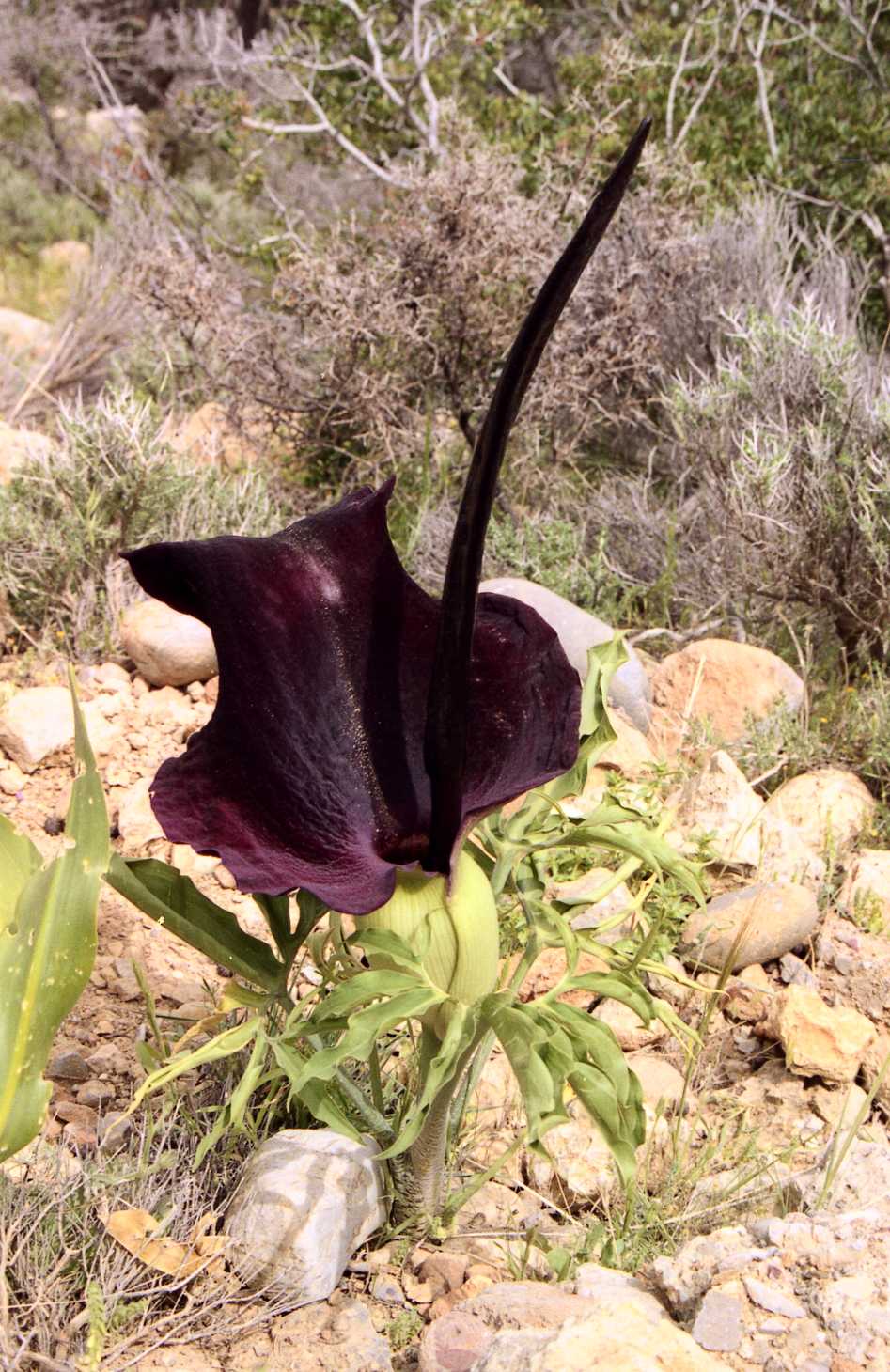
Dracunculus is a small genus of plants in the family Araceae. Members of the genus are perennial, tuberous herbs noted for a striking, often purplish spathe that envelops a central spadix. The flowering structure emits a strong, usually unpleasant odor that attracts fly and carrion-insect pollinators. Botanists generally recognize about three species, with Dracunculus vulgaris and Dracunculus canariensis among the best known.
Image gallery
5 Images


Description and biology
These herbs grow from fleshy tubers and produce a single inflorescence at the growing season's start. The visible flower parts are large and showy but the individual flowers are tiny and densely packed on the spadix; together they form the characteristic inflorescence. Leaves are often large, glossy, and divided, appearing before or after the flowering stem depending on the species. The foul scent and dark coloration are adaptations for sapromyiophily—pollination by insects that normally visit decaying organic matter.
Distribution and taxonomy
Species of Dracunculus are native to parts of the Mediterranean basin and nearby islands. For example, D. vulgaris occurs in parts of Southern Europe and North Africa, while D. canariensis is known from the Canary Islands and Madeira. Taxonomic treatment has varied: some populations have been split or lumped by different authors, so literature may refer to slightly different species counts.
Cultivation, uses and common names
Several species are cultivated as ornamental plants and can make dramatic specimens in a shaded garden or rockery with well-drained soil. The unusual appearance of the spathe and spadix is the primary attraction, despite the malodour during bloom. Common names reflect this showiness and odor; typical vernacular names include:
- Snake Lily
- Dragon Arum or Black Dragon
- Voodoo Lily or Stink Lily
- Black Arum, Dragonwort
Care, propagation and notable distinctions
Dracunculus species are usually propagated by division of tubers or by seed. They prefer sheltered, partly shaded sites and soils that avoid waterlogging. Flowers are short-lived but conspicuous; gardeners should be prepared for a strong scent when plants bloom. Though superficially similar to other aroids such as Amorphophallus or Arum, Dracunculus can be distinguished by its combination of a relatively narrow but tall spadix, deeply colored spathe, and its specific leaf and tuber morphology. Because of their distinctive ecology and dramatic flowering, these plants are of interest to gardeners, horticulturists and those studying pollination by saprophilous insects.
For further reading on taxonomy, horticulture and species accounts, consult specialist floras and horticultural resources linked in botanical databases and regional guides.
Related articles
Author
AlegsaOnline.com Dracunculus (dragon arum): appearance, range, and cultivation Leandro Alegsa
URL: https://en.alegsaonline.com/art/28831
Sources
- paghat.com : Paghat.com: Dracunculus