
Drosera (sundews): sticky-leaved carnivorous plants
Drosera, commonly called sundews, are a widespread genus of carnivorous plants that trap insects with sticky mucilage on glandular hairs. Overview, traits, distribution, life cycle, uses and conservation.
Overview
Drosera, known as sundews, are a diverse genus of carnivorous flowering plants in the family Droseraceae. The common name refers to the glistening droplets of sticky mucilage that cover their leaves and resemble morning dew. Sundews capture small invertebrates to supplement nutrients in poor soils; their trapping and digestion strategies are among the best known of carnivorous plants. For a concise introduction see Drosera overview.
Image gallery
10 Images




Physical characteristics and trapping mechanism
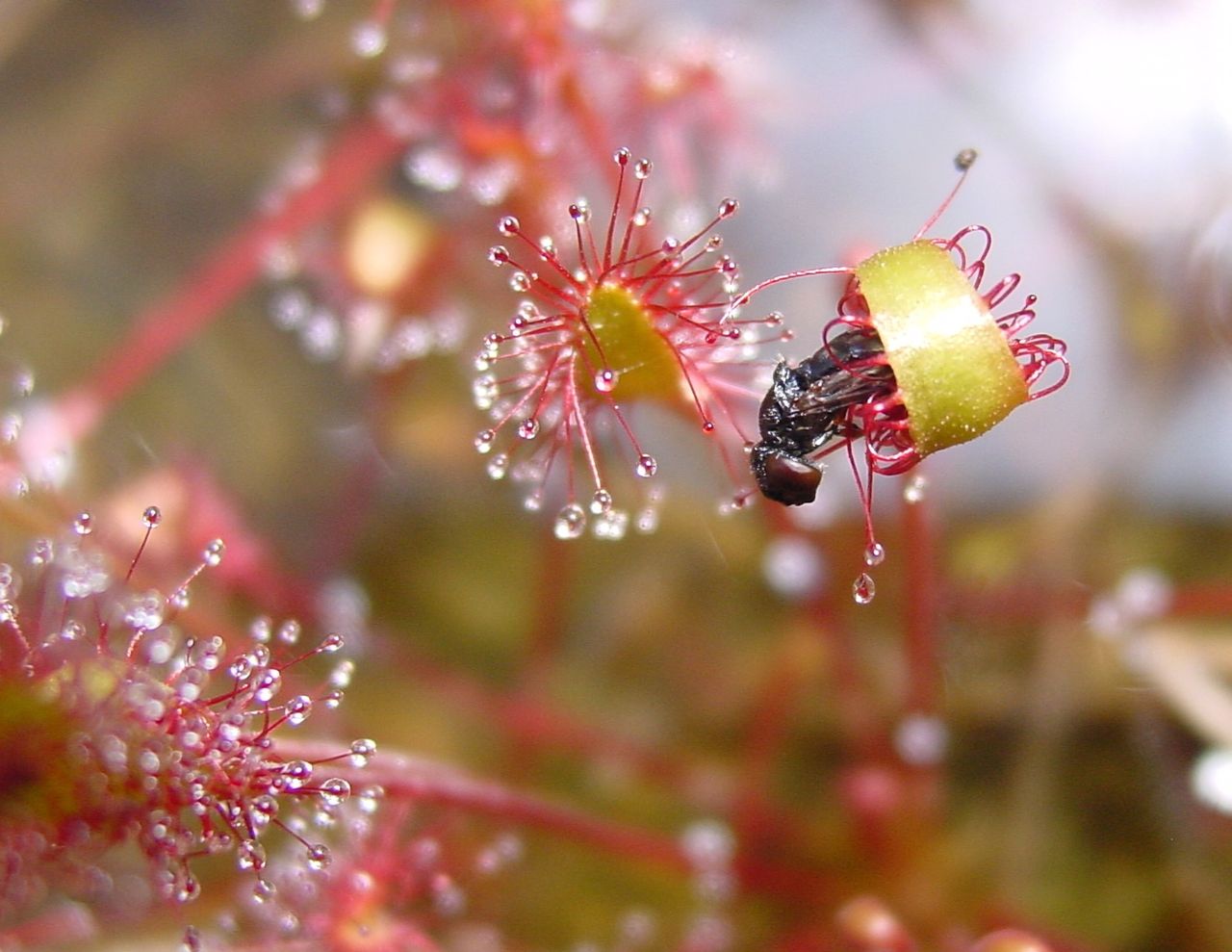
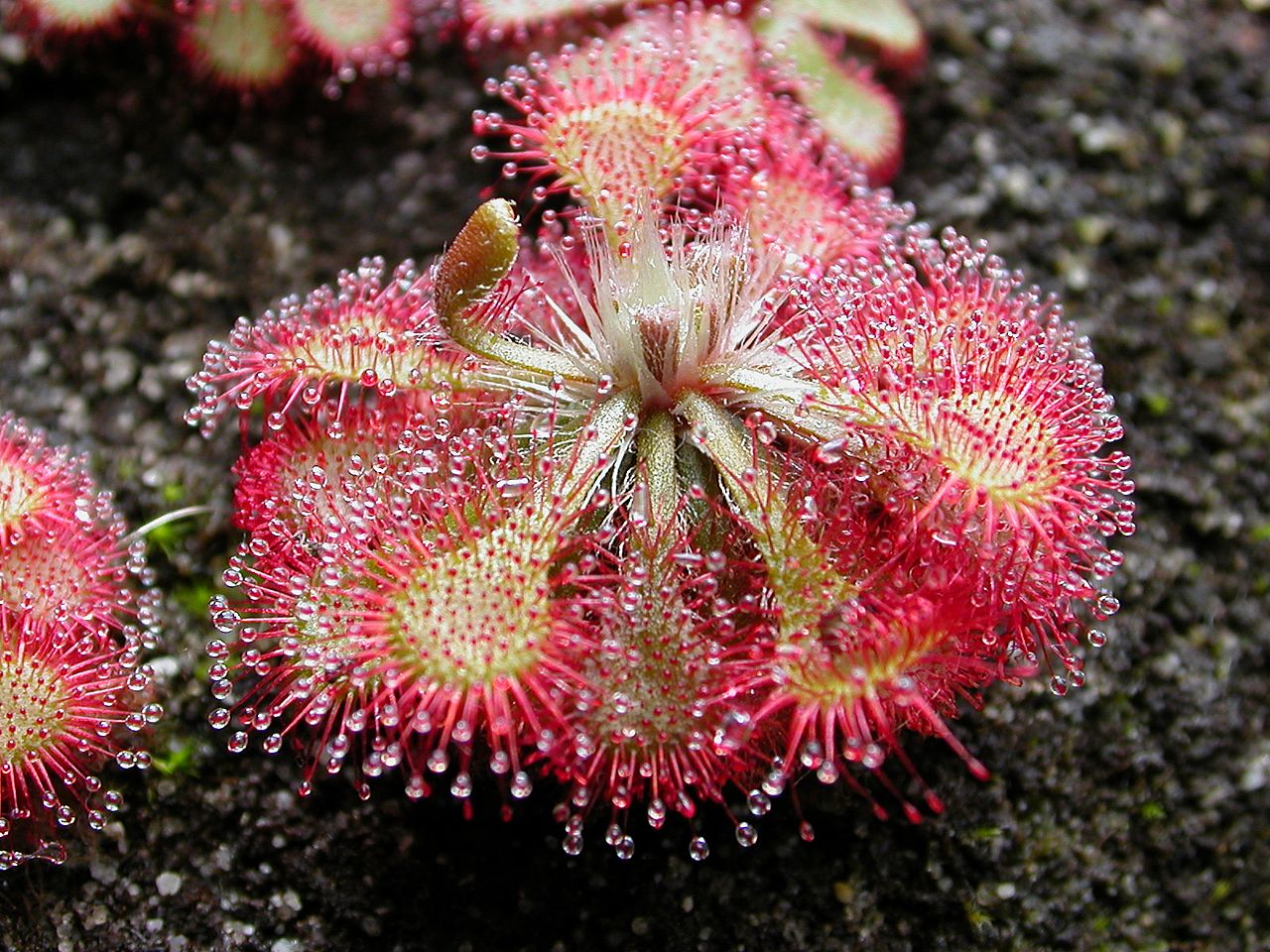
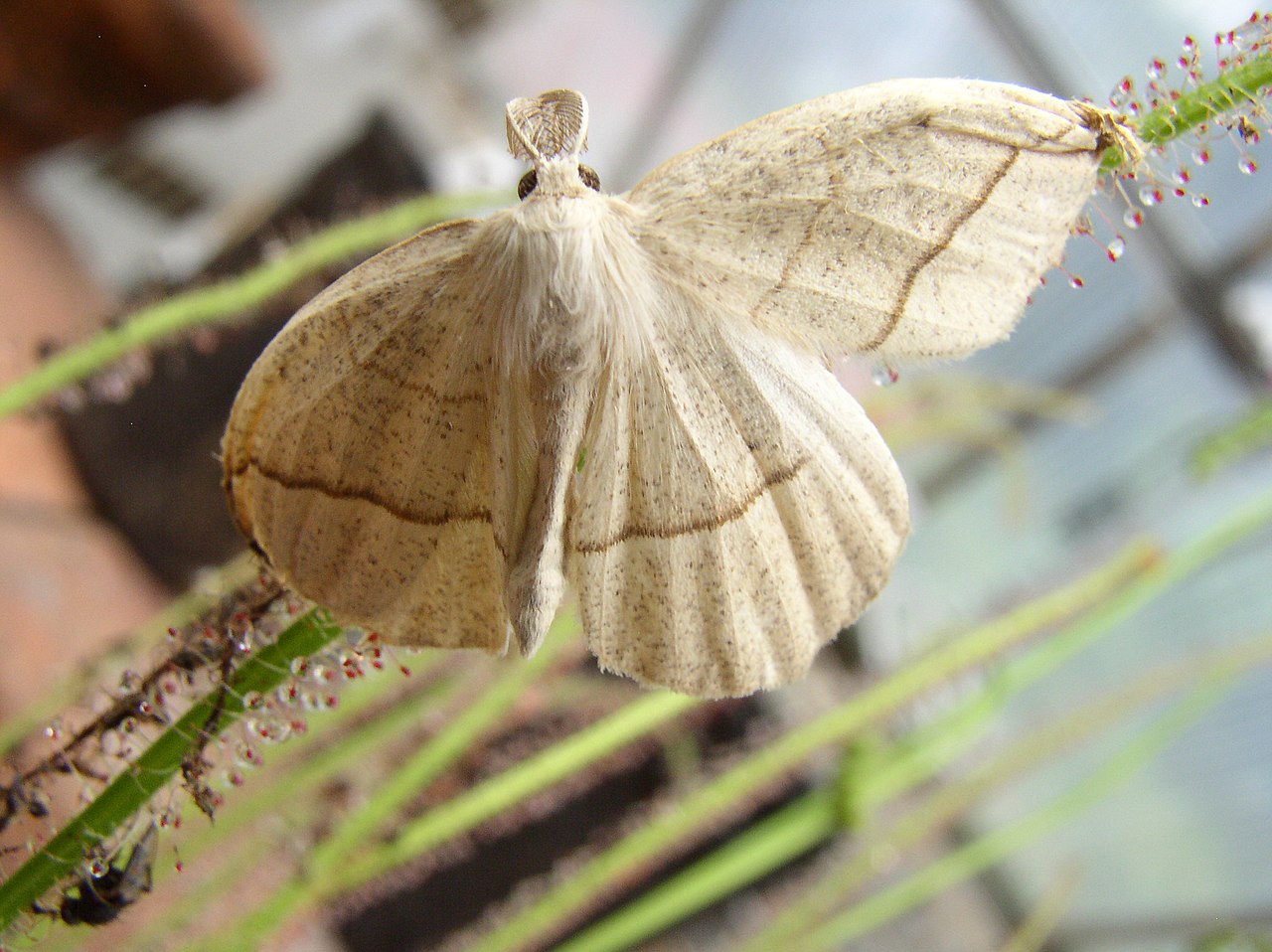
Sundews have leaves densely covered with glandular trichomes (sticky hairs). Each trichome bears a droplet of mucilage that both attracts and adheres to prey. Contact with the mucilage often provokes slow leaf movement—either curling or rolling—to bring more glands into contact with the insect. Digestive enzymes and microbes break down soft tissues so the plant can absorb nitrogen, phosphorus and other nutrients. For details on the glands and mucilage chemistry see mucilage and glands and digestion processes.
Diversity, taxonomy and notable species
The genus includes roughly two hundred species worldwide, ranging from tiny rosettes only a few millimetres across to larger, putting some species with elongated leaves. Well-known species used in cultivation and study include Drosera rotundifolia (round-leaved sundew), Drosera capensis (Cape sundew) and several tuberous sundews from Australia. Taxonomy and species lists are covered in many botanical references; see taxonomic resources.
Distribution, habitats and life cycle
Sundews occur on every continent except Antarctica and inhabit bogs, fens, wet heaths and other acidic, nutrient-poor wetlands. Many species are perennial and can live for many years; some are annuals that complete their life cycle in a single growing season and rely on seed to persist. Certain temperate species form dormant structures such as winter buds or tubers to survive adverse seasons. For distribution maps and habitat notes see distribution and habitat.
Uses, ecological role and conservation
Sundews are popular in horticulture and education because of their dramatic feeding behaviour. Ecologically, they occupy nutrient-poor niches and help regulate insect populations at small scales. Many species face habitat loss, peatland drainage and collection pressure; conservation measures include habitat protection, cultivation programs and legal safeguards. Authoritative conservation summaries are available at conservation sources.
Further reading and notable facts
- Sundews were named from the Greek word for "dew" because of their glistening mucilage; the genus has been studied since early botanical times. See historical notes at historical references.
- They illustrate convergent evolution among carnivorous plants: similar trapping solutions evolved independently in different families.
- In cultivation, species vary in temperature and moisture needs; some tuberous Australian species require a dry summer dormancy.
For practical guides on growing, identification keys, and academic literature, consult the links above and specialist botanical texts.
Questions and answers
Q: What are Drosera?
A: Drosera are carnivorous plants sometimes called Sundews.
Q: How do Drosera trap and digest their prey?
A: Drosera use a thick gluey goo called mucilage that is attached to special hairs called trichomes to trap and digest their prey.
Q: How common are Drosera?
A: Drosera are one of the most common carnivorous plants with at least 188 species.
Q: Where are Drosera found?
A: Drosera are found everywhere in the world except Antarctica.
Q: How long do many Sundew species typically live for?
A: Many Sundew species typically live for two or more years.
Q: How do some Sundew species reproduce?
A: Some Sundew species reproduce by seed.
Q: What is the maximum lifespan of some Sundew species?
A: Some Sundew species can live for 50 years.
Related articles
Author
AlegsaOnline.com Drosera (sundews): sticky-leaved carnivorous plants Leandro Alegsa
URL: https://en.alegsaonline.com/art/28991
Sources
- isis.library.adelaide.edu.au : Insectivorous Plants