
Dogger Bank: North Sea sandbank — geography, ecology, history and uses
Dogger Bank is a large, shallow sandbank in the North Sea off England. This article covers its physical features, geological history, ecology and fisheries, human uses and conservation issues.
Overview
Dogger Bank is a prominent shallow elevation of the seabed in the North Sea. Situated roughly 100 kilometres from the coast of England, the bank stands out from surrounding waters and has long influenced navigation, marine life and human activity in the region.
Image gallery
4 Images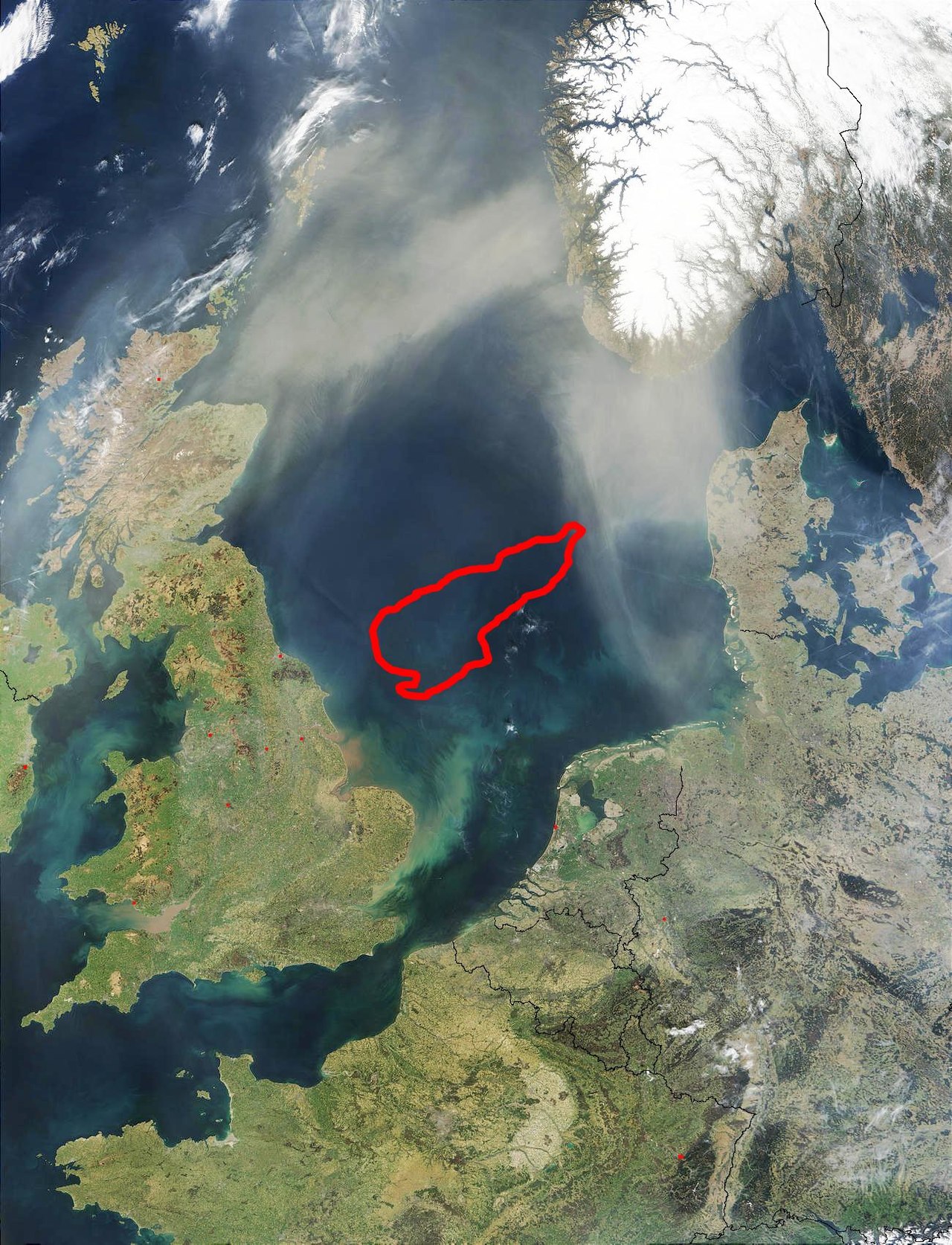



Physical characteristics
The feature stretches approximately 260 kilometres in length and about 97 kilometres across. Compared with the broader sea, Dogger Bank is unusually shallow: the wider North Sea has an average depth well below the bank, whereas depths over Dogger Bank are typically around 30 metres and can be as little as 13 metres in the shallowest parts.
Origin and geological history
Formed from sands, gravels and glacial deposits, the bank was sculpted by ice, rivers and changing sea levels. During the late last ice age and during subsequent rises in sea level it alternately emerged as an island or functioned as a land bridge to mainland Europe, a role that affected the movements of humans and animals in prehistoric times.
Ecology and fisheries
Shallow, sandy habitats on and around Dogger Bank support abundant benthic communities and attract fish, shellfish and seabirds. The area is an important centre for commercial fishing, historically yielding species such as cod and European plaice. Its biological productivity makes it a focus for fisheries management and ecological research.
Human uses and notable facts
Beyond its role as a fishing ground, Dogger Bank has been considered for large-scale renewable energy developments and is crossed by shipping routes. It has also featured in historic naval events, underlining the bank's strategic as well as economic significance. Present-day use requires balancing extraction, transport and energy with protection of marine habitats.
Conservation and management
Because of its ecological importance, portions of Dogger Bank have been subject to proposals for marine protection and international management efforts. Conservation measures, spatial planning and regulated fisheries aim to conserve habitats while allowing sustainable human use, supported by ongoing scientific monitoring.
Related articles
Author
AlegsaOnline.com Dogger Bank: North Sea sandbank — geography, ecology, history and uses Leandro Alegsa
URL: https://en.alegsaonline.com/art/28191