
European plaice (Pleuronectes platessa): description, habitat and fisheries
The European plaice is a right-eyed flatfish of the North-East Atlantic and Mediterranean. It inhabits sandy continental shelves, feeds on benthic invertebrates and supports important commercial and recreational fisheries.
Overview
The European plaice (Pleuronectes platessa) is a widely distributed flatfish of commercial and ecological importance. It is a righteye flounder: in adults both eyes are on the right side and the fish lies on its left flank on the seabed. Plaice occur across the continental shelf of northwestern Europe and adjacent seas and are adapted to a demersal life on sandy and mixed sediments.
Image gallery
4 Images

Appearance and distinguishing features
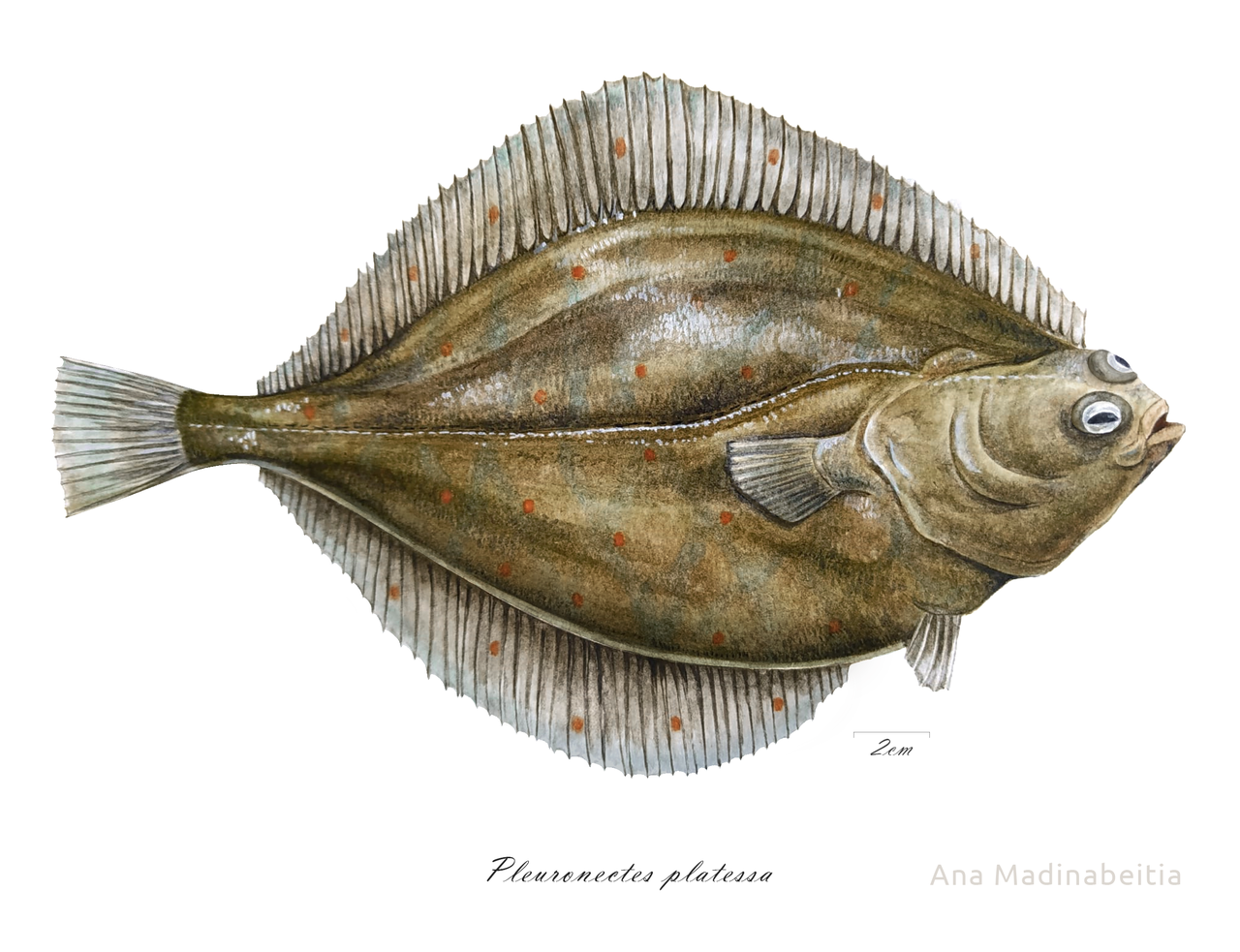
Plaice have a flattened, oval body with a smooth skin texture compared with some other flatfish. The upper surface is generally brown to olive and is often marked with distinctive orange or red spots and a subtle bony ridge behind the eyes. The underside is pale. Juveniles are more translucent and change shape and colour as they mature. Key identifying traits include:
- Body plan: flattened, demersal shape suited to lying on the seabed.
- Eye position: both eyes on the right side in mature individuals.
- Colouration: brown to olive dorsally with characteristic orange-red spots.
- Skin texture: relatively smooth; a bony ridge is present behind the eyes.
Distribution and habitat
Plaice are native to the eastern Atlantic, with a range extending from Arctic and sub-Arctic waters, including the Barents Sea, southwards to the Mediterranean. They favour sandy or mixed sand-and-mud substrates and are typically found from shallow coastal waters to depths approaching 200 metres. Juveniles commonly use estuaries and sheltered bays as nursery areas before moving to deeper shelf habitats. For regional distribution summaries and maps refer to authoritative sources and surveys (distribution resources, regional studies).
Diet, behaviour and life cycle
Plaice feed mainly on benthic invertebrates such as polychaete worms, small crustaceans and bivalves; they locate prey by probing into sediment and by ambush. Reproduction is seasonal and varies with latitude; spawning typically takes place in cooler months in many parts of the range. Eggs and early larvae are planktonic and drift with currents before settling to the seabed and undergoing metamorphosis to the juvenile flatfish form. Growth rate and age at maturity vary between populations and are influenced by temperature and food supply. For more on feeding ecology see dietary studies and benthic interaction reports (diet studies, benthic interactions).
Fisheries, management and human use
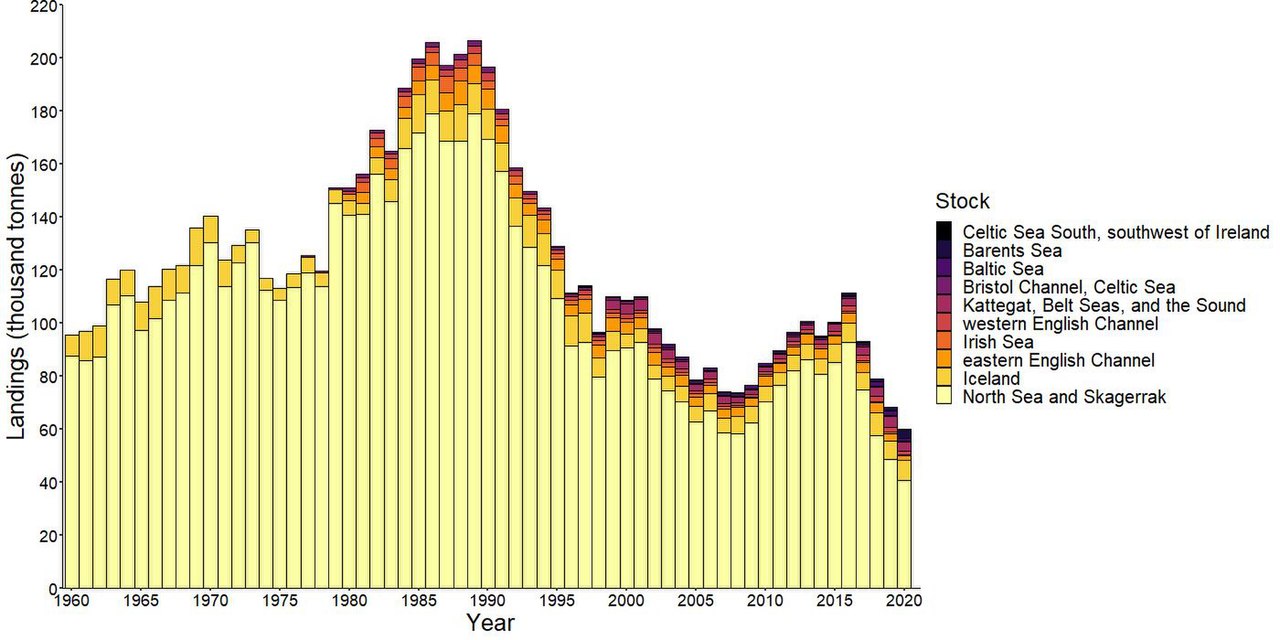
Plaice are an important target for commercial trawl and beam fisheries and are also taken by smaller artisanal and recreational fleets. The flesh is pale, mild and widely consumed fresh, frozen or processed. Because of their commercial value, plaice stocks are monitored in many regions and management measures commonly include quotas, minimum size limits and seasonal closures to protect spawning concentrations. Information on management and catch statistics can be found in regional fisheries documents and assessments (management information).
Ecological role and conservation considerations
The species plays a role as both predator of benthic invertebrates and prey for larger demersal fish, marine mammals and seabirds. Plaice populations can be affected by overfishing, habitat disturbance from bottom-contact gear, and environmental change such as warming seas and altered prey communities. Management aims to balance sustainable catch with habitat protection and the maintenance of productive spawning and nursery areas.
Similar species and identification tips
Plaice may be confused with other flatfish such as sole or dab; differences include eye-side, body outline and the presence and pattern of spots. When identifying specimens, note eye side, overall shape, dorsal spot patterns and the bony ridge behind the eyes. For practical identification guides consult regional field guides and fisheries identification sheets (species summaries).
Questions and answers
Q: What is a European plaice?
A: European plaice is a commercially important flatfish found on the sandy bottoms of the European shelf.
Q: Where is the geographical range of European plaice?
A: The geographical range of European plaice is from the Barents Sea to the Mediterranean.
Q: What are the physical characteristics of plaice?
A: Plaice are characterised by their smooth, brown skin, red spots, and bony ridge behind the eyes.
Q: What do European plaices feed on?
A: European plaices feed on polychaetes, crustaceans, and bivalves.
Q: What is the maximum depth at which European plaices can be found?
A: European plaices can be found at a depth of about 200 m.
Q: What makes European plaices commercially important?
A: European plaices are commercially important due to their high demand in the seafood market.
Q: Where does the European plaice live?
A: The European plaice lives on the sandy bottoms of the European shelf.
Related articles
Author
AlegsaOnline.com European plaice (Pleuronectes platessa): description, habitat and fisheries Leandro Alegsa
URL: https://en.alegsaonline.com/art/32621