
Allotropes of Carbon: Forms, Structure, and Uses
Comprehensive overview of carbon allotropes — diamond, graphite, graphene, fullerenes and others — covering structures, properties, historical milestones and principal applications.
Carbon is unique among elements for the variety of ways its atoms can bond and build structures. Different arrangements of identical carbon atoms give rise to distinct physical forms called allotropes. Two of the best known are diamond and graphite, but advances in chemistry and materials science have revealed many more forms with diverse properties and uses.
Image gallery
8 Images


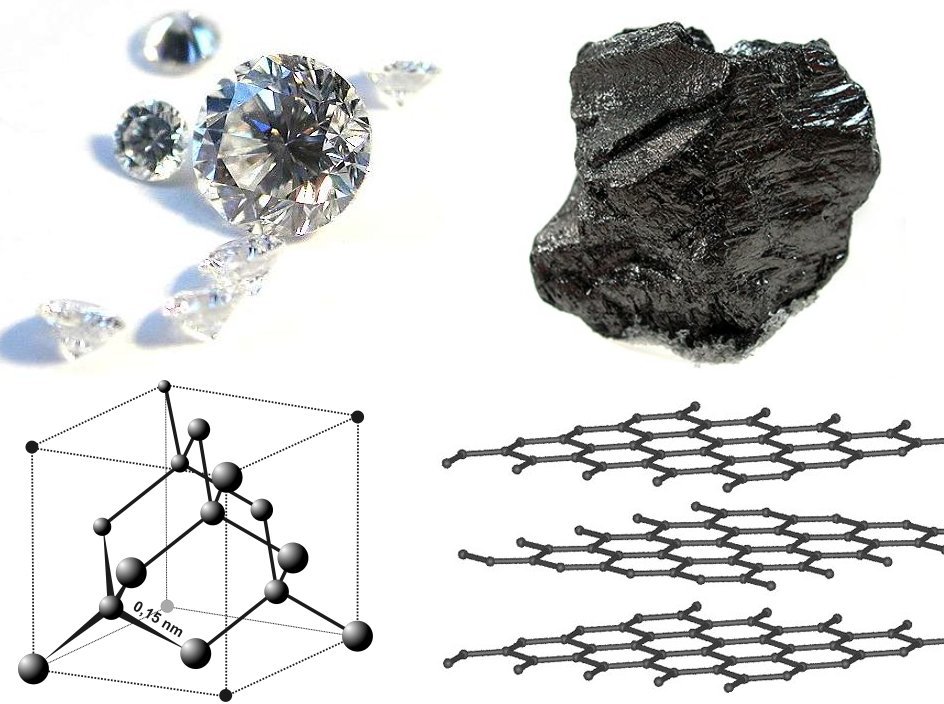

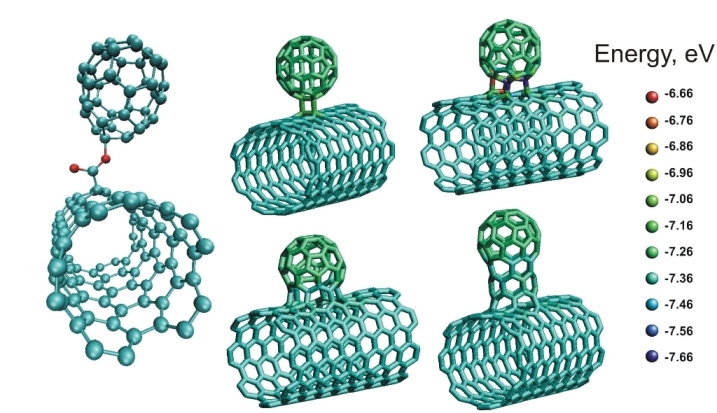
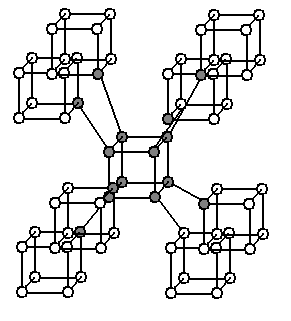
Common allotropes and structural types
- Diamond — a three-dimensional sp3 network.
- Graphite — stacked sp2-bonded sheets.
- Graphene — a single atom-thick sheet of carbon.
- Carbon nanotubes — rolled graphene cylinders.
- Fullerenes — closed-cage molecules such as C60.
- Amorphous carbon — disordered networks common in soot and charcoal.
- Lonsdaleite — a hexagonal form related to diamond, found in meteorite impact sites.
- Carbyne — linear chains of sp-hybridized carbon atoms (subject of ongoing research).
- Glassy carbon — a hard, glass-like non-graphitizing carbon used in electrodes.
- Carbon black — fine particulate carbon produced from incomplete combustion.
- Activated carbon — highly porous carbon used for adsorption and filtration.
- Nanodiamond — diamond particles at the nanometer scale with special surface chemistry.
- Buckminsterfullerene (C60) — the prototypical fullerene molecule.
- Carbon fibers — high-strength fibrous forms used in composites.
- Shungite — a naturally occurring, carbon-rich mineraloid with complex structure.
- Graphene oxide — an oxygenated derivative of graphene used for processing and chemistry.
- Reduced graphene oxide — partially restored conductive sheets derived from graphene oxide.
- Polyynes — chains with alternating single and triple bonds studied for electronic properties.
- Nanotube ropes — bundles of carbon nanotubes with collective mechanical behavior.
- Soot and charcoal — everyday amorphous carbons formed by combustion.
- Fullerene derivatives — chemically modified cages used in research and devices.
The distinction between these forms arises from differences in bonding: sp3-hybridized carbon atoms form the tetrahedral network of diamond, while sp2 bonding builds planar aromatic sheets in graphite and graphene. Delocalized electrons in sp2 systems give electrical conductivity and characteristic chemical behavior, whereas the saturated sp3 lattice of diamond is electrically insulating and exceptionally hard.
History, discovery and development
People have known and used diamond and forms of carbon such as charcoal for millennia, but modern identification of new allotropes accelerated in the 20th century. The discovery of fullerenes in the mid-1980s opened a new field of molecular carbon cages, and the 1990s and 2000s brought rapid progress in nanotubes and the isolation of graphene as a one-atom-thick material. These breakthroughs transformed both fundamental chemistry and applied materials science, leading to a broad international research effort to characterize, produce, and harness new carbon forms.
Graphite is thermodynamically the most stable form of carbon at standard conditions, which helps explain why diamond, though common in nature, is technically a metastable allotrope under ordinary surface conditions. Many synthetic routes — high-pressure high-temperature synthesis, chemical vapor deposition, and catalytic growth — now permit controlled production of particular allotropes for industrial or research use.
Applications exploit the wide property range of carbon allotropes. Diamond and nanodiamond are used for jewelry, cutting, polishing and some electronics. Graphite serves as a dry lubricant and as the conductive material in electrodes and batteries; its layered structure enables intercalation chemistry in lithium-ion cells. Graphene and carbon nanotubes are studied for high-strength composites, flexible electronics, sensors and thermal management. Fullerenes and their derivatives appear in organic photovoltaics, molecular electronics and biomedical research. Porous carbons like activated carbon are indispensable in filtration and adsorption technologies.
Understanding carbon allotropy illustrates a central concept in chemistry: identical atoms can produce radically different materials when bonded and arranged in alternative ways. That flexibility makes carbon a cornerstone of both natural systems and advanced materials engineering. For further reading on specific allotropes and laboratory techniques, see the linked entries above and specialized reviews available in the scientific literature.
Questions and answers
Q: What are allotropes of carbon?
A: Allotropes of carbon are different forms of the same chemical element.
Q: Which are the most famous allotropes of carbon?
A: The most famous allotropes of carbon are diamond and graphite.
Q: What is graphite and what are its properties?
A: Graphite is a semimetal and a good conductor. It is also the most stable form of solid carbon ever discovered.
Q: What are allotropes?
A: Allotropes are different forms of the same chemical element.
Q: Why do different elements show allotropy?
A: Many elements show allotropy because there are a number of ways in which the atoms can be linked together.
Q: What is diamond and what are its properties?
A: Diamond is one of the best known allotropes of carbon. Its hardness and high dispersion of light make it good for use in jewellery. It is also the hardest known natural mineral.
Q: What is the melting point of both diamond and graphite?
A: Both diamond and graphite have extremely high melting points, which is unusual for a nonmetallic element.
Related articles
Author
AlegsaOnline.com Allotropes of Carbon: Forms, Structure, and Uses Leandro Alegsa
URL: https://en.alegsaonline.com/art/2857