
Deadpool (Marvel Comics character)
Deadpool is a Marvel Comics antihero known for a rapid healing factor, dark humor, and breaking the fourth wall. Created in 1991, he appears in comics, films, and games and mixes violence with meta-comedy.
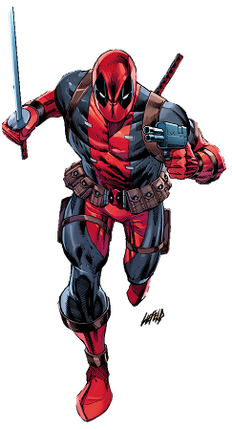
Deadpool is the common name of Wade Wilson, a fictional character appearing in American comic books published by Marvel Comics. Introduced in the early 1990s, Deadpool became notable for combining action and graphic violence with self-aware, irreverent humor. Often cast as an antihero, he oscillates between villainy, freelance mercenary work and reluctant heroism; across decades of stories he has become one of Marvel's most commercially successful and culturally visible characters.
Image gallery
3 Images

Characteristics and powers
Deadpool's most distinctive trait is a powerful regenerative healing factor that repairs tissue and arrests aging, allowing him to recover from wounds that would be fatal to ordinary people. This ability drives several recurring themes: his physical resilience, grotesque scarring of his flesh, and complications in his interpersonal life (for example, a mythic infatuation with the personification of Death is a motif in some storylines). He is an expert marksman and swordsman, commonly depicted carrying twin handguns and one or two katanas, and he blends firearms, blades and improvisational weaponry in close-quarters combat.
Beyond physical skills, Deadpool is defined by his voice: rapid-fire wisecracks, violent slapstick, and frequent direct address to readers — the so-called "breaking the fourth wall." He behaves as if aware he is a fictional construct, a device that writers and artists have exploited to create meta-commentary on comics and pop culture.
Origin and publishing history
Deadpool was created by artist Rob Liefeld and writer Fabian Nicieza and first appeared in The New Mutants #98 (published 1991). Initially introduced in a supporting role, the character quickly developed a cult following and was given solo miniseries and ongoing titles. Over time he appeared in crossover team books, most notably in X‑related titles, and headlined a steady stream of limited series, graphic novels and ensemble books. Writers have taken varied approaches to tone, ranging from grim action to absurdist comedy; this flexibility helped sustain the character through multiple creative revamps and editorial directions.
Major themes, storylines and affiliations
Recurring themes in Deadpool stories include identity, redemption and mental instability. Several arcs portray him struggling to control violent impulses or to be a better father, partner or friend; other stories emphasize mayhem and black humor. He has been allied with teams such as X‑Force and has had extended partnerships and rivalries with other Marvel characters. Notable recurring threads include teamups with Cable, ensembles like the Deadpool Corps, and participation in large crossover events that reconfigure continuity.
- Combat style: mixed martial tactics, firearms and blades;
- Abilities: accelerated healing, enhanced durability and slowed aging;
- Personality: wisecracking, unpredictable, self-referential;
- Typical costume: red-and-black suit concealing facial scarring and identity.
Adaptations and cultural impact
Deadpool has crossed into other media, most prominently in major motion pictures where the character was portrayed by actor Ryan Reynolds in commercially successful R‑rated films. He also appears in animated programs, video games and merchandising. The films emphasized the same mixture of graphic action and meta-humor that characterizes the comics, and they brought the character to a far wider audience, influencing how later comics balance comedy with action. His popularity has prompted discussions about genre boundaries, censorship, and the appeal of antiheroes in contemporary popular culture.
Notable distinctions and criticism
Writers and critics note two striking, sometimes conflicting aspects of Deadpool: his capacity for genuine pathos and attempts at moral growth, and his tendency toward excessive violence and tasteless jokes. The "breaking the fourth wall" device is celebrated by many fans for its cleverness but sometimes criticized when overused. As a character who frequently dies, returns, or exists in alternate timelines, Deadpool highlights how modern superhero comics handle continuity and reinvention.
Further reading and resources
The list below links to representative resources and publisher pages where readers can explore publication history, character biographies and critical discussion. Each entry uses a placeholder link for editorial reference.
- Deadpool: character overview and profile
- Selected comic appearances and issue guides
- Deadpool and the X-Men: appearances and team-ups
- Marvel Comics official page
- Early villainous portrayals and development
- Appearances in X-series and crossover events
- Iconic costume designs and color schemes
- Weapons, fighting style and armory
- Analysis of the healing factor and powers
- Major story arcs and continuity notes
- Relationships and recurring characters in Deadpool's life
- Mythic elements: Death and other supernatural motifs
- Fourth-wall breaking and metafictional techniques
Related articles
Author
AlegsaOnline.com Deadpool (Marvel Comics character) Leandro Alegsa
URL: https://en.alegsaonline.com/art/25970
Sources
- robliefeldcreations.com : "Deadpool and Me"
- newsarama.com : "There's Something About DEADPOOL: A Popularity Question"