
Death Certificate (album)
Death Certificate is Ice Cube’s second solo album, released October 29, 1991. Noted for its political and social themes, the record reached number two on the Billboard 200 and generated heated debate.
Death Certificate is the second solo studio album by American rapper Ice Cube, released on October 29, 1991, through Priority Records. It followed his departure from the group N.W.A and further established his solo voice. The album debuted at number two on the Billboard 200 chart, reflecting both strong sales and wide public attention. Musically it continued Ice Cube’s combination of hard-edged beats and direct, narrative lyricism rooted in West Coast hip hop.
Image gallery
1 Image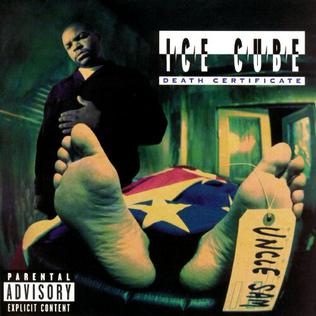
Background and structure
Recorded in the months after Ice Cube left his former group, the album is commonly described as having two contrasting halves that examine different perspectives on social conditions and street life. Production features sparse, sample-driven arrangements that emphasize the clarity of the lyrics. Ice Cube used the record to expand on themes he had explored as a member of N.W.A, moving between polemical commentary and first-person storytelling.
Themes and controversy
Death Certificate drew attention because of its outspoken treatment of race, crime, policing and community relations. Several songs critique racial profiling, urban violence, and what Ice Cube presents as the economic realities of drug dealing and survival in marginalized neighborhoods; some passages prompted public debate about responsibility and artistic expression. The album also contains direct attacks on his former associates in the rap world, most famously the track "No Vaseline," a pointed diss that intensified media coverage and fan discussion. Retailers, community groups and commentators reacted strongly to a number of tracks, producing protests and calls for boycotts in some areas and fueling wider conversations about free speech in music. For contemporary accounts and summaries of those controversies see contemporary coverage and discussions of his remarks on drug dealing and social policy.
Notable tracks
- No Vaseline — an aggressive diss track aimed at Ice Cube’s former N.W.A bandmates.
- Steady Mobbin' — a single that exemplified the album’s raw production and street-oriented narratives.
- Black Korea — a song that addressed tensions between African-American communities and Korean-American merchants; it contributed to the record’s controversy.
- Other tracks alternate between social critique and autobiographical vignettes, showcasing Ice Cube’s skill as both a provocateur and storyteller.
Reception and legacy
At the time of release critics and listeners were divided: some praised the album’s uncompromising perspective and lyrical force, while others criticized the tone and some of its depictions. Commercially, its high chart position and continued references in hip hop discourse testified to its impact. Over time Death Certificate has been discussed as an influential work in the development of politically charged gangsta rap, notable both for its musical intensity and for sparking broader debates about representation, responsibility and the limits of provocative art in popular music.
Related articles
Author
AlegsaOnline.com Death Certificate (album) Leandro Alegsa
URL: https://en.alegsaonline.com/art/26021