
Dangerous Minds (1995 film)
1995 American drama starring Michelle Pfeiffer as a former Marine who teaches at an inner‑city California high school; noted for its soundtrack, Coolio's 'Gangsta's Paradise', and mixed critical reception.
Overview
Dangerous Minds is a 1995 American drama film that centers on LouAnne Johnson, a former U.S. Marine who becomes a teacher at an underfunded high school in California. The picture stars Michelle Pfeiffer in the leading role and adapts material from Johnson’s autobiographical source book. Released on August 11, 1995, the film attracted large audiences despite a mixed response from critics and later inspired a short‑lived television adaptation.
Image gallery
1 Image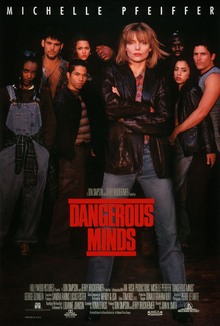
Plot and characters
The narrative follows Johnson as she encounters students coping with poverty, fractured family relationships and the pressures of street life. Many of the pupils depicted—the film foregrounds young people identified as African American and Hispanic—face challenges including gang involvement, teenage pregnancy and chronic absenteeism. Johnson’s efforts to connect with them emphasize classroom strategies and creative assignments, and the film highlights how a teacher’s relationship with students can influence engagement.
Themes and style
Dangerous Minds combines social drama with a redemption arc, often using personal stories and classroom moments to address broader issues in urban education. The movie gives weight to creative expression—poetry, spoken word and literature are shown as means of reaching resistant students—and commentators have described the film as an urban melodrama because of its emotional tone and emphasis on transformation. At the same time the film raises questions about simplification and representation of systemic school problems.
Production and release
Directed for the screen from an adaptation of Johnson’s memoir, the production assembled a cast intended to reflect the demographics of an inner‑city campus. Upon its August 1995 release, the movie performed strongly at the box office while critics were divided: many praised Pfeiffer’s committed portrayal, while others argued the story relied on familiar Hollywood tropes about education and rescue narratives.
Soundtrack and awards
The film’s soundtrack became a major cultural element, most notably through the single "Gangsta's Paradise" by Coolio. The song crossed over to mainstream radio and helped the soundtrack reach audiences beyond typical filmgoers. The single and album received several high‑profile nominations, including recognition associated with the Grammy awards and other industry honors, and Coolio won a Grammy for his performance on the track.
Critical debate and educational impact
Scholars and commentators studying Hollywood depictions of schools have used Dangerous Minds as an example when discussing both potential virtues and drawbacks of mainstream portrayals. Supporters note the film’s focus on the importance of relationships and nontraditional teaching techniques, while critics point to tendencies toward stereotyping and the simplification of entrenched social issues. The film thus serves as a useful case for classroom and media studies about representation, pedagogy and the politics of rescue narratives.
Adaptations and legacy
A television series bearing the same name premiered shortly after the film’s run and attempted to continue the classroom drama on the small screen (TV adaptation). That series had a limited run. In later years Dangerous Minds has remained part of conversations about 1990s cinema, popular soundtracks and portrayals of urban youth; it is frequently mentioned in retrospectives that consider both its popular appeal and the criticisms leveled at it.
Further topics and resources
- Film overview and context
- Cast and principal performances
- Primary source: the memoir
- Depiction of students and youth culture
- Treatment of gang themes
- Use of poetry and arts in the classroom
- Soundtrack and singles
- Awards and nominations context
- Genre and critical reception
- Representation and diversity
- Discussion of school problems
- Biographical elements of the protagonist
- Setting: California urban schools
- Public high school context
- Social issues addressed
- Television adaptation details
For readers seeking more, consult contemporary reviews, interviews with the filmmakers and scholarship on media portrayals of education to obtain a fuller understanding of the film’s production history, public reception and longer‑term cultural effects. Discussions of Dangerous Minds often connect the movie’s popular soundtrack with its broader public impact and the debates it provoked about representation, pedagogy and urban social issues.
Related articles
Author
AlegsaOnline.com Dangerous Minds (1995 film) Leandro Alegsa
URL: https://en.alegsaonline.com/art/25368
Sources
- boxofficemojo.com : "Boxofficemojo.com"
- imdb.com : "Dangerous Minds (1995) - Awards"