
Dareka no Manazashi — short anime by Makoto Shinkai
Dareka no Manazashi is a Japanese short anime film by Makoto Shinkai that explores changing family relationships and memory through a compact, emotionally resonant story.
Dareka no Manazashi (Japanese: だれかのまなざし, literally "Someone's Gaze") is a Japanese anime short film written and directed by Makoto Shinkai. Released in 2013, it is a brief, self-contained piece that focuses on intimate, everyday moments rather than large-scale action. The film is often cited as an example of how short-form animation can deliver a concentrated emotional impact with limited running time.
Image gallery
2 Images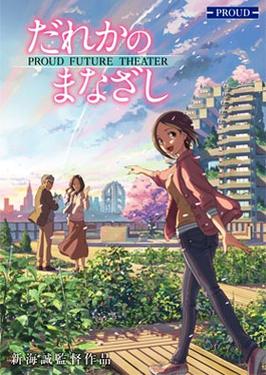

Overview and themes
The narrative centers on the shifting ties within a family and the small gestures that reveal love, distance and memory. Rather than following an elaborate plot, the piece concentrates on atmosphere and character interactions to evoke nostalgia and the quiet sorrow of change. Themes commonly noted by viewers include generational distance, the care in family routines, and the bittersweet feeling of growing up or growing apart.
Production and release
The short was both written and directed by Makoto Shinkai, who is known for his visually detailed, emotionally driven works. It premiered at a screening event at the Tokyo International Forum for the "Proud Box Appreciation Festival" on 10 February 2013 and was later shown alongside Shinkai's feature The Garden of Words at its premiere on 31 May 2013. The film's compact length allowed it to be paired with a feature as a complementary short.
Cast and music
- Voice cast: Fumi Hirano, Satomi Hanamura and Shinji Ogawa.
- Music: the song in the film is performed by the singer Kazusa.
Reception and significance
Critics and viewers responding online described the film as emotionally affecting, particularly for those who recognize the kinds of familial shifts it depicts. Many online reviews highlighted its ability to convey complex feelings in a short span, and commentators in critical responses have noted its appeal to older audiences who may connect personally with themes of aging, care and changing responsibilities.
While brief, the work is seen as part of Shinkai's broader exploration of human relationships and isolation rendered with expressive visuals. It demonstrates how short animated works can complement a director's feature-length output by exploring a narrower emotional focus and by providing audiences with a concentrated, reflective experience.
For viewers interested in contemporary Japanese animation or in short films that prioritize mood and character over plot mechanics, this short movie offers a compact, contemplative glimpse into family life and the passage of time.
Questions and answers
Q: What is Dareka no Manazashi?
A: Dareka no Manazashi is a Japanese anime short movie directed by Makoto Shinkai.
Q: Who were the voice actors for the characters in Dareka no Manazashi?
A: Fumi Hirano, Satomi Hanamura, and Shinji Ogawa spoke the characters' voices in Dareka no Manazashi.
Q: When was Dareka no Manazashi first shown?
A: Dareka no Manazashi was first shown at the Tokyo International Forum for the "Proud Box Appreciation Festival" on 10 February 2013.
Q: What other movie was Dareka no Manazashi shown with for its premiere?
A: Dareka no Manazashi was shown with The Garden of Words for its premiere on 31 May 2013.
Q: What is the movie about?
A: Dareka no Manazashi is about the relationship between a woman and her family.
Q: What did many online reviews say about the movie?
A: Many online reviews said that the movie was very emotional.
Q: Who was the target audience for the movie?
A: The target audience for the movie was older people as the movie focused on how family relationships can change over time.
Related articles
Author
AlegsaOnline.com Dareka no Manazashi — short anime by Makoto Shinkai Leandro Alegsa
URL: https://en.alegsaonline.com/art/25502
Sources
- animenewsnetwork.com : "Shinkai's Garden of Words to Be Screened with 'Dareka no Manazashi'"
- animenewsnetwork.com : "Makoto Shinkai's 'Dareka no Manazashi' Anime Trailer Streamed"
- shinkaimakoto.jp : "「だれかのまなざし」"
- animeanime.jp : "新海誠監督「だれかのまなざし」の映像一部公開 和紗1stミニアルバムMVに収録"
- animeanime.jp : "新海誠「だれかのまなざし」主題歌 和紗「それでいいよ」MVフルバージョンをネット公開"
- rocketnews24.com : "新海誠監督のDVD未収録アニメ『だれかのまなざし』が無料公開! ネット上で感動を呼ぶ「あかん、号泣だった」「こういうのいいねぇ」"
- ascii.jp : "新海誠氏のショートフィルム『だれかのまなざし』が全編公開!"