
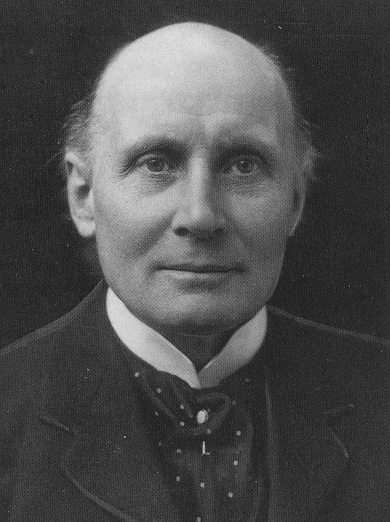
Alfred North Whitehead
English mathematician turned philosopher (1861–1947); co-author of Principia Mathematica and founder of process philosophy with lasting influence in mathematics, metaphysics, science, and education.
Overview
Alfred North Whitehead (15 February 1861 – 30 December 1947) was an English mathematician, logician and philosopher whose work bridged rigorous formal thinking and broad metaphysical inquiry. Trained as a mathematician, he made foundational contributions to logic and the philosophy of mathematics and later developed a systematic metaphysical view now known as process philosophy. He is best known for his collaboration with Bertrand Russell on the three-volume Principia Mathematica and for later works that reoriented metaphysics toward events and relations.
Image gallery
10 Images




Major works and central ideas
Whitehead's early career produced technical writings on algebra, logic and the foundations of mathematics. The Principia Mathematica (co-authored with Bertrand Russell) aimed to derive mathematics from symbolic logic. In his later period he published influential philosophical books such as Process and Reality, in which he proposed that the basic constituents of the world are processes or "actual occasions" rather than enduring things. Key notions in his system include prehension (the way entities relate and incorporate others), concrescence (how events become unified), and the intrinsic creativity of reality.
Life and academic career
Born in Ramsgate, Kent, Whitehead studied and taught at Cambridge University and later accepted a professorship at Harvard University, where he spent his final decades refining his metaphysical writings and teaching. His career spanned pure and applied logic, pedagogy and philosophical reflection on science, and he addressed questions about how scientific theories relate to more general ontological commitments.
Influence and applications
Whitehead's ideas influenced a wide range of fields: analytic and continental philosophy, theology, ecology, education, and the philosophy of science. Process thought offered an alternative to substance‑based metaphysics, encouraging thinkers to emphasize relations, change and emergence. Educators have drawn on his essays about aims and methods of education, while theologians adapted process concepts to rethink divine action and creativity.
Notable distinctions and legacy
Whitehead is remembered for combining mathematical precision with expansive metaphysical ambition. His writings are sometimes viewed as difficult because they mix technical argument with novel terminology, yet they remain a fertile resource for contemporary debates about time, causation, and the status of scientific models. He is often credited with helping to open philosophical inquiry to dynamic, relational accounts of reality.
Further reading and resources
- Biographical overview and key dates
- Academic profile and early mathematical work
- Expositions of Whitehead's logic
- Places associated with Whitehead's life
- Context on Kent and regional background
- Harvard years and later life
- Whitehead's international significance
- Work on algebra and related mathematics
- Foundations of logic and symbolic systems
- Philosophy of science and methodological essays
- Connections to physics and scientific theory
- Metaphysical writings and primary concepts
- Educational writings and lectures
- Bertrand Russell and the Principia Mathematica collaboration
- Full bibliographies and collections of works
Note: This article summarizes widely known aspects of Whitehead's life and thought. For detailed primary texts and scholarly commentary consult the linked resources and contemporary studies.
Related articles
Author
AlegsaOnline.com Alfred North Whitehead Leandro Alegsa
URL: https://en.alegsaonline.com/art/2498