
Alfred Waterhouse — Victorian architect of civic and museum design
English architect (1830–1905) famed for the Natural History Museum and Manchester Town Hall; associated with the Gothic Revival and noted for terracotta façades, versatility and large public commissions.
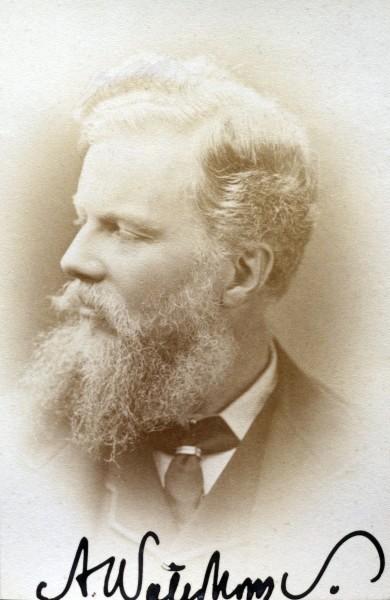
Alfred Waterhouse (19 July 1830 – 22 August 1905) was an English architect whose practice shaped many of the most recognisable public and institutional buildings of the late Victorian era. Best known for his work on the Natural History Museum in London and Manchester Town Hall, he combined scholarly respect for medieval forms with practical innovations in materials and planning.
Image gallery
2 Images
Style, materials and characteristics
Waterhouse is often associated with the Victorian Gothic revival, but he did not limit himself to a single historicist vocabulary and comfortably adapted elements from Renaissance and Romanesque precedents when appropriate. His buildings are noted for robust massing, careful structural legibility and richly modelled façades. He made extensive use of brick and terracotta — materials chosen for their durability and fire-resistant qualities — and often introduced polychrome effects and sculptural ornament that referenced natural and civic themes.
Major works and commissions
Waterhouse received commissions across Britain for civic, commercial, educational and domestic projects. His approach suited large institutional clients and insurers, and he became one of the most commercially successful architects of his generation. Prominent projects include:
- Manchester Town Hall — a landmark civic building known for its clock tower and ornate interior.
- Natural History Museum, London — celebrated for its terracotta façade and sculptural program of fauna and flora.
- The headquarters and offices for major Victorian firms and insurers, demonstrating his aptitude for urban commercial architecture; see records of his career for further examples.
- Numerous civic buildings, schools and country houses that display his flexibility across scales and settings.
Waterhouse’s work balanced careful planning with decorative restraint: circulation, natural light and service arrangements were integral to his designs, rather than afterthoughts.
Reception and legacy
During his lifetime Waterhouse was commercially successful and widely respected; many of his buildings remain central to the civic life of their cities. He influenced how public architecture could project civic pride while meeting functional needs, and his use of terracotta contributed to its revival as a practical and decorative façade material. Today his major works are frequently studied as exemplary Victorian public architecture.
Notable facts: he practised widely across Britain and adapted historic styles without clinging to a single formula, demonstrating an architectural pragmatism that served a growing industrial and municipal society well.
Further reading and archival material are available through institutional collections and online catalogues that document his commissions and drawings; for concise professional summaries consult an architect biography or the catalogue entries that list his completed works and surviving archives (career records).
Related articles
Author
AlegsaOnline.com Alfred Waterhouse — Victorian architect of civic and museum design Leandro Alegsa
URL: https://en.alegsaonline.com/art/2507
Sources
- berkshirehistory.com : "Royal Berkshire History — Alfred Waterhouse (1830–1905)"
- nhm.ac.uk : "Natural History Museum Archive Catalogue - Alfred Waterhouse"