
Bertrand Russell: Philosopher, Logician and Public Intellectual
British philosopher and mathematician (1872–1970) whose work shaped modern logic, analytic philosophy and public debate; Nobel Prize laureate in 1950 and a prominent social activist.
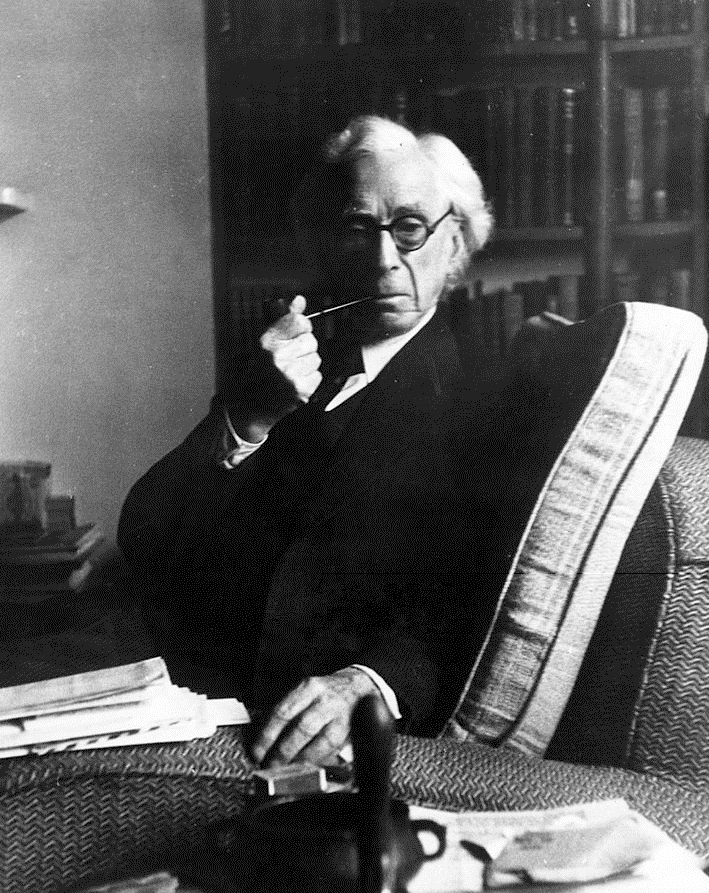
Bertrand Arthur William Russell (18 May 1872 – 2 February 1970) was a British philosopher, logician and public intellectual whose work helped define much of twentieth‑century analytic philosophy and the foundations of mathematics. He combined rigorous technical investigation with sustained efforts to communicate philosophy to a wider public. Russell wrote on logic, language, epistemology, ethics and social questions, producing both specialist works and influential books for general readers.
Image gallery
10 Images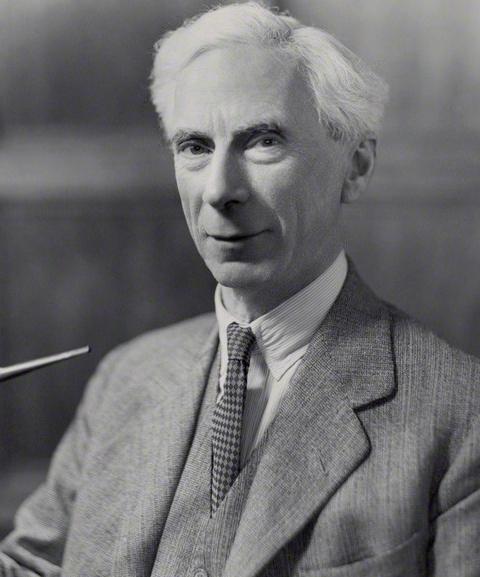




Early life and education
Russell was born into an aristocratic family and educated in Britain. He studied mathematics and philosophy at Cambridge, where he became associated with a new emphasis on clarity, argument and formal reasoning that later came to be called analytic philosophy. His early investigations ranged from set theory and the formal structure of arithmetic to problems about meaning and reference in ordinary language.
Contributions to logic and mathematics
Russell made several foundational contributions to logic. He discovered a fundamental paradox in naive set theory, now known as Russell's paradox, which revealed contradictions in early formulations of set theory and stimulated development of more rigorous logical systems. In collaboration with Alfred North Whitehead he worked on Principia Mathematica, an extended attempt to derive much of mathematics from symbolic logic. That project, though later modified by developments in logic and set theory, was central to debates about the logical foundations of mathematics in the early 20th century.
Philosophy of language and epistemology
Russell's essay "On Denoting" introduced the theory of descriptions, an account of how language refers to objects that influenced subsequent work in philosophy of language and logic. He emphasized precise analysis of propositions and of how linguistic expressions relate to the world. These concerns shaped later developments in analytic philosophy, including the work of philosophers who followed him in Cambridge and elsewhere.
Writings, style and popular influence
Russell was an unusually prolific writer who addressed both specialist and general audiences. He produced textbooks, surveys and essays intended to make philosophical ideas accessible. Works such as A History of Western Philosophy and numerous essay collections brought his clear, often witty prose to a broad public and helped popularize philosophical thinking. In 1950 he received the Nobel Prize in Literature, a recognition of his varied writings and of his skill in presenting complex ideas to non‑specialist readers.
Social and political activism
Throughout his long life Russell engaged in public debate and social criticism. He opposed British participation in the First World War on pacifist grounds and suffered legal penalties for his activism. Later he became a leading voice against nuclear weapons and a campaigner for international arms control; he was a signatory of the Russell–Einstein Manifesto and took part in public efforts to reduce the danger of nuclear conflict. His political views combined commitments to liberal democracy, social reform and civil liberties, and at times he identified with socialist ideals.
Later life and public role
From 1931 until his death Russell held a seat in the House of Lords, where he continued to comment on public affairs and to intervene in debates on education, morality and foreign policy. His political positions were often controversial and provoked both admiration and fierce criticism. Nevertheless, his combination of technical scholarship and public engagement made him a model for many who believe philosophers should speak to urgent social questions.
Legacy
Russell's legacy is multi‑faceted. In logic and the philosophy of mathematics he helped uncover problems that shaped later technical work. In philosophy of language and epistemology his analytic methods influenced generations of philosophers. As a public intellectual he demonstrated how philosophical reflection can intersect with civic life. Debates about the value and limits of his positions continue to be part of the history of twentieth‑century thought.
Further reading and resources
- Overview of Russell's life and career
- Early life and family background
- Work and residence in England
- Russell's role in twentieth‑century philosophy
- Philosophy made accessible: essays and popular works
- Russell's public commentary and opinions
- The essay "On Denoting" and the theory of descriptions
- Political orientation and liberal views
- Socialism, pacifism and anti‑war activities
- Russell as a cultural and intellectual figure
- Approach to reason, science and rational life
- Membership in the House of Lords and later life
Questions and answers
Q: Who was Bertrand Russell?
A: Bertrand Russell was a British philosopher, logician, and mathematician who spent most of his life in England.
Q: In which century did Bertrand Russell work?
A: Bertrand Russell worked mostly in the 20th century.
Q: What prize did Bertrand Russell win in 1950?
A: Bertrand Russell won the Nobel Prize in Literature in 1950.
Q: What is "On Denoting"?
A: "On Denoting" is an essay written by Bertrand Russell that has been described as one of the most influential essays in philosophy in the 20th Century.
Q: What were some of the topics on which Bertrand Russell gave his opinion?
A: Bertrand Russell gave his opinion on many topics, including very serious issues and everyday things.
Q: Was Bertrand Russell popular?
A: Yes, Bertrand Russell was a well known liberal, socialist, and anti-war activist, and millions looked up to him as a prophet of the creative and rational life.
Q: Was Bertrand Russell's stance on topics always widely accepted?
A: No, many of Bertrand Russell's stances on topics were extremely controversial. From 1931 until his death, he was a member of the House of Lords.
Related articles
Author
AlegsaOnline.com Bertrand Russell: Philosopher, Logician and Public Intellectual Leandro Alegsa
URL: https://en.alegsaonline.com/art/115078
Sources
- quoteinvestigator.com : Montreal Star (found in February 1932 Reader’s Digest “The Reader’s Digest”)