
Point mutation
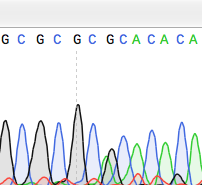
A point mutation is a change affecting a single nucleotide in genetic material. It includes substitutions, single-base insertions or deletions and can alter protein sequence, function, or gene regulation.
A point mutation is a genetic alteration that affects only one nucleotide position in DNA or RNA. It is the smallest class of mutation and can take several forms: a single-base substitution, the insertion of one base, or the deletion of one base. Because the change is localized to a single site, its effects range from harmless to seriously disruptive depending on where it occurs and how it alters the encoded information.
Image gallery
3 Images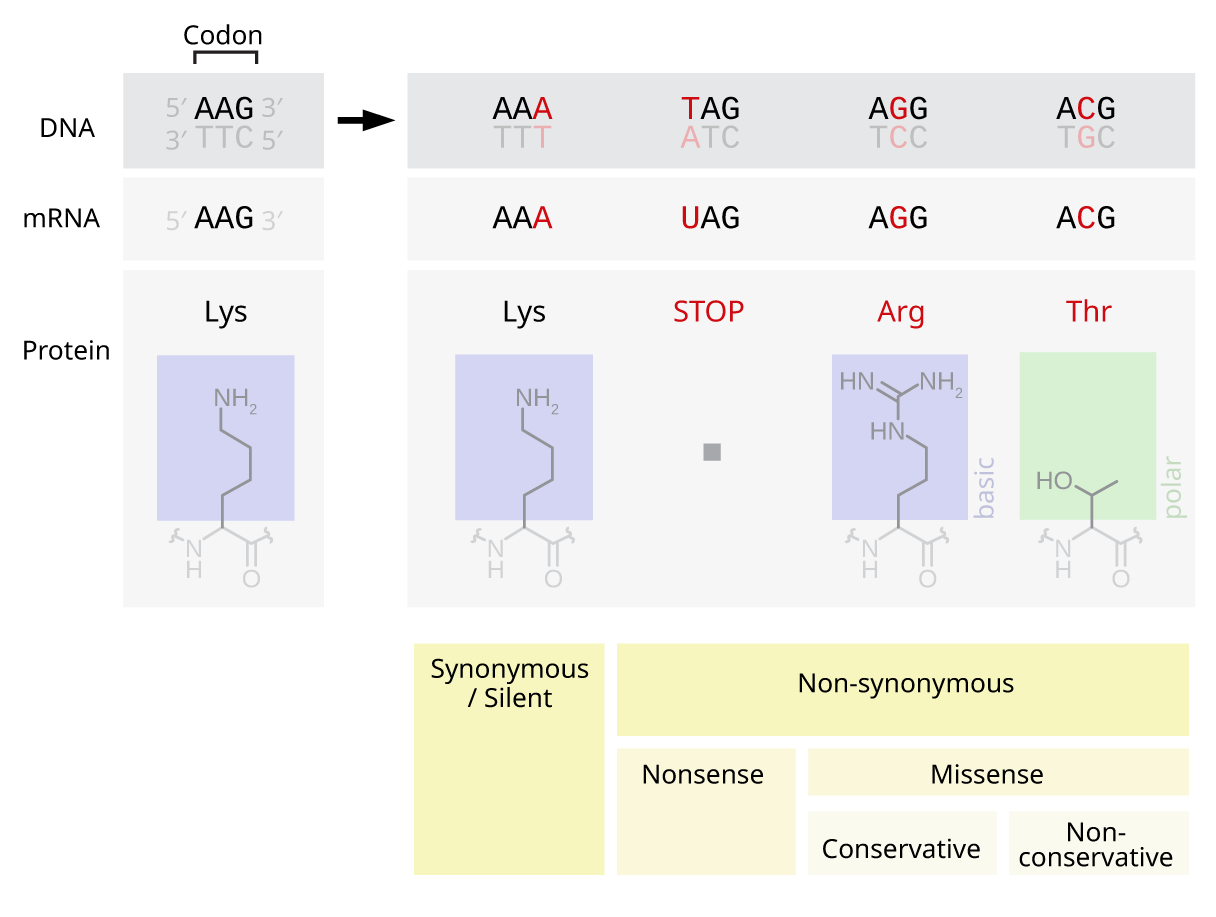

Common types and how they act
- Substitution – one base is replaced by another. Substitutions are often classified as transitions (purine↔purine or pyrimidine↔pyrimidine) or transversions (purine↔pyrimidine).
- Missense – a substitution that changes a codon so a different amino acid is incorporated into a protein.
- Silent – a substitution that does not change the encoded amino acid due to genetic-code redundancy.
- Nonsense – a substitution that creates a premature stop codon and shortens the protein; many such transcripts are reduced by nonsense-mediated decay.
- Insertion or deletion (indel) of a single base – usually causes a frameshift when it occurs in a coding sequence, altering downstream amino acids and often producing nonfunctional proteins.
Causes and cellular responses
Point mutations arise through replication errors, spontaneous chemical changes (for example, deamination), exposure to mutagenic chemicals or radiation, and errors during repair. Cells have multiple repair pathways to correct single-base problems, including mismatch repair and base excision repair. When a mutation produces an early stop codon, quality-control systems such as nonsense-mediated mRNA decay can reduce production of the truncated protein.
Consequences and examples
The functional outcome of a point mutation depends on context: a silent change may be effectively neutral, a missense change can subtly or dramatically alter protein activity, and a nonsense or frameshift mutation often abolishes function. Well-known examples include single-nucleotide substitutions that alter protein structure and lead to inherited conditions. Point changes are also the basis for many diagnostic tests and can determine drug response in clinical genetics.
Importance in genetics and evolution
At the population level, single-base changes are a major source of genetic variation. Common single-base variants are called single-nucleotide polymorphisms (SNPs) and are widely used as markers in mapping studies. Over evolutionary time, point mutations accumulate and contribute to divergence between species as well as to adaptation within species.
Further notes and resources
Point mutations should be distinguished from larger structural mutations that rearrange or delete many bases. For practical information and definitions, see resources on mutation basics: overview of mutation types, nucleotide structure, and DNA structure and function. For details about stop codons and their effects consult stop codon information and about how changes are transcribed or translated see transcription and translation. For protein-level consequences and quality control pathways refer to protein biology resources.
Related articles
Author
AlegsaOnline.com Point mutation Leandro Alegsa
URL: https://en.alegsaonline.com/art/77628
Sources
- utminers.utep.edu : "What is a mutation?"
- rosalind.info : "Glossary: point mutation"
- ncbi.nlm.nih.gov : "How DNA changes affect phenotype"