
Decomposition: Biological and Chemical Breakdown of Organic Matter
Process by which organic material is broken down by biological, chemical, and physical means; covers microbial and fungal action, animal consumers, environmental controls, ecological roles and human uses.
Overview
Decomposition is the set of natural processes that break down once-living organic matter into simpler chemical compounds. It applies to animal carcasses, fallen leaves, food waste, and any organic residues. The process releases nutrients and energy that are recycled through ecosystems, returning carbon, nitrogen and other elements to soil, water and the atmosphere. Decomposition may proceed through biological activity, chemical reactions and physical fragmentation, often acting together.
Image gallery
7 Images
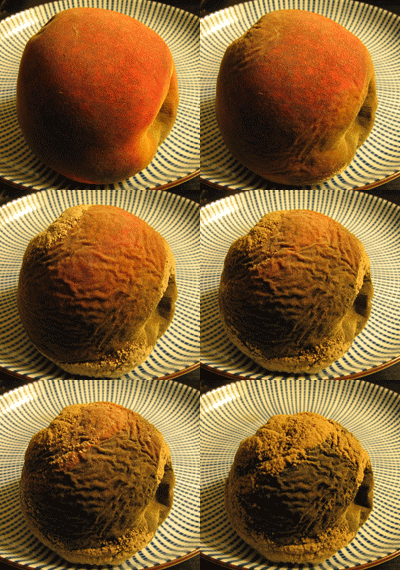


Agents and stages
Several kinds of organisms and mechanisms contribute to decay. Microorganisms such as bacteria initiate many breakdown reactions by secreting enzymes that cleave complex molecules. Fungi form another major group; an entire kingdom of life is specialized to decompose organic substrates, frequently adopting a saprophytic lifestyle that absorbs nutrients across cell walls. Invertebrates and scavengers—worms, beetles, flies and their larvae—physically fragment tissues and consume material, and larger animals may scavenge carrion.
Decomposition is commonly described in stages: early changes driven by the organism's own enzymes (autolysis), followed by microbial colonization and rapid breakdown (putrefaction and active decay), then a slower phase in which tougher materials like lignin degrade and finally the material is integrated into the soil. Animal remains may also be processed through digestion by consumers; for example, fly eggs hatch into maggots that feed on soft tissues and accelerate soft-tissue loss.
Environmental controls
Temperature, moisture, oxygen availability and pH strongly influence the speed and pathways of decomposition. Warm, moist, oxygen-rich conditions usually favor rapid microbial activity and aerobic breakdown, while cold, dry or anoxic environments slow decay and can lead to different chemical outcomes such as preservation or anaerobic fermentation. Physical conditions and the chemical composition of the material (e.g., woody versus soft tissue, presence of fats or cellulose) also determine which decomposers dominate.
Ecological roles and human relevance
Decomposition is essential to ecosystem nutrient cycling. It returns building blocks for plants and microbes, supports food webs of detritivores and decomposers, and stabilizes soils. Humans deliberately harness decomposition in composting to recycle organic waste into soil amendments and in wastewater treatment. Patterns of decay also have practical applications in fields such as forensic science, where observations about the stage and rate of decomposition can help estimate time since death.
Distinctions and notable facts
- Not all breakdown is biological: purely inorganic chemical reactions such as oxidation and hydrolysis can alter organic compounds over time.
- Different materials decompose at very different rates—fruit and soft tissues break down quickly, whereas lignified wood can persist for years or centuries.
- Many ecosystems rely on specialized decomposers; for example, fungi are especially important in breaking down complex plant polymers like lignin and cellulose, while bacteria often dominate in fresh, protein-rich substrates.
For further reading on topics related to decomposition, researchers and students can consult resources on microbial ecology, soil science and waste management to explore enzymatic pathways, community succession and human practices such as composting. Practical guidance and case studies are available that discuss how to manage decomposition for agricultural, environmental and forensic applications.
References and external links: organic material, kingdom overview, saprophytic lifestyle, bacterial decomposition, digestion processes, maggot activity, inorganic breakdown.
Questions and answers
Q: What is decomposition?
A: Decomposition, also known as rotting, is the process that occurs when living things or organic material break down after they die.
Q: Why does decomposition happen?
A: Organic molecules store building blocks and energy. When organic material breaks down, the energy and building blocks are used to reproduce new organisms.
Q: What is the role of fungi in decomposition?
A: Fungi are a whole kingdom of living things that break down organic material. They intake organic matter through their cell walls, and their lifestyle is called "saprophytic".
Q: What type of living things are involved in decomposition?
A: Microbes, especially bacteria, fungi, and maggots are involved in decomposition.
Q: How do maggots contribute to decomposition?
A: Maggots hatch from insect eggs and begin to feed on the body's tissues, contributing to the decomposition process.
Q: What are the different ways in which decomposition can occur?
A: Decomposition can occur through microbial activity, maggots feeding on the body's tissues, and inorganic processes.
Q: Why do all organic materials break down over time?
A: All organic materials break down over time because they are in a higher energy state than ordinary inorganic materials.
Tags
Related articles
Author
AlegsaOnline.com Decomposition: Biological and Chemical Breakdown of Organic Matter Leandro Alegsa
URL: https://en.alegsaonline.com/art/26188