
Crystal Palace: district, park and legacy of the glass exhibition
Crystal Palace is a South London district known for the ruined Victorian exhibition building, a large public park with dinosaur sculptures, a broadcasting mast, and an active sporting and cultural life.
Overview
Crystal Palace is a locality in South London, England that sits at the junction of several boroughs and on high ground known as Sydenham Hill. It lies within the orbit of London and the county of England, and its boundaries touch or are adjacent to boroughs such as Croydon, Lambeth, Southwark and Lewisham. The name "Crystal Palace" comes from a large iron-and-glass structure that once dominated the ridge; although the building no longer exists, the name remains attached to the neighbourhood, the park and a number of local institutions.
Image gallery
10 Images




History and origins
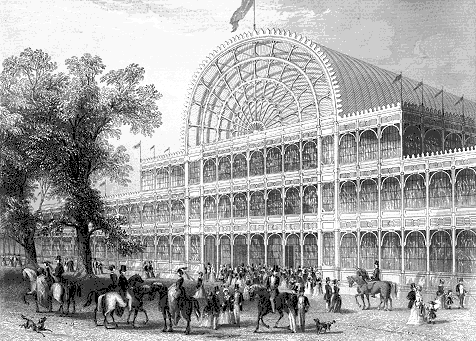
The original Crystal Palace was designed in the mid-19th century to house the Great Exhibition of 1851. After the exhibition closed in Hyde Park the modular iron-and-glass structure was dismantled and re-erected on Sydenham Hill in 1854; the move created a landmark visible across the city. The exhibit building was associated with Victorian engineering and with designers such as Joseph Paxton. The structure stood for several decades as an entertainment and cultural venue until it was destroyed by a catastrophic fire on 30 November 1936. The site of the palace and its landscaped grounds were retained as a public amenity that later became Crystal Palace Park, preserving the location's role as a focal point for the surrounding districts. The original exhibition in 1851 is often referred to as the Great Exhibition, and its first home was Hyde Park.
Crystal Palace Park and surviving features
Crystal Palace Park occupies much of the former palace site and is notable for a mix of leisure, historic and recreational features. Among the park's most widely recognised attractions are the nineteenth-century dinosaur models — large concrete sculptures intended to represent prehistoric animals — which were among the earliest attempts at public palaeoart and remain both curious and culturally important. The park also contains sporting facilities, including an athletics stadium used for national events, an open-air pool built to large dimensions and varied recreation spaces for walking and community activities. The footprint of the former palace is readable in terraces, promenades and some surviving architectural fragments.
Transport, mast and local economy
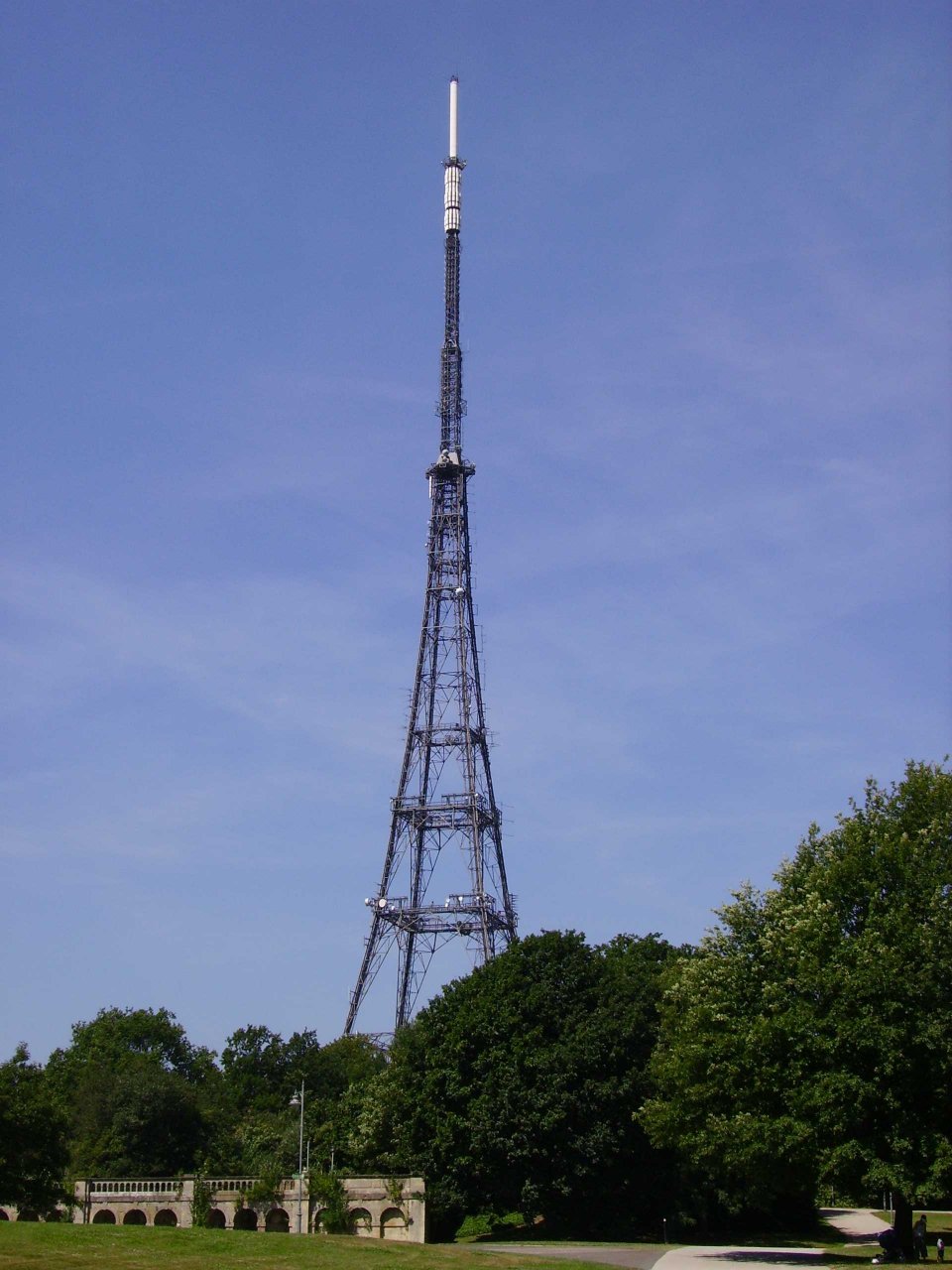
The area is an important local transport hub rather than a single defined town centre. A station named Crystal Palace provides rail connections into central London and towards Croydon, and there is a busy bus interchange on Crystal Palace Parade. The skyline is marked by the Crystal Palace transmitting station, a tall mast that broadcasts television and radio signals across much of south and central London; there is also a backup facility that has served the area when needed. Residential streets, small shops and cultural venues form the day-to-day economy; many residents identify neighbouring shopping centres such as the one around Upper Norwood — which contains a Sainsbury's — when referring to local amenities.
Uses, community and cultural significance
Beyond leisure and travel functions, Crystal Palace is a neighbourhood with active sports clubs, community groups and a calendar of public events held in the park and on the Parade. The name has been adopted by organisations beyond the immediate vicinity: for example, a professional football club takes its name from the area. The park and its objects are used for education, amateur palaeontology interest, heritage walks and open-air performances, making the site a continuing cultural resource rather than just a historic relic.
Notable facts and distinctions
- The district takes its name from the 19th-century glass and iron exhibition building rather than from a natural feature.
- Although the palace was destroyed, its park preserves Victorian landscaping and public art.
- The Crystal Palace transmitting mast is a prominent navigational and broadcast landmark.
- The area's position on high ground makes parts of it visible from large areas of London, reinforcing its identity as a local landmark.
- Administratively the neighbourhood overlaps several boroughs and is closely associated with nearby districts including Anerley and Upper Norwood.
For visitors and residents the blend of Victorian heritage, public parkland, community sport and transport links gives Crystal Palace a distinctive character within south London: a place where nineteenth-century ambition, twentieth-century broadcasting infrastructure and twenty-first-century neighbourhood life meet and continue to evolve.
Related articles
Author
AlegsaOnline.com Crystal Palace: district, park and legacy of the glass exhibition Leandro Alegsa
URL: https://en.alegsaonline.com/art/24475