
The Great Exhibition (1851) — the Crystal Palace and the first international world's fair
An encyclopedic overview of the Great Exhibition of 1851—the Crystal Palace event in Hyde Park that showcased industrial technology and design, organized under Prince Albert and a catalyst for later world's fairs.
Overview
The Great Exhibition of the Works of Industry of All Nations, commonly called the Great Exhibition or the Crystal Palace Exhibition, was held in Hyde Park in 1851. It ran throughout the spring and summer months and brought together manufacturers, inventors and artists from many countries to display machinery, manufactured goods and scientific instruments. Conceived as a public celebration of contemporary achievement in design and manufacture, the event helped define the pattern of large international exhibitions that came to be known as world's fairs.
Image gallery
10 Images


Venue, design and principal organisers
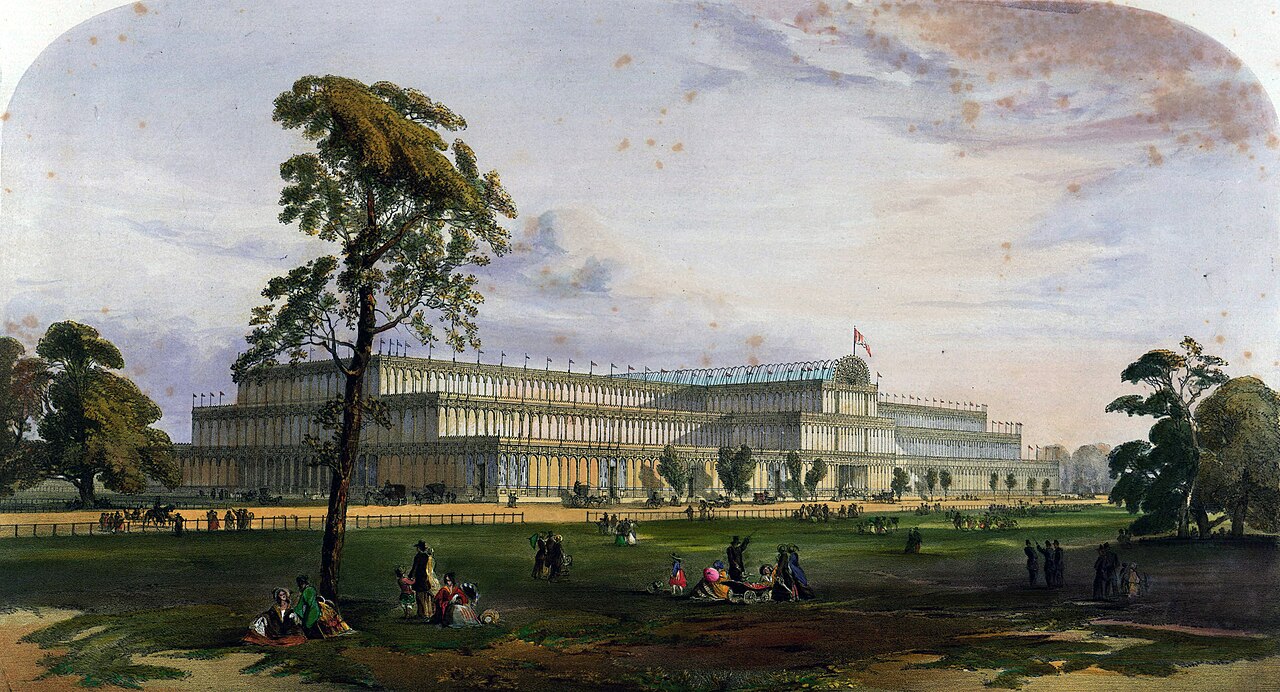
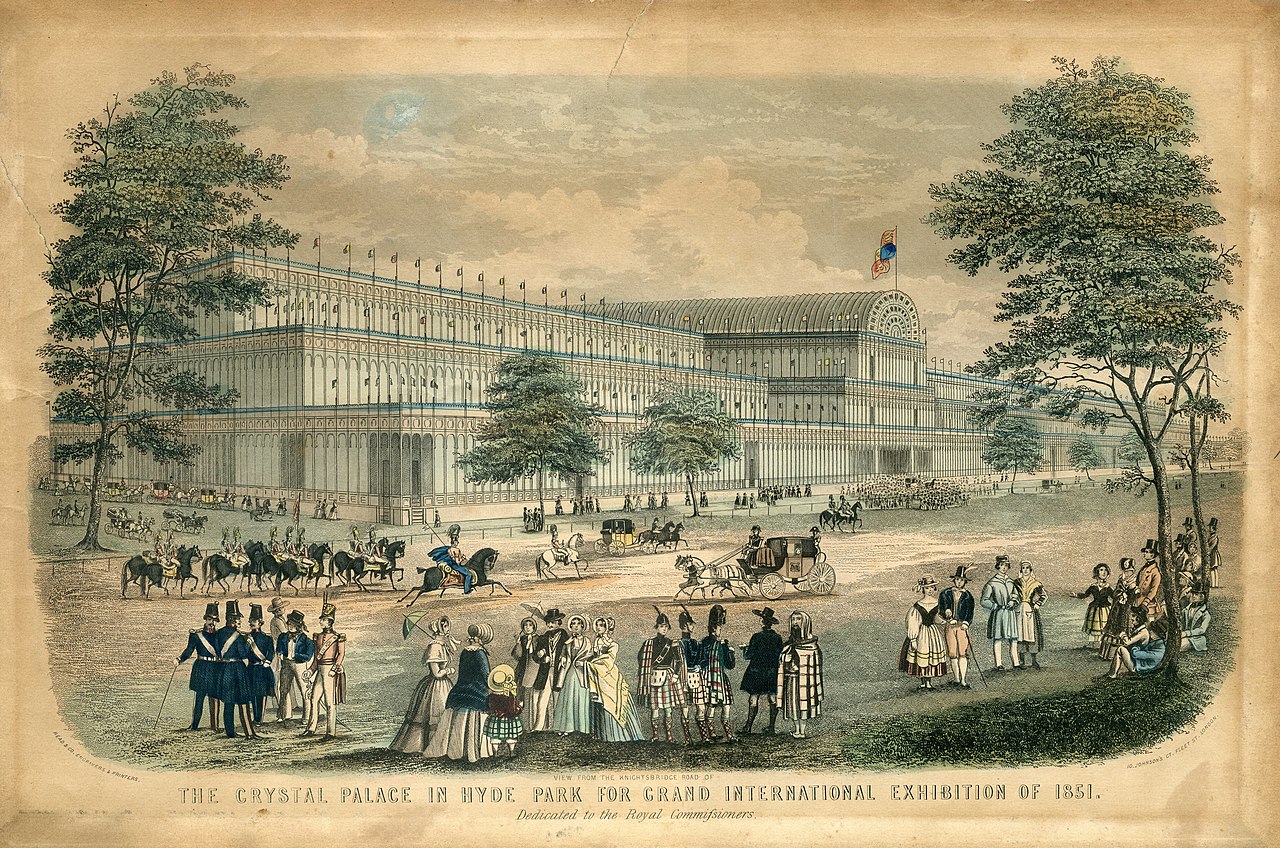
The exhibition was housed in an innovative iron-and-glass building quickly designed and constructed for the purpose; its modular glazing and light structure earned it the popular name "Crystal Palace." The building's prefab approach and clear spans allowed large machines and long process displays to be accommodated under one roof. The project was driven by Prince Albert together with a group of reform-minded civil servants and technocrats, and it was administered with support from the Royal Society for the Encouragement of Arts, Manufactures and Commerce. The site chosen for the event was Hyde Park, within the metropolitan area of London, England.
Exhibits, visitors and experience
Displays ranged from heavy industrial machinery and textile looms to fine decorative arts, scientific instruments and new consumer products. Several exhibits were presented as working demonstrations so that visitors could follow industrial processes from raw material to finished product; for example, textile production from spinning to cloth was shown in sequence. Scientific and precision instruments such as telegraphs, microscopes and chronometers attracted significant interest. The exhibition was open to the general public and drew millions of visits over its months-long run, providing many people with a first-hand view of modern manufacturing and international trade.
Legacy and wider significance
The Great Exhibition was financially self-supporting and produced a surplus that was used to fund cultural and educational institutions in the city. It helped establish a pattern for later international exhibitions that combined commerce, science and spectacle, and it influenced museum development and public education in the Victorian era. The success of the Crystal Palace show also reinforced Britain's identity as an industrial leader in the mid-19th century and stimulated debate about design, technology and social reform.
Notable facts and distinctions
- Architecture: the Crystal Palace exemplified the use of cast iron and glass in large prefabricated structures and became an architectural icon of the period.
- Organization: the event was closely associated with Prince Albert's efforts to promote industry and design reform.
- Impact: the exhibition inspired a succession of international fairs and contributed to the creation or expansion of several major museums and cultural institutions in London.
- Royal connection: Queen Victoria and her family visited the exhibition, underlining its national significance; the monarch's association is often noted in contemporary accounts and later histories (Queen Victoria).
The Great Exhibition deserves attention both as a showcase of mid-19th-century technological and artistic achievement and as an event that shaped public attitudes toward industry and global exchange. It remains a key reference point in the history of exhibitions, public museums and the architectural use of iron and glass in large-scale buildings.
Further links
Questions and answers
Q: What was the Great Exhibition of the Works of Industry of All Nations?
A: It was an international exhibition held in Hyde Park, London, England, from 1 May to 15 October 1851 to celebrate modern industrial technology and design.
Q: Who organized the Great Exhibition?
A: The Great Exhibition was organized under the leadership of Prince Albert and members of the Royal Society for the Encouragement of Arts, Manufactures and Commerce.
Q: What was the main motive of the Great Exhibition?
A: The main motive of the Great Exhibition was for Great Britain to make clear to the world its role as an industrial leader.
Q: Who was Prince Albert?
A: Prince Albert was Queen Victoria's consort and an enthusiastic promoter of the exhibition.
Q: Was the Great Exhibition self-financing?
A: Yes, the Great Exhibition was self-financing.
Q: What kind of technological exhibits were popular at the Great Exhibition?
A: Technology and moving machinery were popular, especially working exhibits. Visitors could watch the entire process of cotton production from spinning to finished cloth. Scientific instruments included electric telegraphs, microscopes, air pumps, and barometers, as well as musical, horological, and surgical instruments.
Q: Did Queen Victoria and her family visit the Great Exhibition?
A: Yes, Queen Victoria and her family visited the Great Exhibition three times.
Related articles
Author
AlegsaOnline.com The Great Exhibition (1851) — the Crystal Palace and the first international world's fair Leandro Alegsa
URL: https://en.alegsaonline.com/art/98093
Sources
- commons.wikimedia.org : The Great Exhibition
- doi.org : 10.1038/35001134
- dukemagazine.duke.edu : "The Great Exhibition of 1851"