
Hyde Park, London — history, layout and public life
Hyde Park is a major Royal Park in central London, notable for the Serpentine, Speakers' Corner, the 1851 Great Exhibition site and a long history of public gatherings, recreation and civic events.
Overview
Hyde Park is one of the largest public parks in central London and one of the Royal Parks that together form significant green open space for the city. It lies within London and is an established urban landmark in England. The open grass, mature trees and broad avenues make it a focal point for both everyday recreation and occasional large gatherings.
Image gallery
10 Images



Layout and key features
The park is roughly rectangular and is bisected east–west by the Serpentine, an ornamental lake created in the 18th century. The Serpentine is used for boating and is a visual centrepiece; its waters and margins support waterfowl and recreational activities. Hyde Park adjoins Kensington Gardens, and together the two parks form a continuous green area popular with walkers, runners and cyclists. Paths, memorials and formal planting are laid out to accommodate both day-to-day use and larger temporary events.
History and development
The area that became Hyde Park was reserved as a royal hunting ground in the 16th century and gradually evolved into landscaped parkland and pleasure grounds. In 1851 the park was the setting for the Great Exhibition, an international showcase of industry and the arts; the famous glass and iron structure known as the Crystal Palace was designed for that event and later relocated after the exhibition closed (Great Exhibition, Crystal Palace). Over the 19th and 20th centuries the park's layout, planting and public facilities were adapted to meet changing patterns of urban life.
Uses, traditions and public life
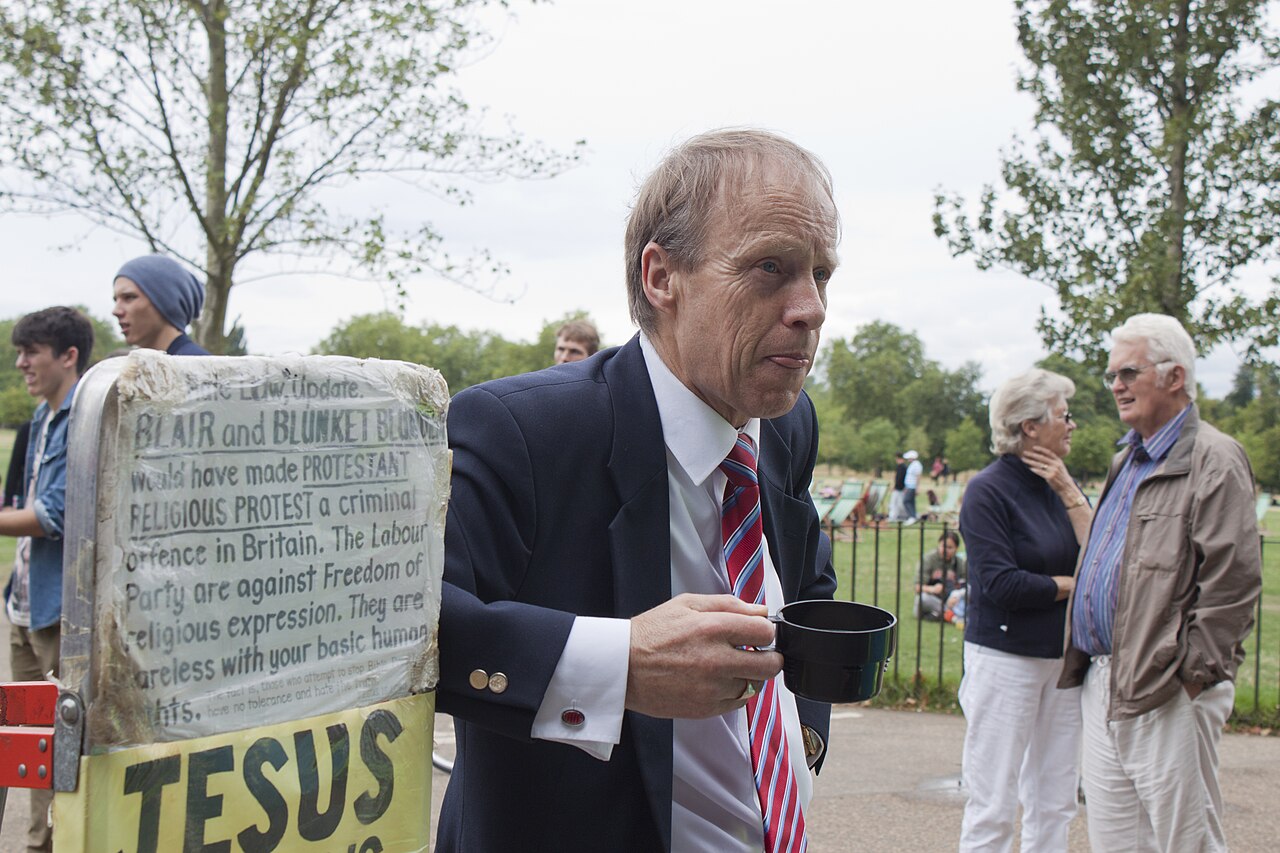
Hyde Park serves many roles: informal recreation, organised sports, concerts and seasonal festivals. It has long provided a forum for public speech and debate; the tradition of open-air oratory concentrated at Speakers' Corner grew in the late 19th century and remains a symbol of free expression. The park is also a recurring location for demonstrations and rallies, reflecting its civic prominence and accessibility (mass demonstrations).
Notable events and incidents
- The Great Exhibition (1851) — transformed the park into an international exhibition site.
- Crystal Palace — the architectural icon designed for the exhibition.
- Protests and processions — the park’s scale and centrality make it a common rallying place.
- 1982 bombing — a fatal attack in the park in the early 1980s that shocked the city.
- Casualties — four soldiers were killed in the 1982 incident.
- Claimed responsibility — the attack was attributed to the Provisional Irish Republican movement.
Management, access and distinctions
Hyde Park is managed as part of the Royal Parks network and is maintained to accommodate a mix of conservation, recreation and events. It is the largest of the central Royal Parks and, together with its neighbour, provides a substantial area of public open space. Visitors come for quiet promenades, sport, wildlife watching, or to attend concerts and civic events; the balance between everyday amenity and high-profile activity is central to the park’s continuing role in London life.
Related articles
Author
AlegsaOnline.com Hyde Park, London — history, layout and public life Leandro Alegsa
URL: https://en.alegsaonline.com/art/46055
Sources
- commons.wikimedia.org : Hyde Park, London
- royalparks.gov.uk : Official website
- streetmap.co.uk : Map showing Hyde Park and Kensington Gardens
- british-history.ac.uk : british-history.ac.uk/report.asp?compid=45205
- lebensfilme.de : Hyde Park Union: Documentary about Hyde Park and its speakers
- victorianlondon.org : Hyde Park in the 19th century
- european-city-parks.com : Hyde Park article