
Crowsnest Pass (Canadian Rockies)
A mountain pass on the Alberta–British Columbia border in the Canadian Rockies. Important for transportation, coal mining history, towns and outdoor recreation, and crossed by the Canadian Pacific Railway.
Overview
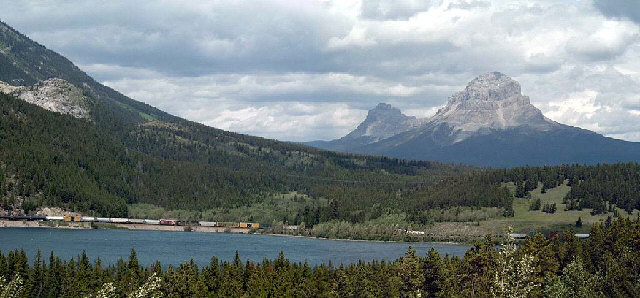
Crowsnest Pass is a mountain corridor through the Canadian Rockies on the boundary between Alberta and British Columbia. The route has long served as a natural crossing point for people, animals and goods moving east–west across the ranges. Today the pass is an identifiable region of communities, transport links and interpretive sites.
Image gallery
7 Images


Geography and transport
The pass lies among rugged peaks and valleys and is crossed by a major highway known locally as the Crowsnest Highway. It is also the route of the historic Canadian Pacific Railway, which helped open the area to large-scale settlement and resource development. For maps and positioning see the regional map entry at map reference.
Communities and landscape
The populated area known as Crowsnest Pass is made up of several small towns and hamlets that grew around coal mining and railway activity. Notable settlements include Blairmore, Coleman, Frank, Bellevue and Hillcrest. The landscape combines steep slopes, forested benches and river valleys that provide opportunities for walking, climbing, skiing and wildlife viewing.
History and industry
Coal mining dominated the local economy from the late 19th century into the 20th century and shaped much of the region's built and social heritage. The area is remembered for major events such as the Frank Slide in 1903, when a huge rockfall devastated part of a town, and the Hillcrest mine disaster in 1914, a mining accident that deeply affected the community. Over time, mines closed or reduced operations and the towns adjusted their economies.
Uses, tourism and culture
Today the pass attracts visitors for outdoor recreation, interpretive museums and heritage trails that recount the coal-mining era and natural events. Activities include hiking, backcountry skiing, angling and local festivals that celebrate the region's history. Museums and memorials preserve artifacts and stories from the mining period.
Distinctive facts
Crowsnest Pass is notable for the concentration of early 20th-century mining settlements in a compact mountain corridor and for the way natural hazards and industrial history have been woven into regional identity. It remains an active transportation link and a focal point for heritage tourism and outdoor pursuits.
Further reading
Related articles
Author
AlegsaOnline.com Crowsnest Pass (Canadian Rockies) Leandro Alegsa
URL: https://en.alegsaonline.com/art/24401