
Cottage pie: British minced‑meat pie finished with a potato topping
Cottage pie is a British savory dish of minced meat cooked in a gravy and covered with potato. When made with lamb it is called shepherd's pie; many regional and modern variations exist.
Overview
Cottage pie is a homely savory pie consisting of a base of minced or ground meat flavoured with vegetables and stock, topped with sliced or mashed potato and baked until the surface browns. Its origins lie in the cuisines of the United Kingdom and Ireland, but the dish is now known and adapted around the world. In modern usage the name distinguishes the protein used: cottage pie for beef and shepherd's pie for lamb.
Image gallery
5 Images
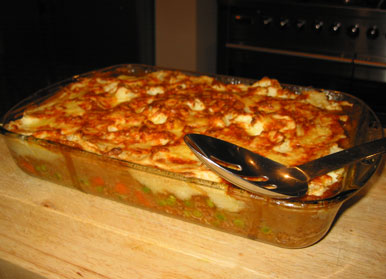


Ingredients and common preparation
The core components are straightforward: minced beef (or lamb for shepherd's pie), an aromatic base of onion, carrot and celery, a sauce made from stock and occasionally wine, and a potato topping. Preparations vary widely, but typical steps are to brown the meat, simmer it with seasonings and vegetables until thickened, transfer to a shallow baking dish, cover with prepared potato—mashed or thinly sliced—and bake uncovered so the top crisps and acquires colour. Many cooks add butter or milk to the potatoes for richness and sometimes grate cheese on top before the final bake.
History and naming
The term "cottage pie" was recorded in the late 18th century, when potatoes became a staple food for poorer rural households who lived in cottages (cottage). Initially, any meat pie topped with potato might be called a cottage pie. Over time, English usage refined the distinction: British English speakers commonly call the beef version cottage pie and the lamb version shepherd's pie, the latter name referring to the animal husbandry role of a shepherd. Regional variations and household practices mean the names are not always used rigidly.
Variations and related dishes
- Protein alternatives: lentils, beans or mixed vegetables create vegetarian or vegan versions that mimic the texture and flavour of the meaty filling.
- Toppings: mashed potato is most common, but thinly sliced potatoes arranged in overlapping tiles are traditional in some recipes and may be used for visual effect.
- Cheese: sprinkling grated cheese over the potato is a frequent contemporary touch for the beef-based version, though it is less common on lamb-based pies.
- Related dishes: Lancashire hotpot is similar in comfort-food status but is normally slow-cooked in a lidded pot; historically, some Scottish cooks made a shepherd's pie with pastry instead of a potato lid.
Cultural role and notable points
Cottage pie is valued for its economy, adaptability and capacity to feed a family from modest ingredients. It appears on home menus, in school and workplace catering, and on pub lists. Presentation ranges from rustic, spooned straight from a baking dish, to neater, individually portioned pies. While closely associated with traditional British and Irish households, it has been adopted in many culinary traditions and reworked with local seasonings and produce.
When preparing a cottage or shepherd's pie, a key practical difference from some other casseroles is that it is baked without a lid so the potato topping can brown and form a crust. This finishing stage both enhances flavour through caramelisation and delivers the characteristic textural contrast between the creamy filling and the crisp, golden top.
For further reading on variations, historic references and technique, see related resources and recipe collections, which explore both classic and modern interpretations of this enduring dish. Overview sources and regional recipe archives provide helpful background and inspiration.
Meat choices • Potato techniques • British culinary context • Irish adaptations • Social history • Language notes • Beef varieties • Shepherding link • Hotpot relation • Pastry variations
Related articles
Author
AlegsaOnline.com Cottage pie: British minced‑meat pie finished with a potato topping Leandro Alegsa
URL: https://en.alegsaonline.com/art/23366