
Couscous: North African semolina grains and the dishes made with them
Couscous are small granules of durum semolina traditionally from the Berber peoples of North Africa. The term also denotes the vegetable- and meat-based stews served with the grains and many regional variations.
Overview
Couscous refers both to tiny granules made from durum wheat semolina and to the meals built around those granules. Originating with the Berber peoples of the Maghreb in North Africa, couscous is a staple food across the Mediterranean, the Middle East and parts of Africa. The product most people buy in stores is pre-steamed and dried, ready to be rehydrated, but traditional couscous is hand-rolled and steamed repeatedly to achieve a light, fluffy texture.
Image gallery
10 Images



Preparation and characteristics
The basic ingredient for traditional couscous is semolina: the coarse middlings of durum wheat. Those semolina particles are moistened and rolled into small pellets, then steamed. Steaming can be done in a special double-pot called a couscoussier or with improvised equipment. Couscous absorbs liquid readily, so dishes served with it are usually accompanied by a generous broth or sauce; otherwise a separate bowl of stew is provided so the grains can be moistened at the table. Instant or pre-steamed couscous sold in supermarkets is rehydrated by adding boiling water or stock, covering briefly and then fluffing with a fork.
Regional variations and history
Couscous has deep roots in the Maghreb and spread throughout North Africa; over centuries it became integrated into regional cuisines from Morocco, Algeria and Tunisia to Libya and Mauritania. It later travelled to southern Europe and other regions via trade and migration. Variations reflect local ingredients and tastes: some areas serve couscous with spicy meat stews; others use fish or vegetable broths. North African spice blends such as ras el hanout and condiments like harissa are commonly paired with couscous.
Culinary uses and examples
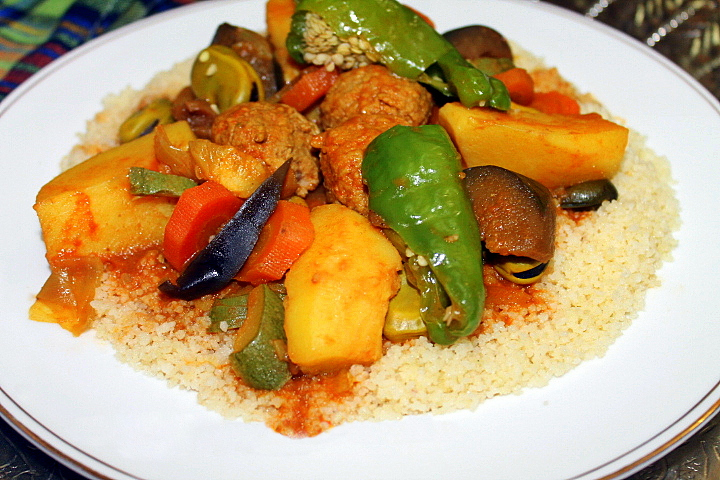
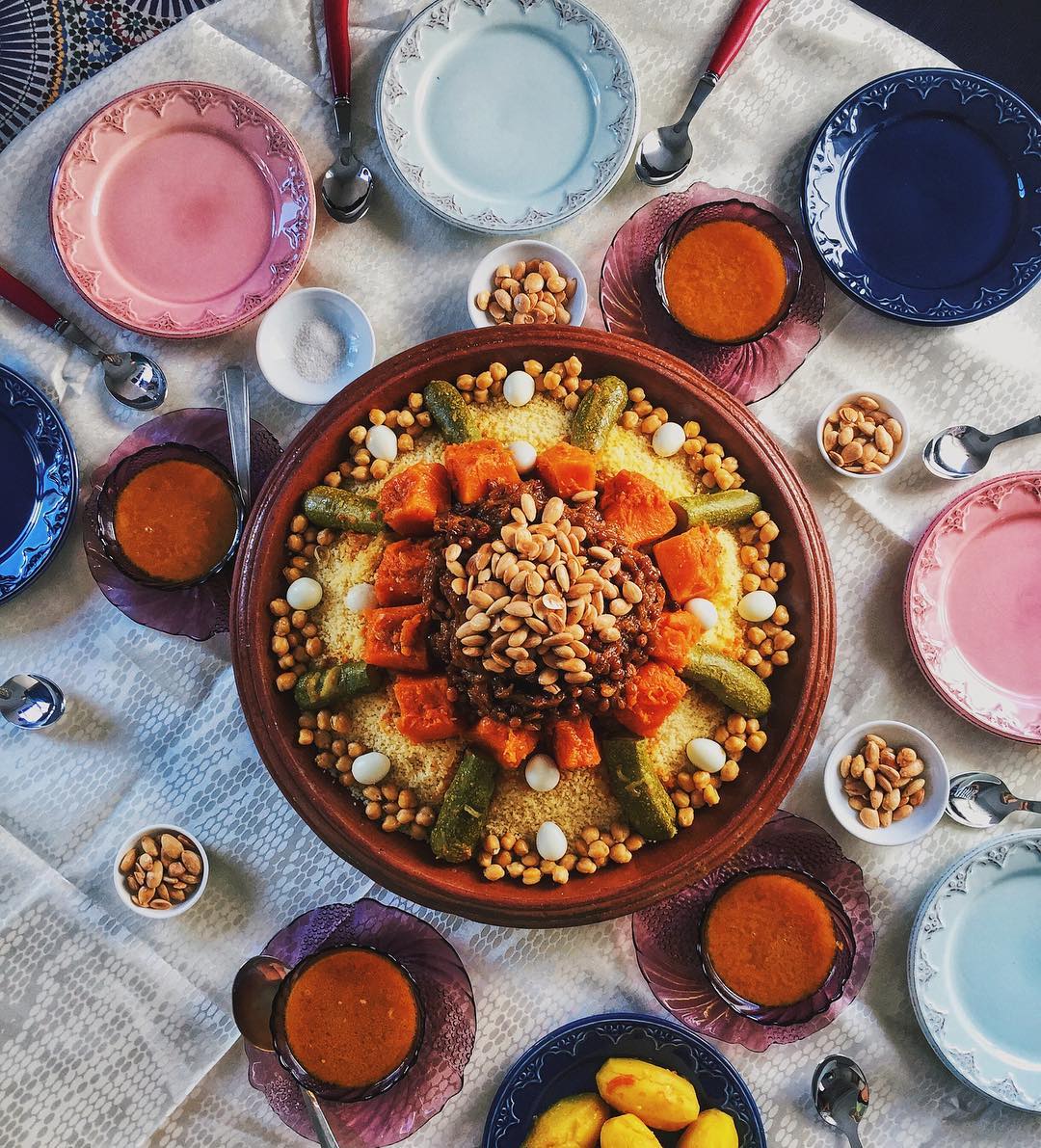
Couscous can be a main course or a side dish. Classic preparations pair the grains with a hearty stew of meat (lamb, chicken, or beef) and vegetables; in other contexts it is mixed into salads and served cold with herbs, citrus and seafood. Sweet preparations exist as well: the grains may be cooked with milk and sweetened, then combined with dried fruits and nuts for a dessert or breakfast porridge. In some countries, local cereals or flours are used to make couscous-like preparations—for example, regional adaptations use cornmeal, cassava or rice-based products.
Distinctions and notable facts
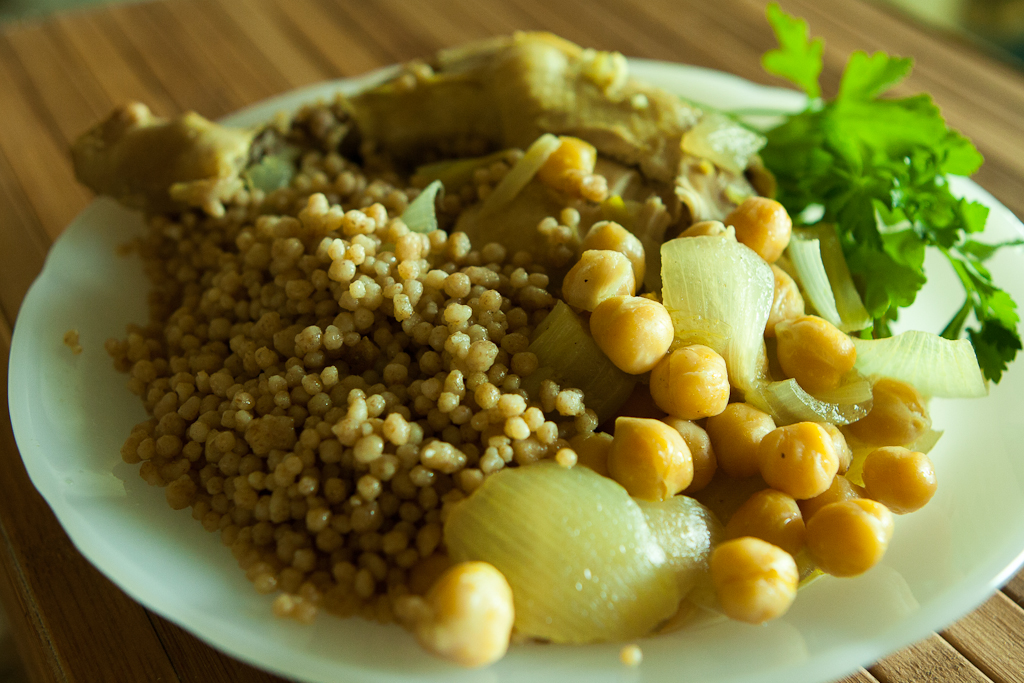
- Not a pasta: While sometimes compared to pasta, traditional couscous is made from semolina granules rather than extruded dough. A different product often called "pearl" or "Israeli" couscous is actually a toasted wheat pasta shaped into small round pieces and behaves more like pasta when cooked.
- Texture: Properly prepared couscous is light and separate; insufficient liquid or steaming can leave it dry and clumpy because it absorbs moisture readily.
- Versatility: It can be adapted to savory, cold salad and sweet dishes, and it takes regional flavors well, from North African spice blends to Mediterranean herbs and citrus.
Further reading and regional resources
- Berbers — cultural origins of couscous
- North Africa — geographic region where couscous developed
- Durum wheat (semolina) — the primary grain used to make couscous
- Pasta — differences between couscous and pasta products
- Spices commonly used with couscous, such as ras el hanout and harissa
- Seafood — one of the common proteins paired with couscous in coastal areas
- Milk — used in sweet couscous preparations
- Raisins — dried fruit often added to sweet or festive versions
- Almonds — nuts commonly used as a garnish or ingredient
- Maghreb — cultural and culinary context
- Armenia — regions where couscous is also consumed
- Middle East — wider area of popularity and adaptation
- Southern France — European region with strong couscous traditions
- Brazil — example of a country with distinct couscous variants
- Tapioca — an accompaniment in some regional breakfasts
- Supermarkets — where pre-steamed couscous is widely sold
- Europe — continental spread and availability
- United States — markets and uses outside traditional regions
Questions and answers
Q: What is couscous?
A: Couscous is a kind of food, originally from the Berbers of North Africa. It has two related meanings: A kind of wheat known in English as durum wheat or fairy pasta and a stew of vegetables and/or meat, together with a plate of couscous wheat.
Q: How is couscous prepared?
A: Couscous is not cooked, but rather steamed over hot water. It must have plenty of liquid, or else a separate bowl of sauce must be provided as the grain is rather dry and absorbs plenty of liquid. Spices such as ras el hanout and harissa are used for seasoning.
Q: Where did couscous originate?
A: Couscous originated in North Africa also known as the Maghreb. It is now popular in Armenia and the Middle East, southern France, Sicilia and Brazil.
Q: Is pre-steamed couscous available?
A: Yes, pre-steamed couscous is available in most supermarkets across Europe and the United States. The package directions are usually to add 1.5 measures of boiling water or stock and butter to each measure of couscous and to cover tightly for five minutes so that it swells up within a few minutes before fluffing with a fork to serve. Pre-steamed couscous takes less time to prepare than regular couscous.
Q: What type of side dishes can be eaten with couscous?
A: Common side dishes eaten with couscous include fish, shrimp, chicken, starch like wheat flour or corn; rice or cassava; butter; eggs; meat; coconut milk; tapioca etc., depending on where it's being consumed geographically speaking - Southeast Asia may consume it differently than North America for example.
Q: Can cold couscous be served?
A: Yes, cold cousins can be served either as the base for salads with seafood added or used to make taboulé salad dish which includes herbs such as parsley & mint plus tomato & onion among other ingredients like olive oil & lemon juice dressing . Cold couscou can also be used for sweets by adding milk raisins or almonds etc..
Related articles
Author
AlegsaOnline.com Couscous: North African semolina grains and the dishes made with them Leandro Alegsa
URL: https://en.alegsaonline.com/art/23659