
Cranberry sauce — preparation, history, and culinary uses
Condiment made from cooked cranberries, served jellied or whole-berry. Common at Thanksgiving and Christmas; available fresh or canned. Origins, preparation methods, variations, and culinary uses explained.
Cranberry sauce is a tart-sweet condiment prepared by cooking cranberries with a sweetener and sometimes spices or citrus. It is most familiar in two textures: a smooth, jellied spread and a chunky, whole-berry relish. The base fruit is the small, red cranberry (Vaccinium macrocarpon), whose natural pectin helps the mixture set when cooled.

Image gallery
9 Images


Characteristics and basic preparation
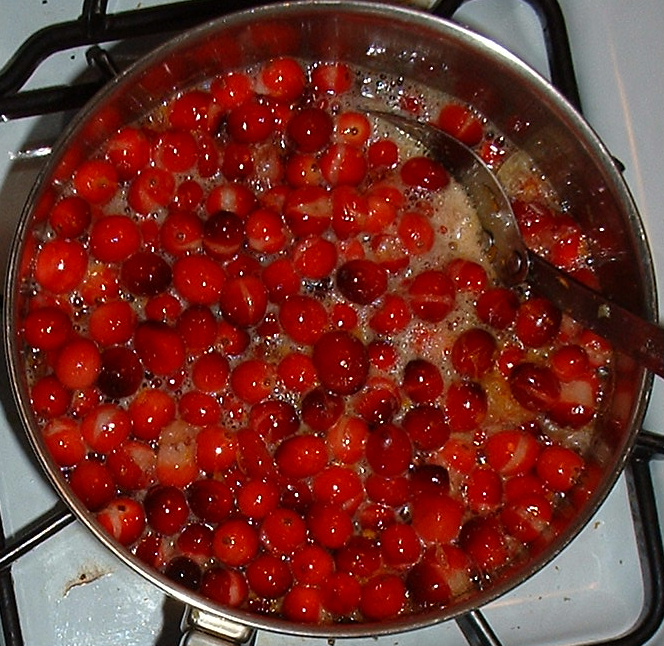
Typical homemade recipes begin by simmering fresh or frozen cranberries with sugar and a bit of water until the skins burst. Many cooks add orange zest, cinnamon, or ginger for warmth, and some recipes incorporate fruit juices or liqueurs. Commercially prepared versions may include added pectin, stabilizers, or corn syrup to produce a consistent texture.

- Jellied: strained or canned to form a smooth sliceable gel.
- Whole-berry: retains intact berries and a relish-like mouthfeel.
- Flavored variations: studded with nuts, apples, or spiced with cloves and orange.
History and cultural significance
Native Americans used cranberries for food, dye, and medicine, and they introduced the fruit to European colonists in North America. Over centuries the bright, tart preserve became associated with autumn and winter meals. In North America it is particularly linked to Thanksgiving (Thanksgiving) dinners, while in the United Kingdom cranberry condiments are commonly served at Christmas (Christmas) roasts. Cranberry sauce also appears alongside holiday turkeys in many other English-speaking countries (North America, United Kingdom).
Commercial availability and seasonal change
Although cranberries are harvested in the autumn, commercial canning and processing made cranberry sauce available year-round in the 20th century; canned varieties became a pantry staple and simplified holiday preparations (canning and preservation). Many households still prefer fresh or homemade versions for texture and to control sweetness.
Uses, pairings, and notable facts
Cranberry sauce is most often served with roast poultry or game, but it is versatile: use it as a spread on sandwiches, a glaze for meats, an accompaniment to cheese plates, or a base for desserts. Nutritionally, cranberries are low in fat and offer vitamins and antioxidants, but prepared sauces can be high in added sugar. When choosing or making cranberry sauce, consider texture (jellied vs whole), sweetness level, and any added flavorings to suit the meal.

For recipes, preservation tips, and regional variants see sources and recipe collections linked from this article: Overview of cranberry sauce, cranberry fruit profile, holiday traditions, North American customs, British Christmas menus, UK cranberry uses, and canning history.
Questions and answers
Q: What is cranberry sauce?
A: Cranberry sauce is a sauce made from cranberries.
Q: When is it typically eaten?
A: It is commonly eaten with turkey during the Thanksgiving holiday in North America or during Christmas dinner in the United Kingdom.
Q: When did cranberry sauce become available all year?
A: Cranberry sauce started being available all year in 1941 with canning.
Q: What does cranberries popping refer to?
A: Cranberries popping refers to the process of boiling and mashing fresh cranberries, which releases their juice and creates a thick, jelly-like consistency.
Q: What does a jar of cranberry sauce look like?
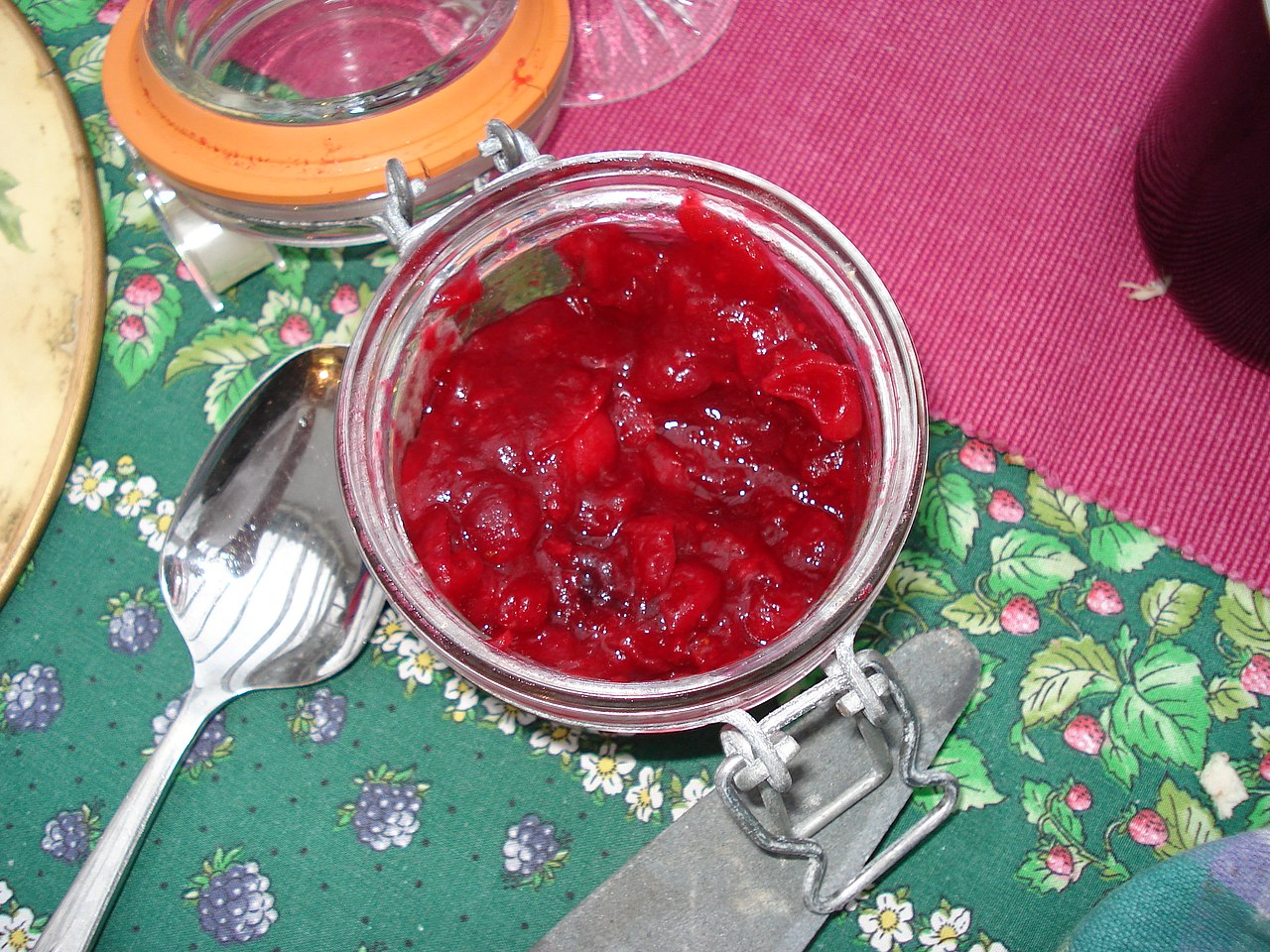
A: A jar of cranberry sauce looks like a jar filled with a thick, red liquid that has chunks of whole berries suspended throughout it.
Q: How does canned cranberry jelly differ from regular cranberry sauce?
A: Canned cranberry jelly differs from regular cranberry sauce because it has been cooked down until it reaches a gel-like consistency and then poured into cans or jars for storage. It also tends to be more tart than regular sauces due to its higher concentration of sugar and other ingredients used for preservation purposes.
Q: How do you serve canned cranberry jelly? A: Canned cranberry jelly can be served by slicing it into thin slices and serving them on top of meats, salads, or desserts such as ice cream or cheesecake.
Related articles
Author
AlegsaOnline.com Cranberry sauce — preparation, history, and culinary uses Leandro Alegsa
URL: https://en.alegsaonline.com/art/23946
Sources
- boston.com : "A tale of two side dishes"